S. Agnon - Shira
Здесь есть возможность читать онлайн «S. Agnon - Shira» весь текст электронной книги совершенно бесплатно (целиком полную версию без сокращений). В некоторых случаях можно слушать аудио, скачать через торрент в формате fb2 и присутствует краткое содержание. Год выпуска: 2014, Издательство: Toby Press, Жанр: Современная проза, на английском языке. Описание произведения, (предисловие) а так же отзывы посетителей доступны на портале библиотеки ЛибКат.
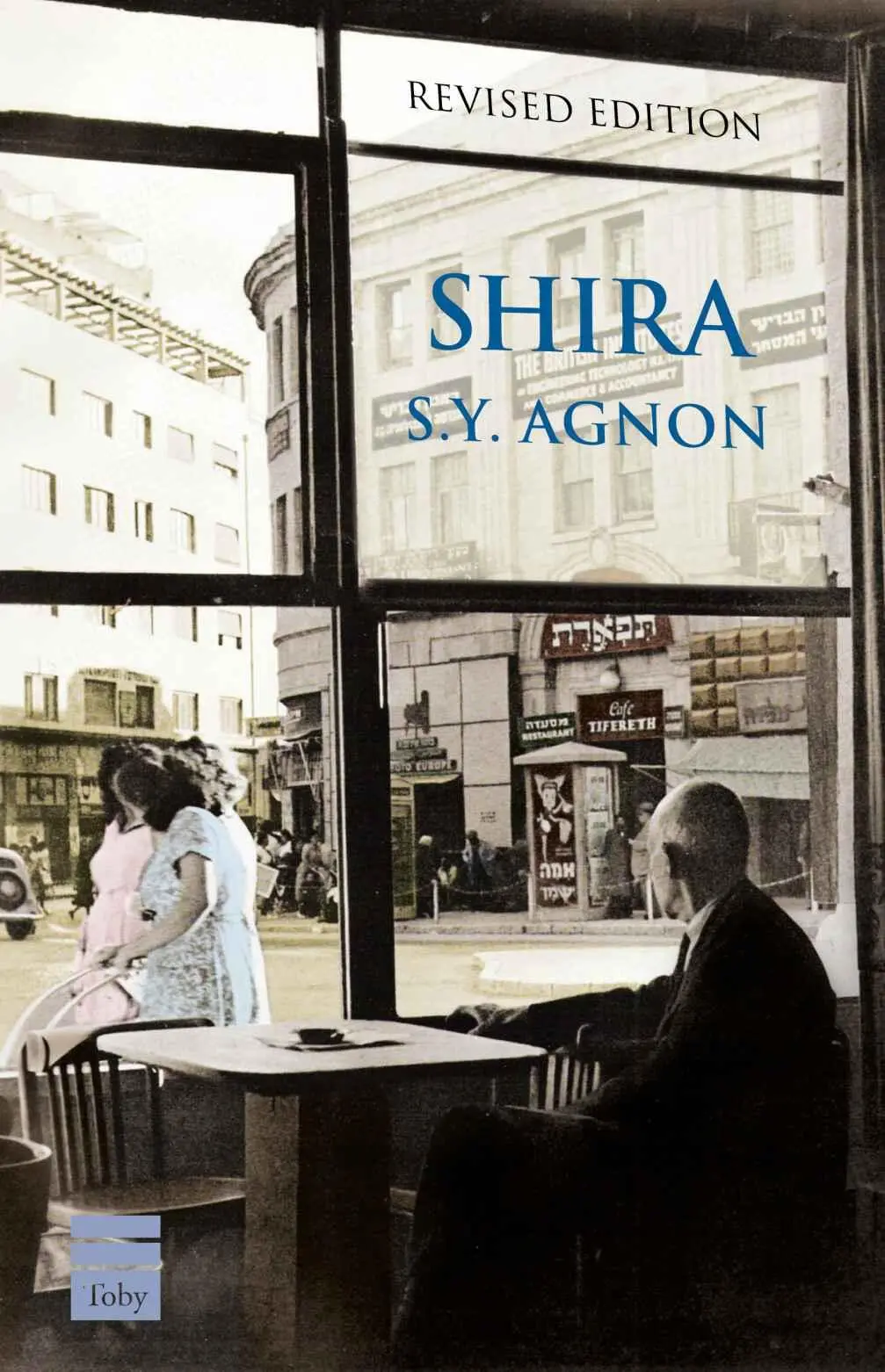
- Название:Shira
- Автор:
- Издательство:Toby Press
- Жанр:
- Год:2014
- ISBN:нет данных
- Рейтинг книги:5 / 5. Голосов: 1
-
Избранное:Добавить в избранное
- Отзывы:
-
Ваша оценка:
Shira: краткое содержание, описание и аннотация
Предлагаем к чтению аннотацию, описание, краткое содержание или предисловие (зависит от того, что написал сам автор книги «Shira»). Если вы не нашли необходимую информацию о книге — напишите в комментариях, мы постараемся отыскать её.
Shira — читать онлайн бесплатно полную книгу (весь текст) целиком
Ниже представлен текст книги, разбитый по страницам. Система сохранения места последней прочитанной страницы, позволяет с удобством читать онлайн бесплатно книгу «Shira», без необходимости каждый раз заново искать на чём Вы остановились. Поставьте закладку, и сможете в любой момент перейти на страницу, на которой закончили чтение.
Интервал:
Закладка:
Chapter fourteen
Herbst was back in the café he had been in with Shira the night Sarah was born. The original owner had given up the café, and it had passed through many hands before being taken over by the present owner, who felt he had been cheated and was looking for a buyer to whom to sell the place, with all its equipment. Since he intended to get rid of it, he made no effort to improve it, and it was like every other café in Jerusalem. It was poorly ventilated; the chairs were uncomfortable; in some spots the light was inadequate, in others it was blinding; the waiter was never there when he was needed, and when he did appear his mind was elsewhere. With the exception of two people who were setting up a chessboard, an English soldier huddled in a corner with a Jewish girl, and a customer who was banging on the table and shouting “Waiter, waiter,” the café seemed empty. When curfews became frequent in Jerusalem, people began to hesitate to go out at night, since they couldn’t count on getting home: a curfew could suddenly be announced, and, before you could get home, the police would appear and take you to jail. As he entered the café, Herbst was reminded of his daughter. If Tamara were in Jerusalem, she might be in this café, and she would see her father with another woman. Luckily, Tamara was far away, and there wasn’t anyone in sight who knew him. After Shira chose a table, Herbst asked what she would like him to order for her. They suddenly discovered that, in addition to the people they had noticed on the way in, there were two others.
Shira whispered to Herbst, “There they are.” “What do you mean?” She whispered to him, “There are those two young men, the ones I saw waving to you.” Herbst shifted his gaze and said to Shira, “They’re my students. The short one with the dark shock of hair is sharp, like a hot pepper. It’s too bad he has to waste so much time earning money. His friend, the tall, skinny one with small, inquisitive eyes, he’s also — “ Shira interrupted, “Why not go over and say hello to them?” Herbst said, “What will you do meanwhile?” Shira said, “You won’t stay forever. I may even try to sit here and manage without you for a while.” Herbst said, “That’s right, I won’t stay with them forever, certainly not when I could be sitting with you. Still, how can I leave you alone?” Shira said, “Don’t worry about me. I promise that I’ll try to make good use of the time.” Herbst got up and went to join his students. Shira went wherever she went.
Herbst addressed them in his version of student talk: “What sort of discourse are you guys engaged in?” The small, dark-haired one said, “What are we engaged in? A thousand things, and nothing at all.” Herbst laughed and said, “I’m terrific at nothing at all; when it comes to a thousand things, I’m not so terrific. We could turn it around and say, ‘A thousand things, maybe yes; nothing at all — that’s impossible.’“ The young man continued, “We were discussing poetry and literature.” Herbst said, “You call such lofty subjects nothing at all? I don’t dare to think about them.” The tall, thin student responded, “Those are weighty subjects, but what we say about them is not very worthwhile. The words roll off our tongues in set speeches requiring very little thought, though someone like me makes the mistake of thinking everything he says originated in his own mind.” Herbst said, “Unless you think my ears are flawed, would you be willing to repeat some of your latest insights? I have often thought that, of all the secrets in the world, the most mysterious ones are the secret of language and the secret of poetry. You are probably familiar with what philosophers have said about the origins of language and the craft of poetry. I myself have done some reading in these areas. But when I disregard what I have read and respond with my heart to the marvels of language — to that which enables people to understand each other and allows philosophers to communicate their wisdom — I am awed and astounded to a degree that nothing else in the world can match. The longer I observe language, the more I regard it as the foremost gift granted to man since he appeared on the face of the earth. It gives him the power to express whatever his heart desires. However, if you end up in a place where your language is unknown and the local tongue is foreign to you, what use is speech after all? As you see, my ideas are neither profound nor novel, but my capacity for wonder is constantly renewed. Beyond language and the barriers of language lies poetry. There are so many words, an infinite number of them, that we don’t ever use. The person we call a poet appears, combines a series of words, and, instantly, each word becomes a joy and a blessing. But I came to hear new ideas, and, in the end, here I am, mouthing ancient, outdated truisms.”
When speaking to his students, Herbst adopted a modest tone. This modesty, at first a defense against pomposity, was now a subtle sort of bribery, for he was aware that his students risked their lives to protect the country and that he had opted not to join them.
As he talked, the old days came back to him, when Zahara was a baby beginning to say words and make sentences. She understood most of what was said to her, and, when she heard a word she didn’t understand, she used to look at him, baffled, and ask, “What, Daddy?” He did not derive the same pleasure from Tamara or, needless to say, from Sarah, because from the day of her birth he had been in a state of distraction. Although he wrote down words he heard Sarah say, he wrote them not on a special pad but on scraps of paper that happened to be at hand, which he never put together. As he jotted them down, he already knew he would not look at them again.
His students saw the gloom on his face and were afraid they had offended him by not answering his question. They didn’t know his face was gloomy for another reason; because he paid so little attention to Sarah. And he paid so little attention to Sarah because of Shira, whom he knew because of Sarah’s birth. Both of these facts — the fact that he paid so little attention to Sarah and the fact that his attention was fixed on Shira — made his face gloomy.
The students looked at one another and said, “You speak first.”
The small, dark-haired student was the one who began. “As I was telling my friend here, Hebrew is unlike other languages, and Hebrew poetry is not like any other. Were we to spot a familiar set of words in a poem in some other language, we would disapprove of this borrowed finery. In Hebrew, the more such combinations, the better. Since Hebrew is not a spoken language, its richness is contained in books, and whoever makes literary allusions in his writing imbues the older text with new life that generates and produces in its own image and form. Nonetheless, I can’t forget something that happened to me, which, on the face of it, ought to have been resolved by this approach. But that’s not how it turned out. I have been reading Hebrew since childhood. One day I happened on Bialik’s poem ‘O heavens, seek pity for me.’ I read it, trembling and marveling at this poet who had the audacity to turn to the heavens and ask them to speak for him, who considered himself deserving enough to trouble the heavens on his own behalf. I reviewed those six words again and again. Each time, my soul was stunned by their splendor. Days later, I opened the Midrash and found those very same words. ‘What’s this?’ I cried in alarm. ‘How did those words get into the Midrash?’ I stood bent over the book, my eyes clutching at each word, astonished, for the phrase had lost its impact; it no longer moved me. Was it because I knew it from the poem that it had no effect?”
Читать дальшеИнтервал:
Закладка:
Похожие книги на «Shira»
Представляем Вашему вниманию похожие книги на «Shira» списком для выбора. Мы отобрали схожую по названию и смыслу литературу в надежде предоставить читателям больше вариантов отыскать новые, интересные, ещё непрочитанные произведения.







Обсуждение, отзывы о книге «Shira» и просто собственные мнения читателей. Оставьте ваши комментарии, напишите, что Вы думаете о произведении, его смысле или главных героях. Укажите что конкретно понравилось, а что нет, и почему Вы так считаете.