S. Agnon - Shira
Здесь есть возможность читать онлайн «S. Agnon - Shira» весь текст электронной книги совершенно бесплатно (целиком полную версию без сокращений). В некоторых случаях можно слушать аудио, скачать через торрент в формате fb2 и присутствует краткое содержание. Год выпуска: 2014, Издательство: Toby Press, Жанр: Современная проза, на английском языке. Описание произведения, (предисловие) а так же отзывы посетителей доступны на портале библиотеки ЛибКат.
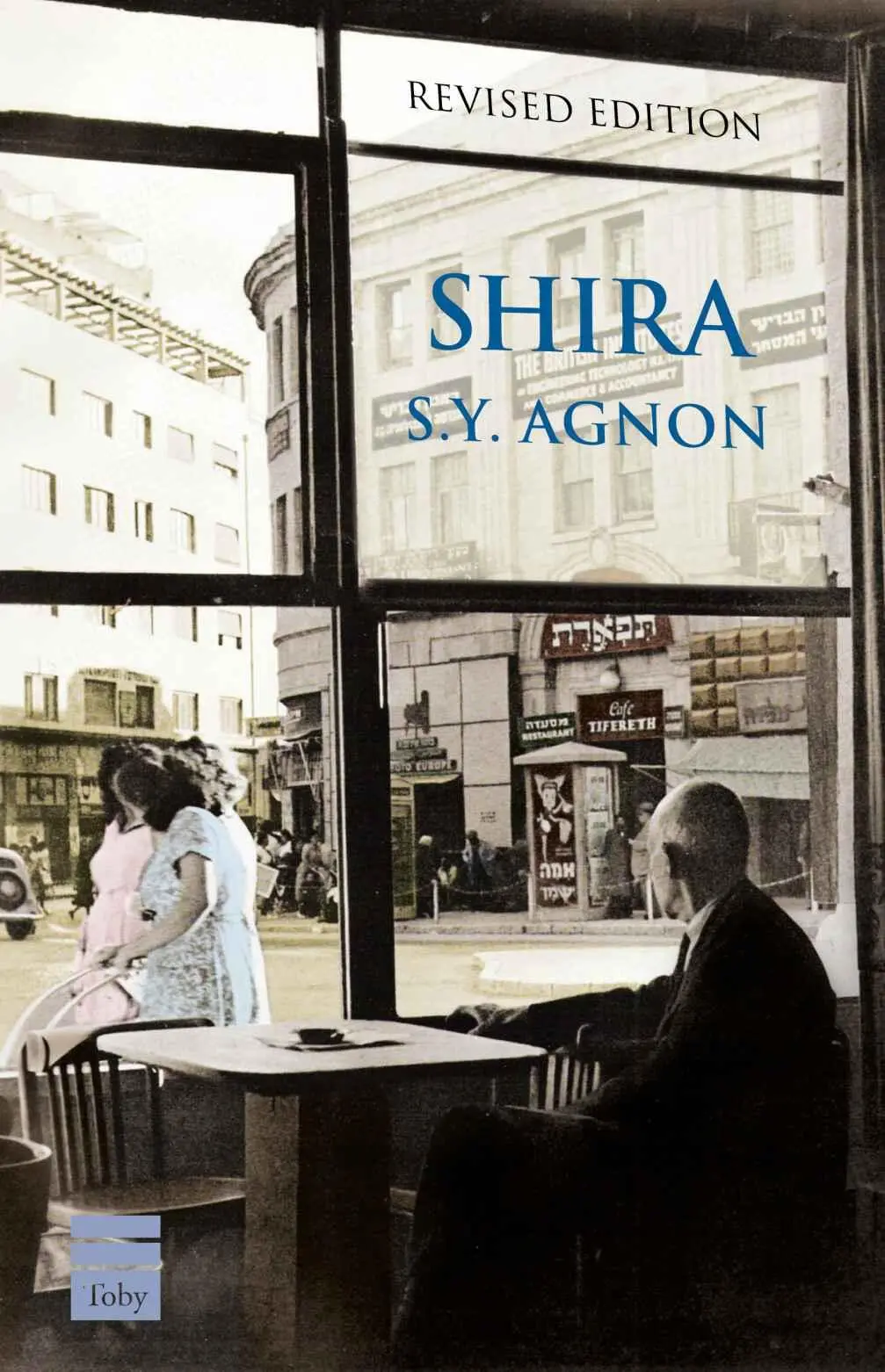
- Название:Shira
- Автор:
- Издательство:Toby Press
- Жанр:
- Год:2014
- ISBN:нет данных
- Рейтинг книги:5 / 5. Голосов: 1
-
Избранное:Добавить в избранное
- Отзывы:
-
Ваша оценка:
Shira: краткое содержание, описание и аннотация
Предлагаем к чтению аннотацию, описание, краткое содержание или предисловие (зависит от того, что написал сам автор книги «Shira»). Если вы не нашли необходимую информацию о книге — напишите в комментариях, мы постараемся отыскать её.
Shira — читать онлайн бесплатно полную книгу (весь текст) целиком
Ниже представлен текст книги, разбитый по страницам. Система сохранения места последней прочитанной страницы, позволяет с удобством читать онлайн бесплатно книгу «Shira», без необходимости каждый раз заново искать на чём Вы остановились. Поставьте закладку, и сможете в любой момент перейти на страницу, на которой закончили чтение.
Интервал:
Закладка:
Herbst repeated each of her words and said, “Please, Shira, explain yourself. Tell me what you mean by arrogance, conceit, and anarchy. To me, the Hasidim look humble. They walk at the side of the road with lowered eyes, making do with minimal food, drink, housing, and clothes. As for anarchy, people who are devoted to rules, regulations, customs, even special dress and gestures prescribed in books — can that be termed anarchy? It’s hard for me to accept what you say, Shira.” Shira glared at him, her eyes flashing with rage, and she spoke fiercely, “If you are so innocent, if you shut your eyes, nothing I say will help you. But let me tell you this: lazy idlers who avoid work to such an extent that they lose the power to engage in anything other than nonsense, retelling tales of righteous men who, with words alone, compel their God to alter the order of the universe on their behalf because of some trivial momentary need, or with a twist of their lip force God to defer His will to theirs — can there be arrogance and conceit to exceed this? Human beings whose arrogance, conceit, and self-love are of such magnitude defy all order and produce anarchy.”
Herbst looked at her with admiration and said, “I won’t debate the merit of your words, but I am sorry, Shira, that you didn’t go into literary scholarship.” Shira said, “You don’t have to debate with me. I don’t mean to win you over to my view, and I’m satisfied to have become what I’ve become and to leave literature to the scholars. I don’t think I would enjoy being a prophet and saying this or that is what the poet had in mind. Anyway, I’m astonished that in such a short time you’ve changed your mind, and now you think I’m capable of judging literature.” Herbst said, “I changed my mind? When did I say otherwise?” Shira said, “Should I remind you of that night and that magazine?” Herbst said, “You are vengeful, Shira. You don’t forget a single casual remark of mine if it displeases you. In any case, now you see that I don’t question the excellence of your taste. I’m merely sorry that you didn’t study literature. Now, tell me, Shira, how do you explain the fact that great thinkers, poets, and philosophers consider the Hasidim remarkable and their way of life sublime?” Shira said, “Maybe they are great thinkers, poets, or philosophers, as you say. I’m not equipped to judge. But I can tell you this: if it were in my power to change the world, like the righteous men in the stories those thinkers, poets, and philosophers find so enthralling, I would transform the poets and philosophers into Hasidim, so their bodies could have a taste of what they celebrate. Now, dear doctor, let’s not argue about things neither you nor I are interested in. I said ‘neither you nor I’; I, as you already know, and you, if you search your heart, will realize that you don’t want to be like them, even for a minute. You may sometimes wish to cast your lot with the holy men who have withdrawn from the world, but to be some sort of yach-mach or itchi-maya — it’s clear to me that’s not what you want. Their stench alone would drive you away.”
Once again, Herbst looked at her as he had never looked at her before and said, “I never met a woman like you, and I never heard such talk from a woman. Your talk would dazzle me even if it came from a man.” Shira said, “Because it is your opinion that women were created only to give men pleasure, you don’t consider the possibility that women’s minds are nevertheless far from empty. Dr. Herbst, I have no wish to offend you, and certainly not to offend Mrs. Herbst, but, when I see how you behave with me and how you behaved with Temima Kutchinsky, I wonder if you and your wife ever have a conversation about anything other than household matters and bodily needs.” Herbst said, “So that’s how well you know me.” Shira said, “Before you were married, you undoubtedly talked a lot about all sorts of German ideals. Humanism, you call it. But afterward, that was no longer necessary, so you flung the household and the children in her lap while you, the great pasha, amble through the palaces of wisdom where there is no place for featherbrains like us.” Herbst said, “You sound just like a book.” Shira said, “I’m only saying what I see.” Herbst said, “And what you say about me is what you see?” Shira said, “It’s only a fraction of what I see.” Herbst said, “Could you tell me more?” Shira said, “The gypsy whose tune I dance to hasn’t been born yet. You will have to make do with what I’ve already said.” Herbst said, “In that case, a thousand and one thanks for your generosity in offering me some of what your eyes have shown you.” Shira said, “Please don’t bore me by showing how smart you are.” Herbst said, “So you have a temper too?” Shira said, “I don’t have a temper, but, if there’s reason to be angry, I’m angry. The road is clear now. Let’s go.” “Whereto?” “To the King David Hotel.” “What do you want to do there?” “The gardener there may have some flowers. I’m going to visit someone, a sick friend, and I would like to bring her flowers. The florists are all closed for Shabbat, and there are no flowers to be had anywhere else. We go too far, allowing the Orthodox to do as they like with us. If we don’t stop them, we won’t be allowed to breathe on Shabbat. How I hate them and all the things they keep us from doing! Smoking on Shabbat is forbidden, wearing short sleeves is forbidden, everything is forbidden. People you have nothing to do with take charge of you, proclaiming, ‘Don’t do this, don’t do that.’ I doubt that any of them know what is forbidden and what isn’t, yet they forbid us to do anything.” Herbst said, “Who is the woman you plan to visit?” Shira said, “Come and see.” Herbst said, “Tell me anyway.” Shira said, “Again, you’re consumed with curiosity. There was a young girl in the hospital who went home a few days ago, and I want to see how she is recovering from her surgery.” “Was it serious?” “It was minor surgery, on her jaw.” “Who is she?” Shira said, “And if I tell you, will you know? Do you know all the young women in Jerusalem? We’re already there. Come up with me. I promise you, it won’t detract from your dignity. A little while back, you were willing to give up everything for the sacred life. Now that you have the opportunity to do a good deed and pay a sick call, you avoid it, preferring legends of holy men to an act of charity. You would rather be settled in an armchair, smoking and drinking coffee as you read all about them. Isn’t that right, sir?” She spoke without a trace of rebuke, her eyes mirroring her words. Once again, something akin to laughter leaped out of her eyes. Not the laughter with which he was familiar. If he had tried to define it, he wouldn’t have been able to find the words. She suddenly slanted her nose in the other direction, to avoid the powerful smell that came out of the dim house.
Herbst, who was perhaps even more sensitive to smells than Shira, didn’t notice. But the smell transported him to a desert with snakes, scorpions, caves, tombs, and old men buried alive to the waist in graves they dug for themselves, singing and praising their gods. Other old men, tied to wooden posts or to boulders, stood on one leg, reaching one arm upward, their bodies inert, only their lips moving. They never changed clothes or washed; their tattered garments were covered with vermin, worms, and maggots as they, too, sang and praised their gods.
Herbst was transported to still another place, an emperor’s palace, where there was a party for a holy man the emperor had heard about, who had been brought to the palace so the emperor could bask in his holiness. The emperor presided over an extravagant feast prepared for the holy man and for all his courtiers. The holy man sat at the head of the table, within sight of the emperor and his courtiers, neither eating nor drinking, delighting in his sores, which swarmed with worms and maggots. Before their very eyes, a new worm stirred, born in the holy man’s flesh, unmindful of the emperor, the feast on his table, his courtiers — unaware, perhaps, that it inhabited a holy body and was feeding on holy flesh. Such lowly creatures lack the capacity to recognize greatness. “Where are you?” Shira said to Herbst. “If you’re not in outer space, I don’t know where you are. As I said earlier, you seem to be in some other world today. Come on, let’s go in.” Shira took his hand and went up the dark, dilapidated steps with him.
Читать дальшеИнтервал:
Закладка:
Похожие книги на «Shira»
Представляем Вашему вниманию похожие книги на «Shira» списком для выбора. Мы отобрали схожую по названию и смыслу литературу в надежде предоставить читателям больше вариантов отыскать новые, интересные, ещё непрочитанные произведения.









Обсуждение, отзывы о книге «Shira» и просто собственные мнения читателей. Оставьте ваши комментарии, напишите, что Вы думаете о произведении, его смысле или главных героях. Укажите что конкретно понравилось, а что нет, и почему Вы так считаете.