S. Agnon - Shira
Здесь есть возможность читать онлайн «S. Agnon - Shira» весь текст электронной книги совершенно бесплатно (целиком полную версию без сокращений). В некоторых случаях можно слушать аудио, скачать через торрент в формате fb2 и присутствует краткое содержание. Год выпуска: 2014, Издательство: Toby Press, Жанр: Современная проза, на английском языке. Описание произведения, (предисловие) а так же отзывы посетителей доступны на портале библиотеки ЛибКат.
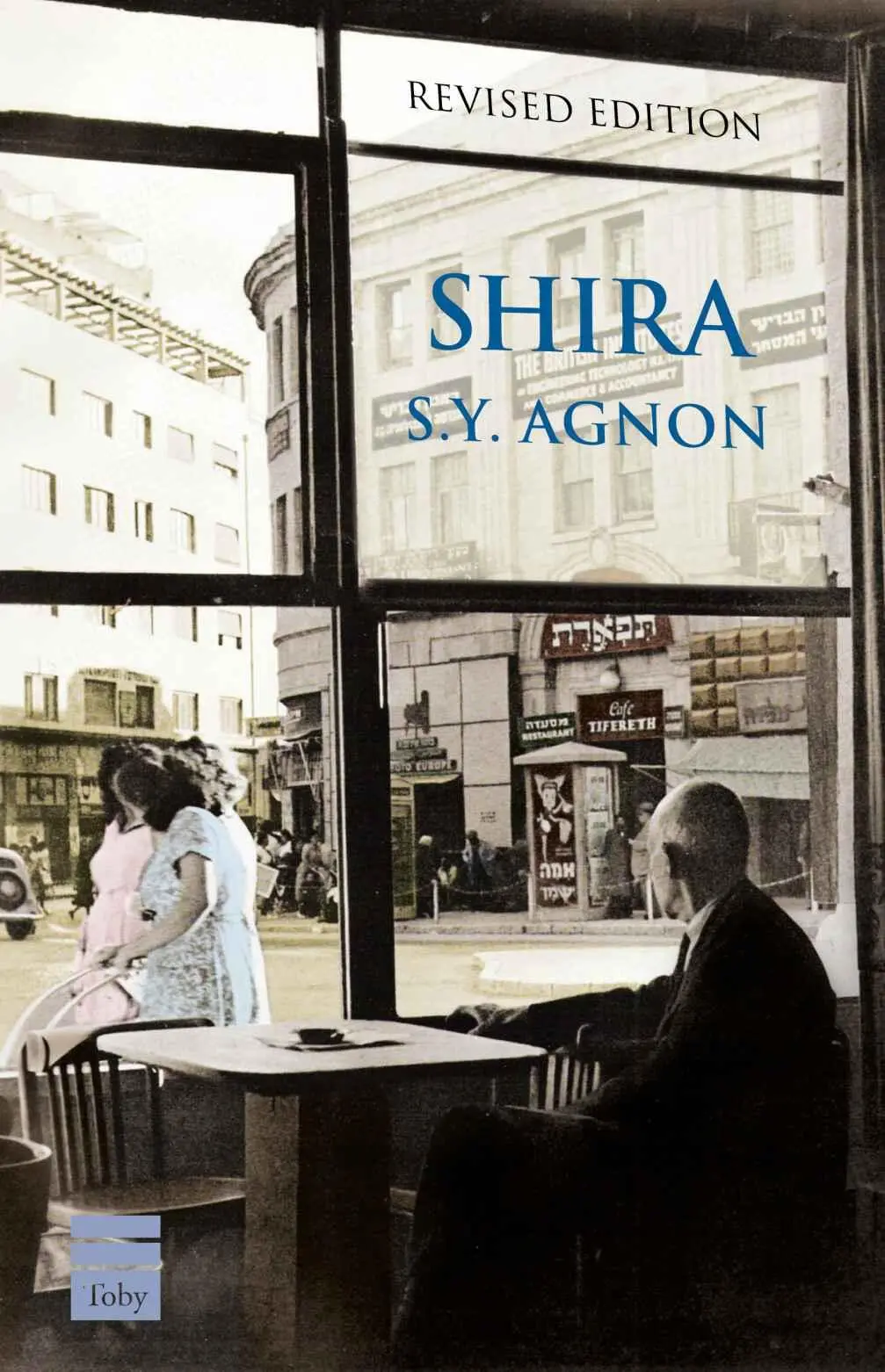
- Название:Shira
- Автор:
- Издательство:Toby Press
- Жанр:
- Год:2014
- ISBN:нет данных
- Рейтинг книги:5 / 5. Голосов: 1
-
Избранное:Добавить в избранное
- Отзывы:
-
Ваша оценка:
Shira: краткое содержание, описание и аннотация
Предлагаем к чтению аннотацию, описание, краткое содержание или предисловие (зависит от того, что написал сам автор книги «Shira»). Если вы не нашли необходимую информацию о книге — напишите в комментариях, мы постараемся отыскать её.
Shira — читать онлайн бесплатно полную книгу (весь текст) целиком
Ниже представлен текст книги, разбитый по страницам. Система сохранения места последней прочитанной страницы, позволяет с удобством читать онлайн бесплатно книгу «Shira», без необходимости каждый раз заново искать на чём Вы остановились. Поставьте закладку, и сможете в любой момент перейти на страницу, на которой закончили чтение.
Интервал:
Закладка:
Shira wrapped herself in a robe and got out of bed. Herbst pretended not to be watching as he strained to follow every one of her gestures. He passed his tongue over his lips, speculating: Now she’s putting on her girdle; she’s taking off her robe now and putting on some other garment; she’s slipping her feet into her stockings. His eyelids covered his eyes, but her every move was revealed to him. His fantasies transformed themselves into vision and showed him everything she did. They showed him every single garment, and his mind was fixed on every one of her limbs. Had he uttered their names, he would have been startled. But his mouth was silent. He didn’t have the strength to say anything. Only his lips quivered. Then, all of a sudden, his entire body began to quiver, and he was overcome with sadness.
He was overcome with sadness — because of this woman, because of her clothes, because of her body, because of how she moved, because she paid no attention to him, because she ordered him not to look at her, because she didn’t acknowledge his existence. Would she continue to treat him as she had been treating him recently? His mood vacillated between inertia and turbulence. They finally merged, taking the form of devastating despair.
By degrees, his sadness dissipated and vanished. He had already forgotten its source, remembering only that he had been warned not to look up and gaze at what was forbidden. He complied, without cheating, and did not so much as glance at the sight his mind had conjured up.
He suddenly heard the sound of flowing water, like an open spigot with water spilling out. Herbst looked up in alarm and saw a dripping bottle balanced on the edge of the bed. It was the bottle Shira had been using to warm herself. The lid was loose, and it was dripping. Herbst’s face turned pale, and he wanted to yell, “Shira!” But he didn’t yell; he didn’t call her at all. He sat watching, as if he had been appointed guard.
Shira came. Without being called. Neither dressed nor naked. She picked up the bottle, then brought a rag and a bucket. She soaked up the water and wrung the rag into the bucket. Herbert sat watching her, taking in her every move with his eyes. When she had finished, she straightened up. Herbst asked, “May I help you?” Shira said, “It’s not necessary.” Herbst said, “I didn’t mean with the water.” Shira said, “What did you mean?” He laughed slyly and said, “I was offering to help you get dressed.” Shira said, “I’m not in the habit of having help for such things.” Herbst said, “If the answer is no, then it’s no.” Shira said, “Do you help your wife get dressed too?” He lowered his eyes and was silent.
When she was all dressed, she reappeared. “I see,” Shira said, “that you didn’t smoke. Let’s share a peace pipe, my friend. We won’t be able to smoke when we’re outside. It’s Shabbat for them.” She took out a cigarette, stuck it in his mouth, took another one and put it in her own mouth, lit her cigarette, and went over to him, lighting his cigarette with hers. He inhaled, then took the cigarette from his lips and held it between his fingers. “You’re burning your fingers,” Shira said. “I’m burning my fingers?” Herbst asked. Shira said, “Finish your cigarette, so we can go out.” Herbst said, “I’ll finish it, so we can go out.” Shira said, “You’re in another world today.” Herbst said, “If you want to go for a walk, let’s go for a walk.” Shira said, “Didn’t we agree to go for a walk?” “We agreed.” Shira said, “Then let’s go.” He answered, “Let’s go.” She stood there, looking around her room, at her bed, waiting for him to leave.
Outside, they found the road blocked by black-coated figures strolling along expansively, occupying the width of the street, some with their shtreimels centered on their forehead, others with their shtreimels angled to the left, still others with their shtreimels in hand. The figures became entangled with one another and increasingly voluble. “They are Hasidim,” Shira said. “From Poland. Listen to them, listen to those accents. Yach, mach, itchi maya . They make the city ugly with their getups and their gestures.” Herbst said, “In Jerusalem, everyone makes the city ugly. What about that plump morsel waddling by in shorts? Do her fleshy thighs add to the city’s splendor? Her two companions — the ones with their hands on their hips — are they any more attractive than she is?” “If they’re not attractive on Shabbat,” Shira answered, “they’re attractive on weekdays. They fix roads, build houses, do what they can to improve the world, undertake any task, eat bread they have earned. But these Hasidim don’t do anything to improve the world. They don’t work, they’re idle. They don’t lift a finger to accomplish anything, but at night they breed, producing more of their kind: idlers, nuisances, grumblers, greedy parasites — contentious, in conflict among themselves, with their wives, sons, daughters, the entire world. The more I know them, the more I hate them. They think we were born for the sole purpose of serving them. If they didn’t need us and our charitable institutions, they would drown us in spit. The name of God is on their lips, but their hearts are filled with vice. I won’t say none of them is decent, but how many? Fewer than you’d guess. With respect to women, they’re all the same. Women exist only to satisfy their appetites. One such specimen came to the hospital, a fellow with a goatee, an enlarged Adam’s apple, and elaborately curled earlocks. He came to see his wife, to see how she was doing. The poor woman welcomed him, despite her severe pain. He began to press her to come home. She had barely any life left in her, having been worked to the bone. He took no notice of her suffering and pressed her to come home. I saw her anguish and wanted to drag him by his ugly beard and throw him out. But I overcame my rage and asked, ‘Do you love your wife so much that you can’t do without her for a few days? Wait until she’s better, and she’ll come back to you.’ He laughed derisively and said, ‘Am I the one who needs her? The house and the children need her. Since she went to the hospital, her children have been wild. They don’t go to school; they play on the street like the children of the godless, may their name be erased. It’s not good for a man to be without a wife. It would be all right if there were someone to cover for her when she’s stuck in bed.’ If Dr. Herbst can’t see the difference between these Hasidim and the people who work for a living, I can’t teach him.” Herbst said, “I don’t know about you, but when I read about the lives of holy men, I’m ashamed. I sometimes wish I could drop everything and live with them.” Shira said, “How can you compare these bizarre creatures to holy men, who isolate themselves from the world and don’t demand anything from anyone? Whatever they demand, they demand of themselves. They want to improve their souls, whereas the Hasidim don’t demand anything of themselves. They demand that we satisfy their needs. We have to work, we have to labor, we have to slave, we have to undertake every difficulty, we have to give up sleep — all so those idlers can indulge their appetites.
Oh, how I despise them!” Herbst said, “But you enjoy all those lovely stories about righteous men and Hasidim.” Shira said, “In my childhood, I avoided them, and I don’t understand how a civilized person can see a trace of beauty in that ugly, vapid life. Please, Dr. Herbst, should I be amused because a certain idler didn’t bother to take off his socks year after year? Or, for that matter, because another one, who liked to sit around serving God, as they say, never noticed that his wife and children were wasting away? As you know, Dr. Herbst, I don’t believe in God. I’m not boasting about it, nor do I regret it. But, when they say proudly that all their actions are for the sake of God, I wonder. I don’t doubt that much of our arrogance, conceit, and anarchy derive from that source.”
Читать дальшеИнтервал:
Закладка:
Похожие книги на «Shira»
Представляем Вашему вниманию похожие книги на «Shira» списком для выбора. Мы отобрали схожую по названию и смыслу литературу в надежде предоставить читателям больше вариантов отыскать новые, интересные, ещё непрочитанные произведения.










Обсуждение, отзывы о книге «Shira» и просто собственные мнения читателей. Оставьте ваши комментарии, напишите, что Вы думаете о произведении, его смысле или главных героях. Укажите что конкретно понравилось, а что нет, и почему Вы так считаете.