S. Agnon - Shira
Здесь есть возможность читать онлайн «S. Agnon - Shira» весь текст электронной книги совершенно бесплатно (целиком полную версию без сокращений). В некоторых случаях можно слушать аудио, скачать через торрент в формате fb2 и присутствует краткое содержание. Год выпуска: 2014, Издательство: Toby Press, Жанр: Современная проза, на английском языке. Описание произведения, (предисловие) а так же отзывы посетителей доступны на портале библиотеки ЛибКат.
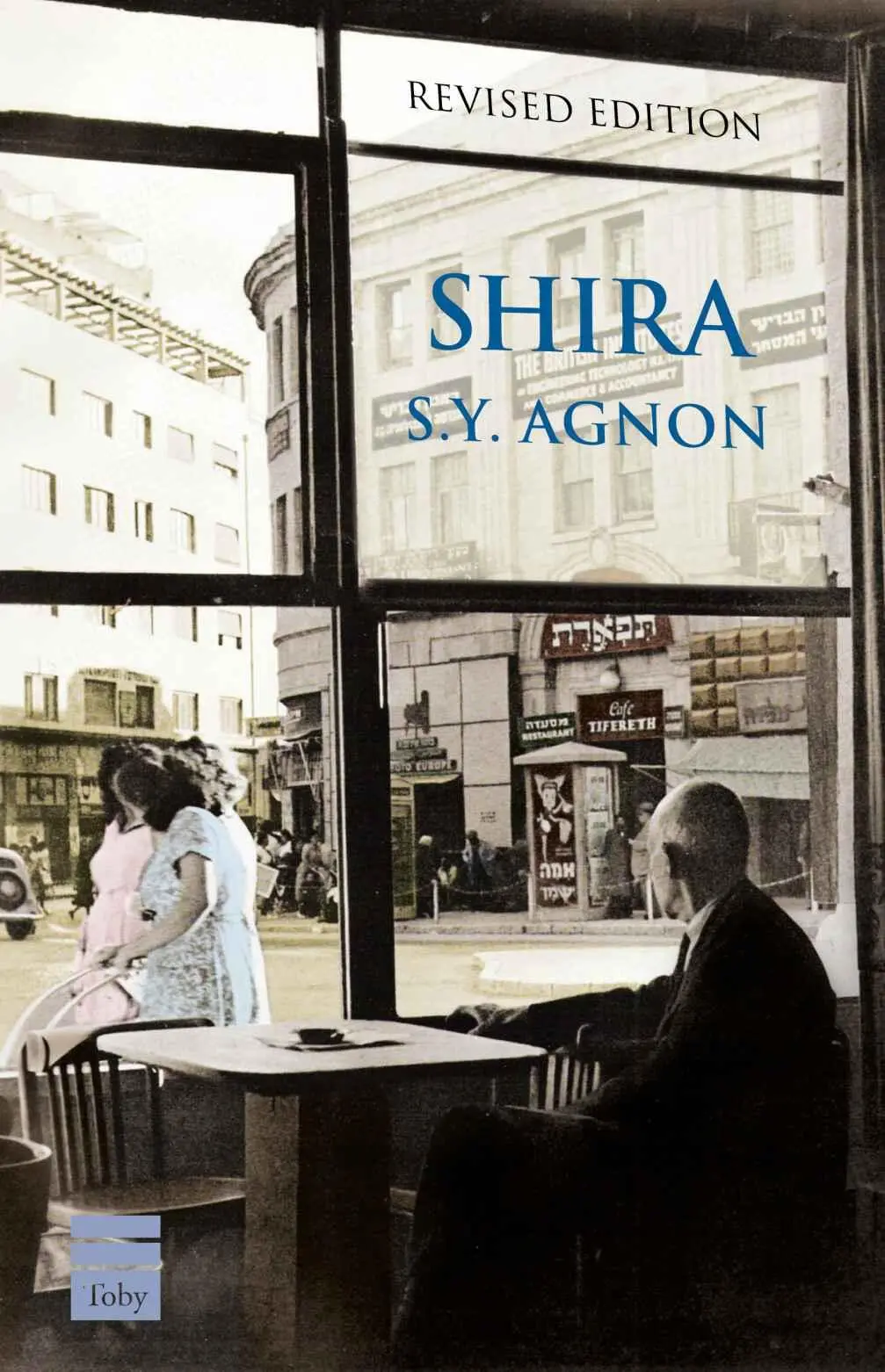
- Название:Shira
- Автор:
- Издательство:Toby Press
- Жанр:
- Год:2014
- ISBN:нет данных
- Рейтинг книги:5 / 5. Голосов: 1
-
Избранное:Добавить в избранное
- Отзывы:
-
Ваша оценка:
Shira: краткое содержание, описание и аннотация
Предлагаем к чтению аннотацию, описание, краткое содержание или предисловие (зависит от того, что написал сам автор книги «Shira»). Если вы не нашли необходимую информацию о книге — напишите в комментариях, мы постараемся отыскать её.
Shira — читать онлайн бесплатно полную книгу (весь текст) целиком
Ниже представлен текст книги, разбитый по страницам. Система сохранения места последней прочитанной страницы, позволяет с удобством читать онлайн бесплатно книгу «Shira», без необходимости каждый раз заново искать на чём Вы остановились. Поставьте закладку, и сможете в любой момент перейти на страницу, на которой закончили чтение.
Интервал:
Закладка:
Herbst took a cigarette, stuck it in his mouth, lit it, stood up, and leaned on the arm of the chair, looking out the window as he blew a wreath of smoke rings. He suddenly heard a bird and became upset, remembering that he had been in the garden with his baby daughter the day before; they had heard a chirping sound, and the little girl had looked up and said, “There’s no bird in the sky.” Too bad; too bad he didn’t tell Henrietta. Henrietta is so pleased when she hears something clever from Sarah, especially when he reports it to her. He put the cigarette in the ashtray and took another. He meant to pick up a pen, but, since the cigarette had found its way into his hand, he stuck it in his mouth, lit it, sat down, and fixed his mind on writing. He produced an article that later became known by its full title: “To What Extent Did the Emperor Justinian Believe in Those Ministers Who Maintained that He Would Rise to Heaven Like Elijah in His Time?”
Herbst found some relevant notes, clipped them together, took one of the thousands of bulletins showered on us by national institutions, and wrote an outline on the blank part of the paper, beginning with quotations from Justinian’s ministers — evidence that often, when they sat together dealing with affairs of state, these ministers were worried that he would suddenly be swept up to heaven in a storm. Since the facts are known, I won’t repeat them, but I should note that Herbst tried to establish whether Justinian actually believed in his own holiness and considered himself in a class with Elijah, or whether he was persuaded to believe in his power by ministers who repeatedly said, “When we were in his presence, we were afraid he would be swept up to heaven in a storm.”
So much for Justinian’s holiness and Herbst’s calculations. It is time to get back to Herbst and to my subject, which is Neu’s book. Herbst’s idea — to explain Neu’s book to those two ladies, Neu’s relatives, contrived to assign him the role of messenger. Since it is my way to relate outcomes at the beginning, let me say that Herbst didn’t get to do it. Why do I tell you this? So no heart will grieve over a good deed that should have been accomplished but never was.
Chapter eleven
After lunch, when Henrietta lay down for a rest, Manfred put on his good clothes, tucked Neu’s little book in his pocket, and went to call on Lisbet Neu. Herbst had never been at Lisbet Neu’s, nor had he ever wished to go there. Now that he had her uncle’s book, his mind was set on going to her.
Like someone who is about to do something he is not in the habit of doing, he pictured some of what he would see at Lisbet’s. Her mother would be sitting in Shabbat clothes, a Shabbat kerchief on her head, her hands on her heart, in the manner of Orthodox women when they are at rest. On the table nearby, he would find a prayerbook, the five books of Moses with Hirsch’s commentary, and her uncle’s book. She has already read the weekly portion, as well as the commentary, and translated its lofty language into simple terms. Some of her interpretations were the ones she learned as a child; others were her own; still others, imparted by teachers, were outdated and had to be revised. Having done what she was trained to do on Shabbat, what more does her heart desire? It is now her desire to know the contents of her uncle’s book. She realizes she won’t ever know its contents, for she wasn’t allowed to study academic subjects, although she did study some difficult material that not everyone would grasp, such as Hirsch’s commentary and ritual law. On many occasions here in Jerusalem, Herbst had spent time with young women — high school students and university students alike — who couldn’t deal with that material, not even with its vocabulary. As she sits there, lost in thought, she hears footsteps, followed by a knock on the door. She says, “Come in.” He comes in and sees Neu’s book on the table. He opens it and begins reading; explicating, interpreting, and analyzing the text; pointing out original insights and discoveries. For Neu has brought many things to light, some of which were totally unknown until he revealed them and others that were illuminated by his insight. The old woman is astonished. She knew her uncle was a great scholar with an international reputation, but this knowledge was not grounded in understanding, and knowledge without understanding is not gratifying. Now that this gentleman, Herbst the teacher, has come and said what he said, her heart expands and her eyes light up, not out of pride and conceit, but in praise and gratitude to the Lord, may He be blessed, for bestowing wisdom on her uncle. Herbst sits with her, reviewing the history of this widow, once rich and aristocratic, which he learned from her daughter Lisbet. Her hand used to be extended to the poor, and countless emissaries from Jerusalem would come to her home and enjoy her hospitality, as well as her gifts and charity. Then, suddenly, the world was shaken by a curse; the entire country and its inhabitants became adversaries, so that she and her daughters, like countless other Jews, had to leave their home, their land, their silver and gold — all the property acquired by her family in the course of four or five generations. She wandered through many lands and finally came up to Jerusalem. Lisbet never mentioned whether the emissaries from Jerusalem — those who used to sit at their table and enjoy their bounty — have chosen not to recognize them, or whether it is they themselves who keep their distance, preferring not to put anyone to the test and risk being humiliated. They struggle to live on the meager resources they managed to take with them, supplemented by Lisbet’s salary. Suddenly, someone comes to her; he comes of his own accord and reads to her from this book, written by her uncle, a Jewish scholar with an international reputation, even now when Israel’s enemies, dominated by this curse, are denouncing Jews everywhere.
These were some of Manfred Herbst’s thoughts, reveries, fantasies when his will contrived to make him the messenger who would explain her uncle’s book to Lisbet Neu’s mother. Herbst had seen Lisbet when he went to congratulate Weltfremdt on his promotion, but since that day he had never thought of her, and it had never occurred to him to visit her. Suddenly, he found that his mind was completely occupied with her. He thought: I’ll go to her, sit awhile, and read a bit. Then I’ll tell Henrietta where I was and what I did, and, even if I say outright that I called on that widow because of Neu, her uncle, Henrietta won’t be surprised. Herbst was not always in the habit of saying “I’ll tell Henrietta”; now he enjoyed saying it: “I’ll tell Henrietta.”
Herbst went out, closed the door behind him, and checked the fence, the bushes, the vegetables, and the flowers, which were drooping because of the heat. He felt sorry for them and resolved to come back and water them before dark. He meant to go back in and tell Henrietta he would water the garden later. Meanwhile, he forgot what was in his mind and didn’t go back. It’s just as well he forgot. Had he gone in, he would have wakened her, and she needed her sleep, because she had been up all night with the baby, who had a stomachache from eating bad grapes and had cried all night. He turned back to the garden and glanced at the flowers, deciding which to take to Lisbet’s mother. He was distracted and didn’t take any. It’s just as well he forgot. Had he brought Lisbet’s mother flowers, she would not have accepted them, because he had picked them on Shabbat. He felt his pocket to be sure he had the book. He opened it and marked the passages he would read to Lisbet Neu and her mother. One could not assume the ladies would understand, but, if he explained, they would surely understand. Again, he pictured Lisbet Neu’s mother, sitting in her chair, hands folded over her heart, gazing at Lisbet, and saying to her, wordlessly: Listen, my child; listen, Lisbet. The scene conveyed a message: all the world’s goodness has not been totally consumed, and even in these troubled times there are ways to help others as well as yourself. Imagine yourself sitting with two respectable ladies, reading to them, and diverting your mind from that woman who was created to torment you.
Читать дальшеИнтервал:
Закладка:
Похожие книги на «Shira»
Представляем Вашему вниманию похожие книги на «Shira» списком для выбора. Мы отобрали схожую по названию и смыслу литературу в надежде предоставить читателям больше вариантов отыскать новые, интересные, ещё непрочитанные произведения.








Обсуждение, отзывы о книге «Shira» и просто собственные мнения читателей. Оставьте ваши комментарии, напишите, что Вы думаете о произведении, его смысле или главных героях. Укажите что конкретно понравилось, а что нет, и почему Вы так считаете.