S. Agnon - Shira
Здесь есть возможность читать онлайн «S. Agnon - Shira» весь текст электронной книги совершенно бесплатно (целиком полную версию без сокращений). В некоторых случаях можно слушать аудио, скачать через торрент в формате fb2 и присутствует краткое содержание. Год выпуска: 2014, Издательство: Toby Press, Жанр: Современная проза, на английском языке. Описание произведения, (предисловие) а так же отзывы посетителей доступны на портале библиотеки ЛибКат.
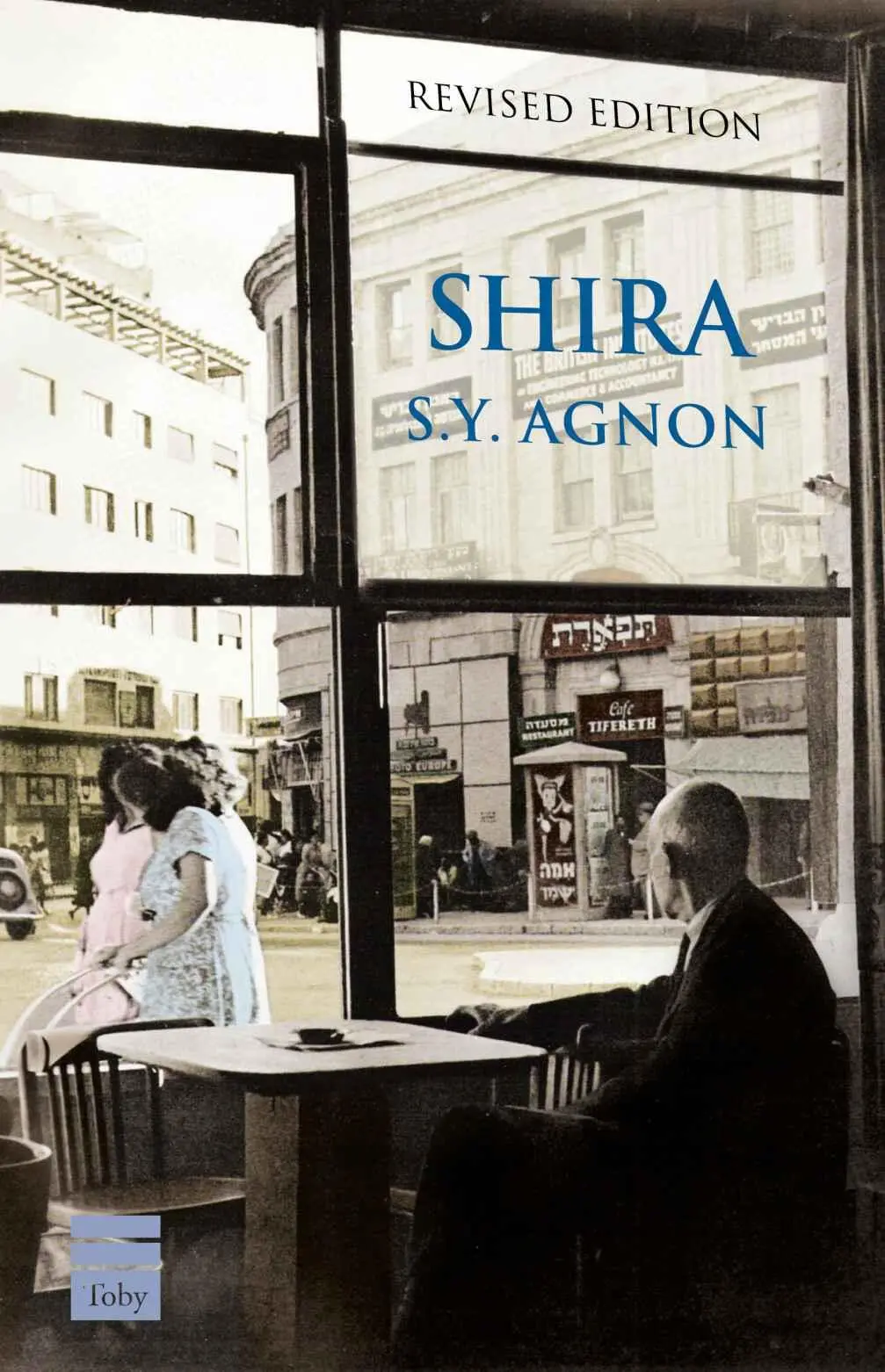
- Название:Shira
- Автор:
- Издательство:Toby Press
- Жанр:
- Год:2014
- ISBN:нет данных
- Рейтинг книги:5 / 5. Голосов: 1
-
Избранное:Добавить в избранное
- Отзывы:
-
Ваша оценка:
Shira: краткое содержание, описание и аннотация
Предлагаем к чтению аннотацию, описание, краткое содержание или предисловие (зависит от того, что написал сам автор книги «Shira»). Если вы не нашли необходимую информацию о книге — напишите в комментариях, мы постараемся отыскать её.
Shira — читать онлайн бесплатно полную книгу (весь текст) целиком
Ниже представлен текст книги, разбитый по страницам. Система сохранения места последней прочитанной страницы, позволяет с удобством читать онлайн бесплатно книгу «Shira», без необходимости каждый раз заново искать на чём Вы остановились. Поставьте закладку, и сможете в любой момент перейти на страницу, на которой закончили чтение.
Интервал:
Закладка:
Herbst was approaching Lisbet Neu’s house. He consulted his watch and saw it wasn’t quite three o’clock. Three in the afternoon was not the time to visit, certainly not for the first time, and certainly not in the case of a well-bred young woman who lives with her mother. So all he could do was wait. He turned toward the valley, sat down in the shade of a rock, and lit a cigarette. Though there were no shade trees, bushes and rocks warded off the sun and sent up a fine, dust-free scent. When he finished the cigarette, he looked at his watch and saw he would have to be patient.
He took out Neu’s book and read snatches of it. He put it back in his pocket, took out a small notebook, and wrote: “Aristotle’s Poetics , Sophocles’ Antigone , Lessing, Herder, Wilhelm Meister , Goethe’s Profiles , Schiller’s Horen , Schlegel’s Descriptions of Character , Jean Paul, Hume.” Herbst meant to help himself remember some of the books he ought to read for the tragedy he was going to write. Actually, he had read all those books and remembered what was in them. He even knew some of them by heart, but, because he was so exacting, he decided to reread them. I will now leap ahead: Herbst followed through on this list, reading all those books, as well as many others, but the drama he intended to write was never written. Still, nothing was wasted. In taking stock of the characters he had invented and ordering their lives, he considered the events of his own life — how they fit together, as well as their implications. After writing what he wrote, he walked among the parched bushes and the sun-struck bramble splitting open with a sound like that of nuts being cracked, reflecting on the characters he had created.
Meanwhile, the sun began to warm him, shrubs and rock giving back to the sun what they took so easily. Herbst closed his eyes, hoping to doze. Mosquitoes came and stung him. He lit another cigarette to keep the mosquitoes away. The cigarette in his mouth dozed off, and so did he. The mosquitoes, however, instead of dozing, came back and stung him again. He got up, yielded his spot to them, began pacing back and forth, and, as he paced, looked around and began to make archeological speculations. Leaping from rock to rock, he was no longer in the valley but had come to a bald spot between the bushes, adorned with thorns and thistles. It glistened in the sun with countless paths and trails nearby that vanished among the bushes and rocks. There were other paths, one of which wound as far as the eye could see, more than likely extending into town, perhaps even all the way to where Shira lived. He felt the point of a scalpel cutting into his heart. It was not a scalpel; it was the anguish of pain. He closed his eyes tight because of the pain and, with closed eyes, followed his feet. He moved on, his legs striking each other. Had he looked at his watch, he would have seen that he could now call on the Neu ladies. But rather than look at his watch, he looked at the path, retreating and bringing him closer to where he was going. When he realized he was close to Shira’s house, he indulged in the prayer we are familiar with: Let me find a locked door, let me find that Shira’s out. The gods, who mock each other and don’t give human beings a chance to mock them, did what they did. While he was praying that Shira would be out, the gods took charge, brought Shira home, and brought Herbst to Shira’s door.
Chapter twelve
Herbst was at Shira’s house again. He had been at Shira’s many times in the evening, but never by day. Now he was there in the daytime. On which day? On Shabbat, a day when neighbors are free to note nonessentials and their curious eyes scrutinize the very air. Herbst stood at the door, wondering how many times to ring. When their love was new, they had agreed on two long rings and one short one to announce his arrival. Now he hesitated; if she knew who it was, she might pretend not to be in. He decided to be devious and gave an ordinary ring. She didn’t answer. He waited and rang again. She didn’t answer. He left, came back, and gave two long rings and a short one. He soon heard her footsteps and could tell she was coming. After a while she opened the door. Before he had a chance to look at her, she was gone.
He went inside and found her in bed, wrapped and swaddled to her neck in a blanket that rose and fell over her stomach, which pushed the blanket aside and reared out from under it. A gurgling sound bubbled forth from underneath the blanket, the sound of an inverted water bottle. There was, in fact, a hot-water bottle resting on her stomach and bubbling loudly. He took a chair and sat beside her bed, as if he had come to see how she was, as if his only interest were in knowing what she was doing. She welcomed him as she hadn’t done in a long while. Her face was flushed, her cheekbones ashen, and her nose partly red, partly white. The hot-water bottle on her belly continued to rumble. The light was dim, because the curtains were drawn over the window. The entire room had become more like a dingy hallway in which a stranger wouldn’t be able to find the door. When he had collected himself, Herbst asked Shira, “Are you sick?” Rather than sympathy, there was a note of irritation in his voice, because she had chosen to be sick at the very time he had taken the trouble to visit. Shira answered, “I was on the night shift at the hospital, and I put myself to bed to make up the sleep I missed.” Herbst said, “I’m sorry I woke you.” Shira said, “You didn’t wake me. Someone rang earlier and woke me, but I couldn’t open the door because I was sleeping naked, without a nightgown.” Herbst said, “When you came to open the door for me, you put on your nightgown.” Shira said, “How do you know that?” Herbst said, “From what you said, I know you were wearing a nightgown. Also, I can see you are wearing it now.” Shira laughed and said, “You see everything, my dear Sherlock. Close the window, please, and lower the blinds. The sunlight is in my eyes. Many thanks, darling. Just that blind, the one across from the bed. Thanks, darling. You’re not smoking? Would you hand me my bag; it’s on the table. Thanks, darling. Now, darling, the little mirror, please. Thanks, darling. Now sit down, darling. You can sit down. I won’t bother you anymore. You’re probably tired. I assume you had to walk here, since it’s Shabbat. Shabbat…the God of the Jews knows how to torture His followers even more than the Gentiles torture them. No, that’s not the bag I meant. I meant the blue one. Would you please look and see if it fell on the floor. No? Then I left it somewhere, and I don’t know where. I’ll look for it later. Don’t bother. See, when you’re used to doing everything yourself and you ask someone else to do something for you, it’s useless. No, no. Actually, that is the bag I wanted. My mistake. That’s it. I’m surprised at myself. I should have recognized it immediately. I probably didn’t recognize it because of the light.”
Shira opened the bag, took out a small puff, dipped it in powder, and smoothed it over her nose. She sprinkled some powder on her forehead and said, “So you finished your article and even got it published.” Herbst asked in alarm, “Who told you about my article?” Shira said, “I have no contact with angels, and I don’t believe in devils, so you can assume it was a person that told me. Not just any person, but someone from Mount Scopus.” Herbst stared at her fiercely and said, “I demand that you tell me who.” Shira laughed and said, “You certainly are curious, sir. Very curious. If I’m not mistaken, two days after we met I told you I don’t like curious people, and you, sir, are not being considerate of me with this display of curiosity. But I will make an exception and tell you.” “Who was it?” Herbst needed to repeat the question, though he was afraid he might hear a name that would mean his downfall. Though Herbst knew of no such person, his terror was undiminished. Something akin to laughter leaped out of Shira’s eyes, glided over her face, and was intercepted by her ashen freckles before returning to its point of origin. She looked at him out of the corners of her eyes, in which two swirls of laughter shimmered, one filled with malice, the other with affection. She looked at him, laughing, and said, “You want to know who told me?” Herbst wanted to say, “Yes, I demand that you tell me,” but he didn’t say anything. Shira said, “Who was it? It was the very person who is here with me now, in this house, at this moment.” Even though he grasped that she was referring to him, his fear didn’t relent. It took him a minute to recover, feign laughter, move his chair, and say, “Yes, it’s true, I told you myself, and I forgot. Now let’s put the article behind us and talk about something else.” Shira said, “You think I’m too stupid for scholarly chitchat.” Herbst got up, took her hand, and held it, stroking it fondly with his other hand, as if to placate her. Shira made no move to withdraw her hand, but she said, “Dr. Herbst is a very learned man; still, there is no reason to stroke my hand.” Herbst let go and put his hands in his pockets. Shira said, “I didn’t mean to offend you.” Herbst said, “I don’t consider myself offended.” Shira said, “That’s good.” Herbst said, “Good, good.” He leaned to his left and looked at his watch. Shira said, “Sit down and have a cigarette. I’ll get dressed, and we can go for a walk.”
Читать дальшеИнтервал:
Закладка:
Похожие книги на «Shira»
Представляем Вашему вниманию похожие книги на «Shira» списком для выбора. Мы отобрали схожую по названию и смыслу литературу в надежде предоставить читателям больше вариантов отыскать новые, интересные, ещё непрочитанные произведения.









Обсуждение, отзывы о книге «Shira» и просто собственные мнения читателей. Оставьте ваши комментарии, напишите, что Вы думаете о произведении, его смысле или главных героях. Укажите что конкретно понравилось, а что нет, и почему Вы так считаете.