S. Agnon - Shira
Здесь есть возможность читать онлайн «S. Agnon - Shira» весь текст электронной книги совершенно бесплатно (целиком полную версию без сокращений). В некоторых случаях можно слушать аудио, скачать через торрент в формате fb2 и присутствует краткое содержание. Год выпуска: 2014, Издательство: Toby Press, Жанр: Современная проза, на английском языке. Описание произведения, (предисловие) а так же отзывы посетителей доступны на портале библиотеки ЛибКат.
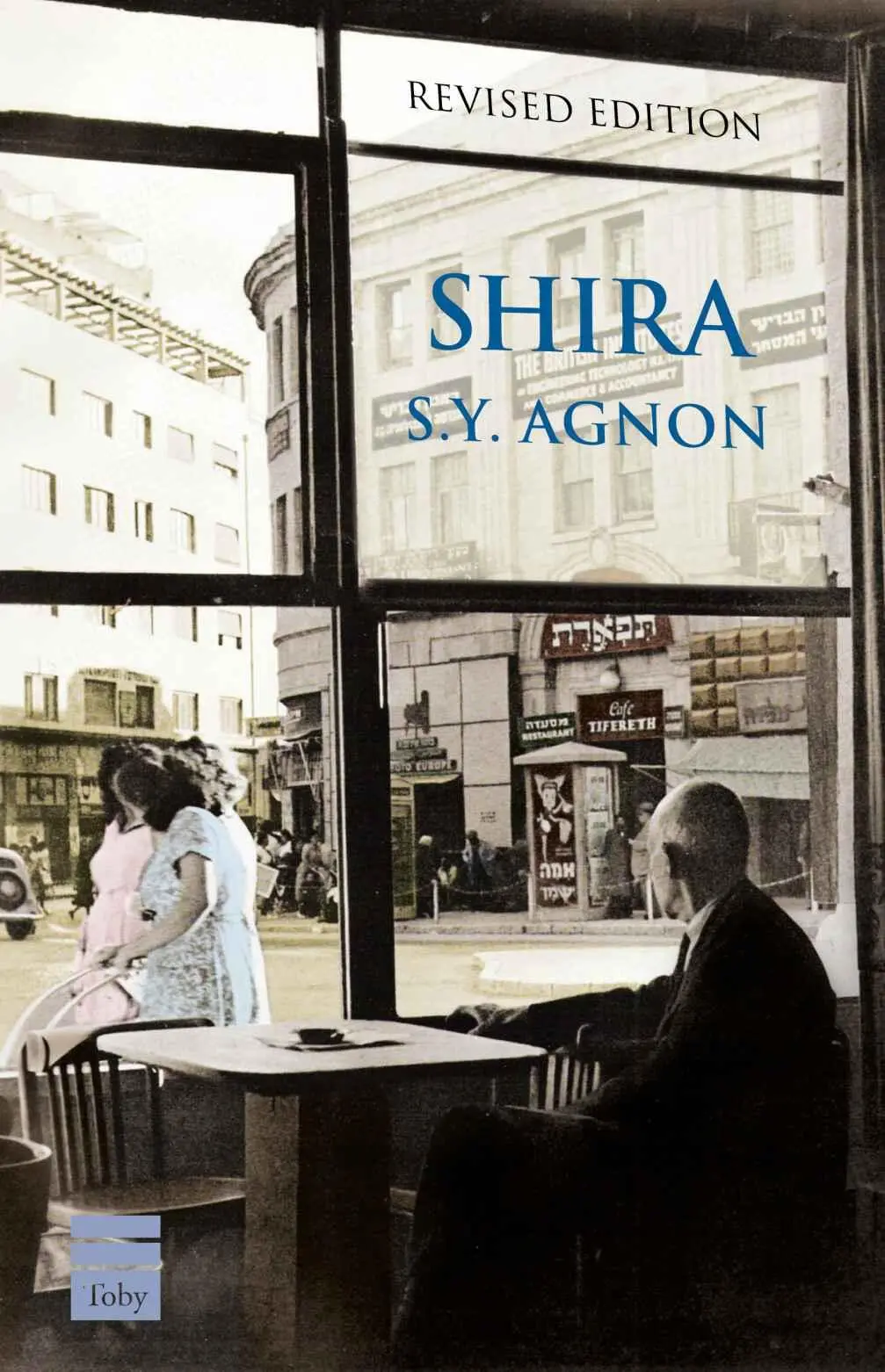
- Название:Shira
- Автор:
- Издательство:Toby Press
- Жанр:
- Год:2014
- ISBN:нет данных
- Рейтинг книги:5 / 5. Голосов: 1
-
Избранное:Добавить в избранное
- Отзывы:
-
Ваша оценка:
Shira: краткое содержание, описание и аннотация
Предлагаем к чтению аннотацию, описание, краткое содержание или предисловие (зависит от того, что написал сам автор книги «Shira»). Если вы не нашли необходимую информацию о книге — напишите в комментариях, мы постараемся отыскать её.
Shira — читать онлайн бесплатно полную книгу (весь текст) целиком
Ниже представлен текст книги, разбитый по страницам. Система сохранения места последней прочитанной страницы, позволяет с удобством читать онлайн бесплатно книгу «Shira», без необходимости каждый раз заново искать на чём Вы остановились. Поставьте закладку, и сможете в любой момент перейти на страницу, на которой закончили чтение.
Интервал:
Закладка:
Chapter twenty-five
The village was asleep; well-earned rest and tranquility enveloped its houses, huts, and tents. An occasional sound was heard — a cow mooing in the barn, chickens clucking in their coop. This was followed by a second sound, sometimes repeating the original one, sometimes sounding surprised at itself. Then the village was silent again, pervaded with quiet peace. The silence was once again broken by the gurgle of irrigation pipes and noises from the water tower, the smell of fading embers emanating from the campfire.
A gust of wind passed through. Tent flaps swelled, and the lights inside quivered. Those who live in the tents are young and hungry for knowledge. On a night such as this, if they are not working, they are sprawled on their beds, reading by candlelight. There are many problems and many hidden secrets; a few of these secrets have been revealed to wise men and are disclosed in their books. There are those who read about cosmic affairs; others read about human affairs. Some read what was written by historians; others read what the poets wrote — the story of Amnon and Tamar, for example. Amnon and Tamar are names picked at random; if you prefer another set of names, they will do as well. Some are reading about soil mechanics; others, about raising livestock and poultry. There is even someone writing, not reading at all. Perhaps future generations will read his words. It is the way of the wind to shift and be everywhere.
I will get back to those people who receive light from others. Right now, let me mention something that is useful to farmers and fruit growers. Both are at war with birds, for they fly in and consume hard-won crops. Those who tend cows and chickens share their grief, for the birds come and eat the animal feed. For this reason, war is declared, even on songbirds. The assault involves not only noisemakers and scarecrows but rifles and other deadly implements. In some poet’s story, we find the tale of a man who had gardens and orchards. He invited birds from near and far to his gardens and orchards, made birdhouses for them, and provided them with food. They grew fond of these gardens and orchards, and became permanent guests. His neighbors said, “Don’t you realize they’re destroying your crops? You give all that up merely for their songs and their beauty.” He said, “Not only do their songs fill my heart with joy. My eyes feast on their feathers. Also, they are useful to me, because they peck at the trees and ferret out insects no human hand can reach.”
The village is deep in well-deserved sleep. Many perils menace these sleepers, for all around them are armed bands with designs on their lives. Yet most of the villagers are immersed in sweet sleep that attached itself to them as soon as they lay down, before they had a chance to think about it. In fact, the watchmen who guard the village function in a remarkable way. They appear to be idle, to be doing nothing, but their roving eyes are a warning to thieves, bandits, and murderers that they had better not approach the village. Occasionally, they approach and even enter, but only after killing the watchman. This is what happened to one of the watchmen in Ahinoam itself, the one whose picture is in the dining hall along with other heroes, whose only daughter is being raised with the rest of the children. The watchmen patrol the four corners of the village, each one heading in a different direction. Those with families think of wives and children, whose sleep they safeguard. Those who are single think of someone special asleep in her tent. Since sleep puts everything out of mind, has she, perhaps, forgotten him? Just then, a tent flap is lifted, and she emerges, the young woman he feared had forgotten him. They run toward each other and walk on together, talking — not in a whisper, which would be frightening; not in a loud voice, for that would disturb those who are asleep — but singing as they go, without raising their voices. They choose, not nostalgic songs, but some of the lighter trifles, such as “Sing a song, song, song, / Sound a cheer, cheer, cheer.”
Herbst lay listening. It seemed to him that what he heard was a German song that sounded like a Russian song but was actually a Hebrew song. His mind shifted to the question of accents, and from there to the character types he had observed in the kvutza and to young women who take on men’s work. From there, his thoughts turned to the war, when most men went to the front and it seemed possible that the world would be destroyed. What with war casualties, the casualties of time, and work left undone, how was the world to survive? So women were expected to do men’s work. Since they were doing men’s work, they wore men’s clothing. Some of them were grotesque, some attractive. But he didn’t dwell on this and began thinking about his book again. He pondered the books of other faculty members, trying to recall whether anyone had written in Hebrew on a general subject or whether all the Hebrew books were about Judaism or the Land of Israel. His mind drifted here and there, from subject to subject, back to the war, to the agents of war, the victims of war, the events of the war. He thought about some of it a great deal; some, he preferred to avoid.
Now, in connection with what happened later that night, I bring up one of the things he dismissed from his mind. During the war, shortly after his marriage, his aunt in Leipzig asked to meet Henrietta. His aunt was too old to travel to Berlin. They agreed by letter that he and Henrietta would come to Leipzig on one of his leaves. One day, Manfred was granted leave. He went to his aunt’s house in Leipzig. He washed up, shaved off his beard, changed his clothes, and went to the train station to meet Henrietta, who was expected on the night train. This plan had been devised in an exchange of telegrams. When he got to the train station, he discovered that he had made a mistake and come a day early. He stood there dejected, watching the Berlin train, which had arrived without Henrietta. As he watched the train, he noticed a girl, dressed in trousers, cleaning one of the cars. His heart began to pound, and he left. Walking back to his aunt’s house, he saw her again. She was coming from work, dressed in a winter coat of the sort train conductors wear. It hung on her shoulders in a mannish way, and her coarse boots squeaked noisily. He stood watching her. She became aware of him and slowed down, to be more available should he choose to talk to her. He was taken aback and walked on, his heart pounding rapidly and ablaze with excitement. The next night, he went to the train station an hour early. While waiting for Henrietta to arrive, he went to the newsstand and saw a photograph of two severed legs, accompanied by a caption about a boy of fifteen or sixteen whose severed limbs were found on a bench in the Rose Valley. Near this item was a second item with the same picture but another caption, explaining that doctors consulted by the police believed the legs were those of a woman of about twenty, who was murdered, probably by a rapist, and that, since a young woman who cleaned cars in the central station in Leipzig had disappeared, it was assumed that the severed legs were hers. I am omitting Henrietta’s reception that night, but I will add that Herbst reproached himself with the thought that, had he talked to the girl, she wouldn’t have fallen prey to the rapist who killed her. Now, back to Ahinoam.
The singing voices were no longer heard. They were replaced by the wail of jackals. This sound didn’t usually frighten Herbst. He had lived in Jerusalem for so many years that it was familiar to him; it had been common in the beginning, when Baka was sparsely settled. Now he was alarmed and shaken, but he didn’t realize the alarm had been stored in him since the night Shira told him about a jackal that devoured a baby. All the things alluded to here are recounted, described, and elucidated in preceding chapters. When Shira told him about the jackal and the baby, he paid no attention, because he was preoccupied with the tale of the engineer and the whip. Now that he heard the jackal, having already dismissed the tale of the whip, the entire story came back to him. When he dismissed the tale of the baby and the jackal, the tale of the severed legs recurred. When he dismissed the tale of the severed legs, the tale of the baby and the jackal recurred. Finally, between the tale of the baby and the jackal and the tale of the severed legs, he was overcome by sleep.
Читать дальшеИнтервал:
Закладка:
Похожие книги на «Shira»
Представляем Вашему вниманию похожие книги на «Shira» списком для выбора. Мы отобрали схожую по названию и смыслу литературу в надежде предоставить читателям больше вариантов отыскать новые, интересные, ещё непрочитанные произведения.










Обсуждение, отзывы о книге «Shira» и просто собственные мнения читателей. Оставьте ваши комментарии, напишите, что Вы думаете о произведении, его смысле или главных героях. Укажите что конкретно понравилось, а что нет, и почему Вы так считаете.