S. Agnon - Shira
Здесь есть возможность читать онлайн «S. Agnon - Shira» весь текст электронной книги совершенно бесплатно (целиком полную версию без сокращений). В некоторых случаях можно слушать аудио, скачать через торрент в формате fb2 и присутствует краткое содержание. Год выпуска: 2014, Издательство: Toby Press, Жанр: Современная проза, на английском языке. Описание произведения, (предисловие) а так же отзывы посетителей доступны на портале библиотеки ЛибКат.
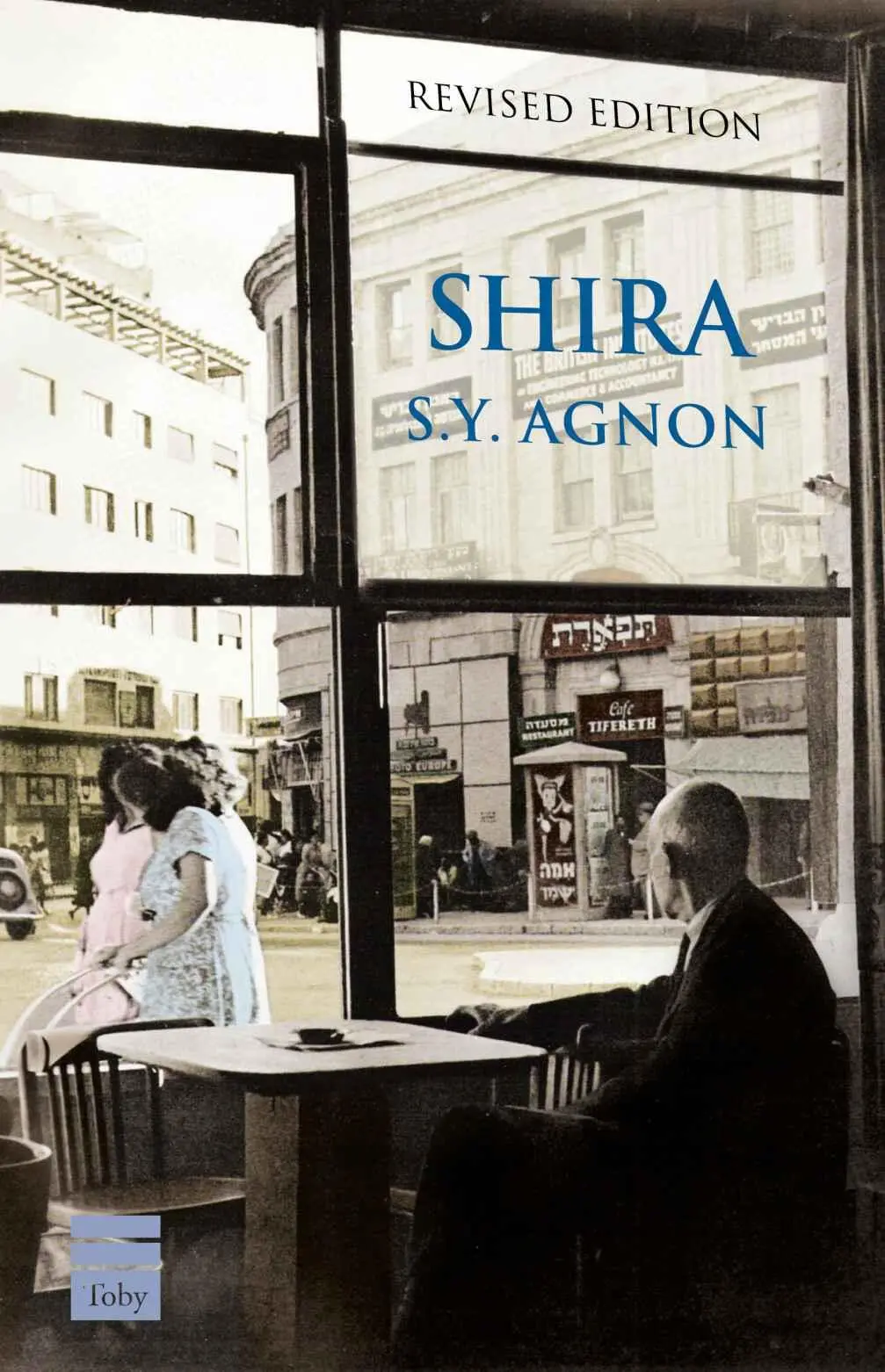
- Название:Shira
- Автор:
- Издательство:Toby Press
- Жанр:
- Год:2014
- ISBN:нет данных
- Рейтинг книги:5 / 5. Голосов: 1
-
Избранное:Добавить в избранное
- Отзывы:
-
Ваша оценка:
Shira: краткое содержание, описание и аннотация
Предлагаем к чтению аннотацию, описание, краткое содержание или предисловие (зависит от того, что написал сам автор книги «Shira»). Если вы не нашли необходимую информацию о книге — напишите в комментариях, мы постараемся отыскать её.
Shira — читать онлайн бесплатно полную книгу (весь текст) целиком
Ниже представлен текст книги, разбитый по страницам. Система сохранения места последней прочитанной страницы, позволяет с удобством читать онлайн бесплатно книгу «Shira», без необходимости каждый раз заново искать на чём Вы остановились. Поставьте закладку, и сможете в любой момент перейти на страницу, на которой закончили чтение.
Интервал:
Закладка:
But it was not good sleep, because in his sleep he discovered whose legs they were and who had severed them. Some brute, returning from war, had found her in the field behind her house and murdered her. Herbst ran to the police station to tell them who the murderer was. Before he even reached the station, he was intercepted by policemen, who arrested him as a suspect. He went with them, saying not a word, for they would soon see he was entirely innocent and release him. But he was upset that, in the meantime, there would be an item about him in the newspaper, and his wife and daughters would be mortified. He was not released; he was led to the death cell. He went to the death cell, saying not a word. He was confident they would soon realize he was innocent and send him home. But he was upset that, in the meantime, his wife and daughters would find out and be mortified. He began to worry that his wife and daughters might suspect him of the murder. He wanted to shout, “I’m innocent of that murder and of any other murder!” His voice was locked in his throat, because Shira was coming and he knew that it was she who was the murderer and it was she who was the rapist. He lifted his eyes and turned toward her imploringly, to arouse her sympathy, so she would attest that he wasn’t guilty. But Shira gave no sign that she intended to make a move on his behalf. He raised his voice and shouted, “Shira, Shira!”
He woke up screaming and saw his wife standing over him, comforting him, trying to soothe his distraught soul. What he had seen in his dream was forgotten. He remembered nothing. Then he remembered being led to the death cell, with women dancing before him and singing, “Sound a cheer, cheer, cheer.” He was startled and wanted to scream. Henrietta stroked his cheek and tried to calm him. Manfred stared at her and cried, “Mother, are you here? Oh, Henriett, I had a terrible dream. Such an awful dream. The sort of dream that can lead to madness.” Henrietta smoothed his brow and said, “Calm down, my love. Calm down, Fred.” Manfred said, “I can’t calm down. I can’t! What a dream, what a dream. Tell me, did you happen to hear what I was shouting in the dream?” Henrietta said, “I heard.” Manfred shrieked in alarm, “Tell me what I shouted!” Henrietta said, “Calm down, Fred.” Manfred said, “I won’t calm down! Tell me what I shouted.” Henrietta said, “You didn’t shout. You were singing.” “Singing? What was I singing?” Henrietta said, “That silly song that Tamara always used to sing.” “Which one?” “‘Sound a cheer, cheer, cheer.’“ Manfred reached for Henrietta and said, “Come and lie down next to me.” Henrietta lay down next to him. He embraced her with all his might and cried out, “It was awful! Mother, a dream like the one I dreamed could drive a sane man to madness.” Henrietta said, “Tell me the dream.” Manfred said, “I can’t, I can’t. Don’t ask me to tell it to you, and don’t mention it. Maybe I’ll forget it too. Mother, it was a dreadful dream, an awful dream, and you say I was singing in my sleep. What was I singing, Mother?” Henrietta said, “But I just told you, Fred.” “Tell me again what I was singing.” Henrietta said, “‘Sound a cheer, cheer, cheer.’“ “Is that all?” “That’s all.” “Mother, you are so good. If not for you, I would have been hanged.” Henrietta said, “Hush, Fred. Hush.” She kissed him on the mouth, and he kissed her, a protracted kiss. Henrietta said, “Wait. I’ll go and cover the window. The moon is shining on my face.” Manfred said, “Mother, don’t move. You are such a delight, Mother. It’s good to have you close.” Henrietta peered at him and asked, “Is that so?” Manfred said, “Yes, Mother. Believe me. You please me more than any woman in the world.” Henrietta said, “To hear you talk, one would think there were others.” She kissed him again and said, “My love, lie quietly. Maybe you’ll fall asleep.” Manfred said, “I don’t want to sleep when you’re with me.” He embraced her with all his might. She embraced him so that they clung to one another and became one flesh.
With this, I have concluded Book Two of the book of Manfred Herbst and the nurse Shira. I will now begin Book Three, starting not with Herbst or Shira, but with Henrietta. After telling about Henrietta, I will come back to Herbst and Shira — to Herbst first, then to Shira, then to the two of them together.
Book Three
Chapter one
Henrietta kept her secret to herself and did not reveal what was in her heart. In delighted surprise and surprised delight, she mused: The baby I’m going to bring forth is younger than my daughter’s child; her own child is older than her mother’s child. She was embarrassed before her daughters, yet pleased for herself, for her youth had been restored and she was as she had been in the early days, right after her marriage.
How did she arrive at such a pass? After receiving the news that Zahara had given birth to a son, she decided to go to her in Kfar Ahinoam, and Manfred agreed to come along. They locked their house and went off, spending three days and three nights with Zahara’s firstborn, with Zahara, with Avraham-and-a-half, and with all their friends and well-wishers in the village. In all their years in Jerusalem, the Herbsts had never had three consecutive days of rest like these. I am speaking, of course, of Henrietta, whose days, except when Tamara and Sarah were born, were filled with work; but Manfred, too, enjoyed the rest. He wasn’t trapped by piles of books, pamphlets, transcripts, notebooks, and cards, nor was he occupied with endless papers that seemed to generate spontaneously, producing more and more of their kind, which he would move from here to there although they belonged nowhere.
He did lecture in Kfar Ahinoam, more than once, in fact. Nevertheless, I maintain that he had never enjoyed such restful days as those in Kfar Ahinoam, for there is a big difference between lectures in Kfar Ahinoam and those at the university. His lectures at the university were required. The lecturer was required to lecture, and the listeners were required to listen, whereas in Kfar Ahinoam it was his wish and desire to lecture, and it was because of their own wish and desire that the listeners listened, most of them being tired of the speeches of political hacks and eager for intellectual discourse. Furthermore, from his lectures in Ahinoam he learned that he could recover what had been taken from him.
I’ll explain what I mean. Dr. Herbst was not one of those who are willing to pay any price for a drop of so-called honor. He already understood in his youth that one benefits only from what is won through integrity. But when our comrade Berl Katznelson organized a three-day workshop, inviting various lecturers but excluding him, he was dejected, for he had always been in demand. The lectures he presented in Kfar Ahinoam were well attended, not merely by members of the settlement, but by many people from neighboring communities, proving that he could attract a larger crowd than all the lecturers on all three workshop days combined.
Back to Henrietta Herbst. Since the day she arrived in the Land of Israel, she had not had three consecutive days of rest, other than when Tamara and Sarah were born. Her days were spent working hard in the house, gardening, and dealing with guests. Most difficult of all was the pursuit of certificates.
Many of the Herbsts’ relatives were left behind in Germany. Upon hearing that Henrietta and Manfred were going to the Land of Israel, they sneered at them for leaving a highly cultured country for an arid wilderness. When they heard Manfred was appointed lecturer at the Hebrew University in Jerusalem, they were astonished to learn that Jerusalem had a university. When they heard lectures were held in Hebrew there, they were astonished that the language still existed. Between yesterday and tomorrow, events occurred in Germany that transformed it into an inferno — the very country about which it was said: Every Jew should bless God daily for the privilege of living there. Now they wandered from land to land. The nations were grudging, and those who escaped the sword were not allowed to earn a living. At great risk, they returned to Germany, and from there they asked friends and acquaintances in America to send them entry permits. Our brethren in America did everything they could, neither resting nor desisting until they brought them to America. But, in the end, they were helpless before the mass of supplicants, among them the Herbsts’ relatives, who were left with no options other than Palestine. They wrote to the Herbsts, “Send us certificates.” Henrietta raced around to obtain certificates, making no distinction between her own relatives and Manfred’s. The same catastrophe engulfed them all, making them equal before it. Nor did she mention that her relatives had all laughed when they heard she was going to Palestine, and, now that they were in trouble, they were asking her to bring them to Palestine.
Читать дальшеИнтервал:
Закладка:
Похожие книги на «Shira»
Представляем Вашему вниманию похожие книги на «Shira» списком для выбора. Мы отобрали схожую по названию и смыслу литературу в надежде предоставить читателям больше вариантов отыскать новые, интересные, ещё непрочитанные произведения.










Обсуждение, отзывы о книге «Shira» и просто собственные мнения читателей. Оставьте ваши комментарии, напишите, что Вы думаете о произведении, его смысле или главных героях. Укажите что конкретно понравилось, а что нет, и почему Вы так считаете.