Gail Hareven - Lies, First Person
Здесь есть возможность читать онлайн «Gail Hareven - Lies, First Person» весь текст электронной книги совершенно бесплатно (целиком полную версию без сокращений). В некоторых случаях можно слушать аудио, скачать через торрент в формате fb2 и присутствует краткое содержание. Год выпуска: 2015, Издательство: Open Letter, Жанр: Современная проза, на английском языке. Описание произведения, (предисловие) а так же отзывы посетителей доступны на портале библиотеки ЛибКат.
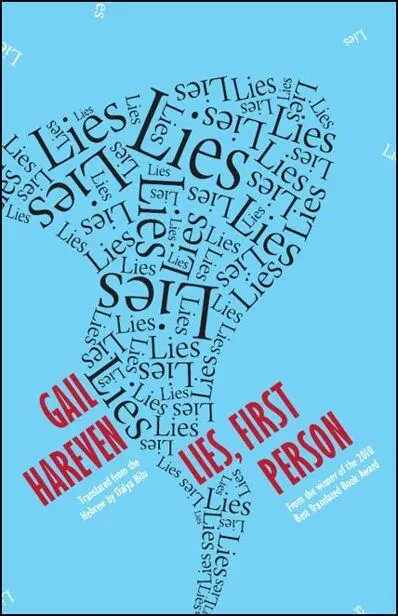
- Название:Lies, First Person
- Автор:
- Издательство:Open Letter
- Жанр:
- Год:2015
- ISBN:нет данных
- Рейтинг книги:3 / 5. Голосов: 1
-
Избранное:Добавить в избранное
- Отзывы:
-
Ваша оценка:
Lies, First Person: краткое содержание, описание и аннотация
Предлагаем к чтению аннотацию, описание, краткое содержание или предисловие (зависит от того, что написал сам автор книги «Lies, First Person»). Если вы не нашли необходимую информацию о книге — напишите в комментариях, мы постараемся отыскать её.
Elinor's comfortable life — popular newspaper column, stable marriage, well-adjusted kids — is totally upended when she finds out that her estranged uncle is coming to Jerusalem to give a speech asking forgiveness for his decades-old book,
.
A shocking novel that galvanized the Jewish diaspora,
was Aaron Gotthilf's attempt to understand — and explain — what it would have been like to be Hitler. As if that wasn't disturbing enough, while writing this controversial novel, Gotthilf stayed in Elinor's parent's house and sexually assaulted her "slow" sister.
In the time leading up to Gotthilf's visit, Elinor will relive the reprehensible events of that time so long ago, over and over, compulsively, while building up the courage — and plan — to avenge her sister in the most conclusive way possible: by murdering Gotthilf, her own personal Hilter.
Along the way to the inevitable confrontation, Gail Hareven uses an obsessive, circular writing style to raise questions about Elinor's mental state, which in turn makes the reader question the veracity of the supposed memoir that they're reading. Is it possible that Elinor is following in her uncle's writerly footpaths, using a first-person narrative to manipulate the reader into forgiving a horrific crime?
Lies, First Person — читать онлайн бесплатно полную книгу (весь текст) целиком
Ниже представлен текст книги, разбитый по страницам. Система сохранения места последней прочитанной страницы, позволяет с удобством читать онлайн бесплатно книгу «Lies, First Person», без необходимости каждый раз заново искать на чём Вы остановились. Поставьте закладку, и сможете в любой момент перейти на страницу, на которой закончили чтение.
Интервал:
Закладка:
•
“Of course you can take the car. You can take whatever you like, no problem, just don’t try to pretend that you’re not all there, because it won’t work. And now please tell me why you need my car.”
What had gotten into him? He was quicker than me. I had always been the quick-witted one, and he the thorough one.
This was the spirit, if not the exact letter, of the exchange between us: I was blindsided, and my husband, who had just woken up, was quick and focused.
What did I need the car for? To run him over and end it? In any case, I didn’t think that I would have an opportunity to do it this evening. But nevertheless, the Defender was very important to me.
“There’s a lecture this evening,” I said.
“And to listen to a lecture you need my car.”
“Yes.”
“Good. That makes a lot of sense. I told you, Elinor, you can get away with pretending to be crazy with other people, but not with me.”
“I’m not crazy.”
“No, you’re not, and you don’t need the Defender tonight either.” Oded got out of bed and turned off the alarm clock. “We won’t need the alarm this morning. In any case I was going to go for a run before it gets too hot. Where are you going?”
“Nowhere.”
“Right. You’re not going anywhere. And you know why you don’t need the car? You won’t need it because you’ve got a driver. I happen to be going to the Cinematheque this evening too.”
Going to the Cinematheque. He knew.
“So listen up, my dear,” he leaned with demonstrative ease on the iron headrest of the bed. He had never, ever, called me “my dear” before. “So listen: my first thought was that if I went to hear him talk, perhaps it would give me an idea of how to stop my parents from going to that dinner. Now I realize that that was only an excuse.”
He fell silent, obliging me to ask him “What do you mean?” and then he outflanked me again, forcing me to speak: “An excuse. You know, an excuse.”
“An excuse for what?”
“My curiosity, let’s say. The guy’s going to talk about ‘Questions and errors in pursuit of the roots of evil.’ It appears that I too am interested in the roots of evil.”
I hugged my knees, and the bed floated and swayed on the sea. I felt as if I had spent hours under a blazing sun: the liquid in my brain was shifting from side to side, my eyes were deluded into seeing land in shadows on the water.
“Only you won’t understand,” I blurted out, without knowing exactly what, out of everything, I was referring to.
“And why won’t I understand? Because I’m not clever enough? Because he’s too intellectual for me? You think I might be confused by some child rapist? Do me a favor. . I can see what that swine is doing to you, and I think it’s about time I know what he looks like. I have to know.”
The raft went on swaying, and words rolled about and escaped me.
During the deliberate silence in which I had immersed myself I had lost the old confidence in my ability to make myself clear to my audience.
“What did you think? That I wasn’t aware of the date of his lecture? That I wouldn’t find out when it was?”
“There’s a problem with facts,” I said weakly.
“Yes, and what exactly is the problem? It’s clear to me that what I know, what you’ve told me, is only the tip of the iceberg, we’ve talked about it more than once, but even so I think I understand quite well. You know what? Why don’t you tell me something you think I’m not capable of understanding? Go on, tell me, try me, at least. I think I deserve that at least — for you to try me. So here I am, and I’m listening.”
His wish to know was loving and pure, untainted by any appetite for sensational thrills. He was not a glutton for suffering. But being who he was, he could not but believe that understanding is acquired by a comprehensive knowledge of all the facts. He sincerely wanted to understand, but what could I tell him? All the facts seemed as hollow as headlines in a newspaper. Talking wasn’t the thing itself. In order to understand something you need to be immersed in it, you need the folie à deux in a three-and-a-half room basement apartment, you need images that seep through your skin until they change the composition of your blood. And as for the jangling facts — I myself didn’t know them all: he did, she cried, what exactly did he do? When did she cry? Perhaps she never cried at all.
“Elinor? Talk to me.”
Oded was coming to the lecture. He was going to prevent me from laying my trap and maneuvering the First Person to stand in front of the Defender. I knew that talking to him would only tie me tighter to the bed. But he looked at me as if he was pinning all his hope on me, and if only because of the hope, if only for the sake of the memory of this night, I could not keep silent or leave.
“Okay, here’s something,” I opened slowly and paused a moment. “Okay. You remember how my parents didn’t really believe it, and how I tracked down the gynecologist he took her to, and confirmed it all over the phone, so they didn’t have any option but to believe it.”
Carefully my husband stroked my tattooed tiger face, a gesture of encouragement to the woman telling the story and an expression of appreciation for the resourceful young girl she had once been.
“Okay,” I said for the third time and switched off the reading lamp. “So that story with the gynecologist — it happened, but not exactly the way you know. .”
Writers fantasize and round corners, and the first time I told my husband this chapter I didn’t exactly lie, but I shortened and skipped, let’s say for beauty’s sake.
It’s true that Elisheva remembered more or less where the clinic was, and it’s true that I searched the Yellow Pages and found a gynecological clinic in Hahovshim Street in the vicinity she remembered. It’s also correct that I phoned the gynecologist’s secretary and pretended to be Elisheva, but nothing was verified in that conversation. The idea of getting confirmation over the phone simply never occurred to me, and all I did was to make an appointment for the person pretending to be Elisheva Gotthilf.
I went to the clinic. It was early evening. There were about ten women in the waiting room, some of them pregnant. More women arrived and we all waited for a long time. That doctor let women wait. About two hours after the hour of my appointment, I was told to go in. On the desk was a gray cardboard file with the name Gotthilf, Elisheva written on it in a black marker.
“How can I help you?”
At this point I could ostensibly have left, since the existence of the file was enough to fling the truth in my parents’ faces. But I had already taken a seat in the chair facing the doctor, and a normal person who walks into a doctor’s office and sits down doesn’t suddenly stand up and walk out. That would be very impolite, and I was very young, and I didn’t have the courage to be abnormal and impolite.
I stammered that I was having problems with my period. “I thought that perhaps it was because of the abortion, probably not, but I wanted to be sure that I can get pregnant one day.” Until then I had never thought about my womb, and certainly not about fertility. Nor did I think about such things for years afterward, at that age you think about all kinds of things but not about your womb — apparently the thought popped into my head because of the pregnant women in the waiting room.
Since entering the room I hadn’t dared to look the man opposite me in the face. If I had met him in the street two day later I wouldn’t have recognized him. I was sure that he was about to unmask me as an imposter and then. . I don’t know, maybe he would call in the police, even though he was actually the one who should have been afraid of the police, not me, but that didn’t occur to me.
Читать дальшеИнтервал:
Закладка:
Похожие книги на «Lies, First Person»
Представляем Вашему вниманию похожие книги на «Lies, First Person» списком для выбора. Мы отобрали схожую по названию и смыслу литературу в надежде предоставить читателям больше вариантов отыскать новые, интересные, ещё непрочитанные произведения.









Обсуждение, отзывы о книге «Lies, First Person» и просто собственные мнения читателей. Оставьте ваши комментарии, напишите, что Вы думаете о произведении, его смысле или главных героях. Укажите что конкретно понравилось, а что нет, и почему Вы так считаете.