Russell Banks - Continental Drift
Здесь есть возможность читать онлайн «Russell Banks - Continental Drift» весь текст электронной книги совершенно бесплатно (целиком полную версию без сокращений). В некоторых случаях можно слушать аудио, скачать через торрент в формате fb2 и присутствует краткое содержание. Год выпуска: 2007, Издательство: Harper Perennial Modern, Жанр: Современная проза, на английском языке. Описание произведения, (предисловие) а так же отзывы посетителей доступны на портале библиотеки ЛибКат.
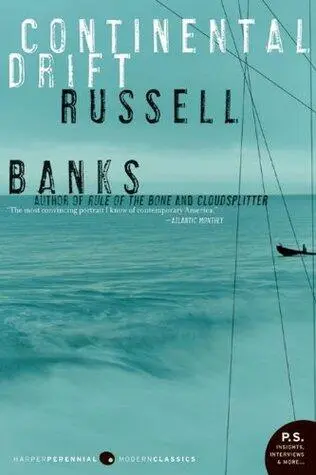
- Название:Continental Drift
- Автор:
- Издательство:Harper Perennial Modern
- Жанр:
- Год:2007
- ISBN:нет данных
- Рейтинг книги:4 / 5. Голосов: 1
-
Избранное:Добавить в избранное
- Отзывы:
-
Ваша оценка:
Continental Drift: краткое содержание, описание и аннотация
Предлагаем к чтению аннотацию, описание, краткое содержание или предисловие (зависит от того, что написал сам автор книги «Continental Drift»). Если вы не нашли необходимую информацию о книге — напишите в комментариях, мы постараемся отыскать её.
is a masterful novel of hope lost and gained, and a gripping, indelible story of fragile lives uprooted and transformed by injustice, disappointment, and the seductions and realities of the American dream.
Continental Drift — читать онлайн бесплатно полную книгу (весь текст) целиком
Ниже представлен текст книги, разбитый по страницам. Система сохранения места последней прочитанной страницы, позволяет с удобством читать онлайн бесплатно книгу «Continental Drift», без необходимости каждый раз заново искать на чём Вы остановились. Поставьте закладку, и сможете в любой момент перейти на страницу, на которой закончили чтение.
Интервал:
Закладка:
One of the sons-in-law laughs and slaps Tyrone on his bare back. “You betcha goddamn ass we want them fish, boy! We earned them suckers.”
“Paid for ’em too,” the other son-in-law adds.
The older men, brothers, fathers of the brides, have stepped free of the boat and are waiting on the pier. One of them announces, “I’m gonna get me a real drink. An al-co-hol-ic beverage. See you boys over there at the restaurant,” he says, and he and his brother head down the pier toward the Clam Shack.
When they reach the wobbly screened door of the place, they notice Bob a few feet away about to get into his car, and the older of the two, who wears mirror sunglasses which he no doubt fancies make him look like a state trooper, stops and hails Bob. “Hey, good buddy, you runnin’ out on us?” The younger brother, eager for his drink, has continued into the restaurant.
“No,” Bob says.
“Well, then, whyn’t you sit down and have a drink with us. Tell us some fish stories.” His glasses glint in the noonday sun. The man is portly and soft-fleshed, but he moves and makes faces like a man who thinks he is lean, hard-muscled and a little mean-tempered. Everything he says and does has a trace of sarcasm to it. “ ’Course, you don’t have to sit down with us if you don’t want to. That ain’t part of the deal.”
“No. I just … I got to get on.” Bob opens the door of his green station wagon. Four hours earlier, up on the bridge of the Belinda Blue, alone, bringing the boat out of the marina at dawn and breaking the still, milky waters of the bay, he was at peace, a rock of a man, smooth-grained, balanced, centered. He was in charge, he was the captain, and for a few moments he knew he’d earned that right, which only added to his pleasure at finding himself up on the bridge, the waters spread before him newly familiar, the boat an old, trusted ally and the smell of the sea in the morning breeze filling him like a particularly cheering childhood dream, a dream of flying over the cold, gray surface of the Catamount River, of leaping from the hill above the mills, the brick smokestacks and tenements, gliding across the river to the high, ancient glacial moraine on the other side, and once on the other side, still soaring, over pine trees now, toward the mountains. He’d come down here to Moray Key and after three months of hard work under Ave’s and Tyrone’s tutelage, he’d made himself into a fisherman, not the best, not even as good as Ave, but good enough, which was something to admire, he knew, and every morning when he had occasion to take the Belinda Blue out of her slip and gunned her into the bay, he enjoyed a few moments of admiring himself. He felt like granite then, warmed by the rising sun.
Now, however, he feels crumpled and torn, papery, subject to puffs and gusts from any direction. It’s no one’s fault. He can’t blame the man in front of him or the man’s brother or the sons-in-law. They’re nobody and everybody, the kind of people every man has to deal with to get through his day, just four more insensitive men, self-centered and arrogant and carrying wallets stuffed with credit cards and traveler’s checks that they use to buy themselves their own kind of pleasure, a few hours at a time.
“Up to you, Cap,” the man says. “You want any of them fish for yourself? My son-in-law’s got your nigger gutting and filleting ’em right now. Too many for us.”
“Well … thanks, no. You keep ’em.” Now, that was stupid, he thinks, and he’s grateful Elaine is not here to hear him say it. There’s fifty dollars’ worth of fish that’s going to be tossed out, she’d say, while we buy hamburger at the A & P for two dollars a pound.
“You sure? We can’t cook ’em in our motel rooms, Cap.”
“No, thanks,” Bob says. “I’m sick of fish.”
“Are you, now? I’d say you’re in the wrong business, then, Cap. What would you say?” The man swings open the door of the restaurant and takes a step inside.
“I’d say you’re right,” Bob answers, and he slides into his car and slams the door shut. Now, he thinks, let’s hope this sonofabitch starts. He turns the key in the ignition, and the engine kicks over easily and catches. Thank Christ for something.
The Chevy wagon shudders and rattles slowly away from the marina, passes out of the parking lot and cuts behind the blond, three-story apartment building and pool, and Bob looks automatically up and sees Ave Boone standing on his tiny terrace overhead, shirtless in cut-off jeans, a cigarette in one hand, a drink in the other. Champagne-colored fiberglass drapes swell through the sliding glass doors behind Ave, and behind those drapes, Bob knows, the girl Honduras lies naked or nearly naked on the king-sized bed, her wet belly cooling under the slow-turning overhead fan. It’s a little past noon, Ave and his girlfriend have been awake for maybe an hour, and they’ve probably fucked twice, made each other gin and tonics, smoked a couple of cigarettes and listened to a new Willie Nelson tape, and now Ave has come out for a bit of air and sunshine before he showers, shaves, dresses, has lunch at the Clam Shack and strolls down the pier to his Tiara, which he’s named Angel Blue , after a famous movie star, he explained to Bob.
He’ll hose down the decks, check the fuel tanks, and when Tyrone has finished filleting the two dozen fish caught by the insurance men from Missouri and has cleaned up the Belinda Blue ,he and Ave will leave Moray Key, heading south by Teatable Key Channel under the bridge, southeasterly to the reef and then west, across open sea toward the Bahamas, Andros Island, Nassau. Bob has asked him why he makes these trips with only Tyrone aboard, and Ave has explained that he is “getting into gambling a little lately.” He wrapped his arm around Bob’s shoulder and added, “Also, pardner, I’m getting to know a lot of the big-time fishermen over there. I’m trying to get a shot on American Sportsman , that TV show. Maybe take Jerry Lewis or Kenny Rogers out for marlin. You got to know the right people for a shot like that. Publicity like that, pal, you’re set for life.”
It makes sense, as do most of Ave’s easy, confident explanations of behavior that, to Bob, is often puzzling. What he, Bob Dubois, does every day of the week — take out in the Belinda Blue whoever will pay him for it, and when there’s no one to pay him for it, hang around the marina waiting for customers, putter around the boat, clean and oil tackle, study and memorize charts, drink beer and gossip with the other idle fishermen — that makes sense. But what Avery Boone does every day of the week — sleep till noon, play with Honduras and her friends, disappear on the Angel Blue with Tyrone every few days for a day and a night and sometimes more — that frequently does not make sense. Not to Bob. A man likes to be able to explain the things in his life that puzzle him, because if he can’t, he may have to accept his wife’s explanations for them, which in this case means that Bob would have to accept Elaine’s often-voiced, worried explanation of Ave’s behavior. “He’s in the drug business, Bob, don’t you realize that? Can’t you see the obvious, for heaven’s sake?”
Bob lifts one hand from the steering wheel and flips a wave at Ave on the terrace above. Ave makes a signal for him to stop, and Bob brakes the car and gets out. The sun is behind Ave’s head, and Bob visors his eyes with the flat of his hand. “What’s up?”
“You have a party this morning?”
“Yeah. Four guys.”
“How was it?”
“Okay. Buncha trout and redfish from out by Twin Key Bank.”
“No bonefish?”
“They wanted stuff they could land. You know.”
“Assholes.”
Читать дальшеИнтервал:
Закладка:
Похожие книги на «Continental Drift»
Представляем Вашему вниманию похожие книги на «Continental Drift» списком для выбора. Мы отобрали схожую по названию и смыслу литературу в надежде предоставить читателям больше вариантов отыскать новые, интересные, ещё непрочитанные произведения.




Обсуждение, отзывы о книге «Continental Drift» и просто собственные мнения читателей. Оставьте ваши комментарии, напишите, что Вы думаете о произведении, его смысле или главных героях. Укажите что конкретно понравилось, а что нет, и почему Вы так считаете.