Russell Banks - Continental Drift
Здесь есть возможность читать онлайн «Russell Banks - Continental Drift» весь текст электронной книги совершенно бесплатно (целиком полную версию без сокращений). В некоторых случаях можно слушать аудио, скачать через торрент в формате fb2 и присутствует краткое содержание. Год выпуска: 2007, Издательство: Harper Perennial Modern, Жанр: Современная проза, на английском языке. Описание произведения, (предисловие) а так же отзывы посетителей доступны на портале библиотеки ЛибКат.
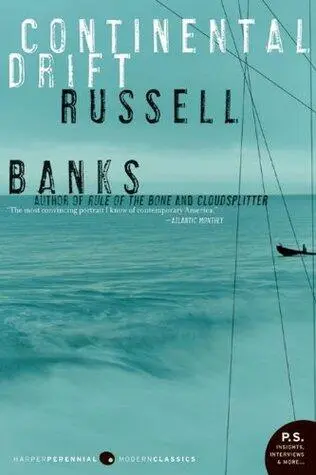
- Название:Continental Drift
- Автор:
- Издательство:Harper Perennial Modern
- Жанр:
- Год:2007
- ISBN:нет данных
- Рейтинг книги:4 / 5. Голосов: 1
-
Избранное:Добавить в избранное
- Отзывы:
-
Ваша оценка:
Continental Drift: краткое содержание, описание и аннотация
Предлагаем к чтению аннотацию, описание, краткое содержание или предисловие (зависит от того, что написал сам автор книги «Continental Drift»). Если вы не нашли необходимую информацию о книге — напишите в комментариях, мы постараемся отыскать её.
is a masterful novel of hope lost and gained, and a gripping, indelible story of fragile lives uprooted and transformed by injustice, disappointment, and the seductions and realities of the American dream.
Continental Drift — читать онлайн бесплатно полную книгу (весь текст) целиком
Ниже представлен текст книги, разбитый по страницам. Система сохранения места последней прочитанной страницы, позволяет с удобством читать онлайн бесплатно книгу «Continental Drift», без необходимости каждый раз заново искать на чём Вы остановились. Поставьте закладку, и сможете в любой момент перейти на страницу, на которой закончили чтение.
Интервал:
Закладка:
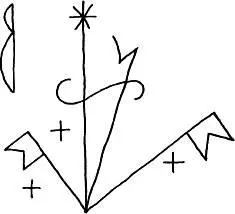
Suddenly, one of the houncis assisting the mambo delicately plucked the white chickens from the upraised hand of the mambo and slit their throats and laid them on the barque below her, and at that moment, several women in the boat, one of them Vanise, were mounted by Agwé. She stiffened, her head snapped back on her spine and came as quickly forward and then slowly rose again, with her features changed, gone, replaced by the features of the Lord of the Sea, a powerful loa, dark and masculine, somber and even sad, a god who has watched too long the troubles of men and women on earth, who has seen too many bad times come back again. It was the very face of history that Agwé wore, skin tightened back to ears, lips grim and taut, eyes filled with watery understanding. There was no look of impatience and no look of patience, either: he was beyond the notion. Agwé in Vanise looked around the jammed, noisy, busy boat from one sweating black face to another, from the mambo to the houncis to the men arranging the barque to the sailors at the tiller and the boom, at these men and women and children from the hills of Haiti, even at the face of young Claude and his cousin Charles, and Agwé viewed them all with infinite compassion, as if for a moment a whale with a whale’s understanding of life had risen from the deep to view human life and had seen humanity’s busy terror, its complicated affections, its nostalgia and longing, its shame and pain and pride. Tears flowed down the face of Agwé. The people nearby said, Don’t cry, oh, no, don’t cry, please don’t cry.
The goat, blue as sapphire, is lifted overhead by a pair of young, muscular men, and the mambo shakes her asson in the animal’s yellow-eyed face, empties a vial over its indigo horns and chants, Agwé, Agwé, Lord of the Sea, protect your children. And taking a slender knife from her hounci, she slices open the animal’s throat. Blood billows over its silky chest, and the young men extend the goat, its eyes glazing over, beyond the gunwale. Blood splashes in sheaves into the sea, and the body of the blue ram-goat follows, drawn instantly to le zilet en bas de l’eau, the island beneath the sea. Agwé mounts a man, several women, the drums rise in tempo and timbre, the conch shell bleats, the houngenikon’s voice takes on strength and fairly shouts its affection and awe, and when the mambo signals with her bell, the young men lift to the gunwale the loaded barque . The boat dips, and the barque slides into the sea. It floats for a moment on the waters and then, as if clutched from below by a gigantic hand, is gone.
It is midday. The gods are properly fed. The wind dies, then it shifts. The boat turns, and the Haitians silently resume their separate journeys.
Selling Out
1
Casual observers on the causeway, people in loaded vans and station wagons with out-of-state number plates driving the tail end of Interstate 95 south from Miami to where the turnpike dwindles to Route 1 and stutter-steps across the Keys to Key West, American families looking out open car windows toward Florida Bay, suede gray above the mud flats, greenish-blue where channels cut intricate pathways in and around the tiny, mangrove-covered keys that dot the bay from the causeway to the Everglades, observers who are kids wearing Disney World tee shirts and quarreling in back over who gets to use the Walkman, dads and moms in Bermuda shorts, tank tops and rubber thong sandals, sunburnt Dad, his Budweiser hat pushed back on his head, wishing he could take time to stop by the side of the road and fish from the shore till dark, and Mom, with her new Ray-Ban sunglasses on, catching her reflection in the side mirror and turning quickly away from the aging, worried face she sees trying to hide behind the movie-star glasses, these people in an expensive hurry to have fun before heading back to their sad, workaday, clock-driven lives in Cleveland, Birmingham and Bridgeport, their lives of high-tech retraining programs, day-long prowls through suburban malls to stock the house the bank keeps threatening to take away, lives with life insurance, dog food and kitty litter, lawn mowers, orthodonture, special ed and school-desegregation programs, lives that on the outside seem stable, rational, desirable, but on the inside persist in feeling strangely fragile, out of control, compulsive and boring — people with such lives look north from the causeway as they pass beyond Islamorada and Upper Matecumbe Key over open water toward Moray and Lower Matecumbe Keys, and they see the Belinda Blue in the distance heading full speed across the basin from Twin Key Bank, a charter fishing boat, a converted trawler glistening white and pale blue in the midday sun, her stubby bow breaking the still water of the flats into crystalline spray, men in bill caps holding beer cans and fishing rods and chatting animatedly on the afterdeck, a tall, suntanned man in white tee shirt and captain’s hat up on the bridge at the wheel bringing the boat smoothly off the basin into Indian Key Channel, and the people in the car, kids and Dad and Mom, all think the same thing: That man up there on the bridge of the fine white and blue boat should be me. I should feel the sea breeze in my hair, the sun on my arms, the flow of the boat through the soft Florida waters beneath me. I should have the rich Northern fishermen on the deck below grateful to me for my knowledge and experience and the reliability of my craft. I should be that man, who is free, who owns his own life simply because he knows whether to use live or dead shrimp for bait, jigs or flies, and where the bonefish feed, he knows where the basin narrows to a channel deep enough to bring his boat lunging in without touching its deepwater keel against the mudded bottom, he knows at sunup whether a squall will blow in from the northwest before noon, and he’s been able to trade his knowledge for power and control over his own life. His knowledge is worth something. Not like the knowledge we own, we who look enviously out the windows of our cars. To us, our knowledge is worth nothing, is merely private information, the names and histories of our family relations, our secret fears and fantasies, our personalities observed obliquely from the inside. We exchange our knowledge for mere survival, while that suntanned man in the captain’s hat up on the bridge of the Belinda Blue — out of Moray Key, Florida, it says on the transom — that man rises above mere survival like a gull lifting from the sea, like the thought of a poet soaring toward the sun. Oh, Lord, wouldn’t that be a wonderful life! we think. But we do not say it, not exactly. Mom says, “I read where all those fishermen now are smuggling drugs. Because of the recession and all.” And Dad says, “When I was a kid up in Saginaw, all I wanted was one of those boats. Not like that one, more a cabin cruiser type. You can buy a damned house, what one of those things costs these days.” And the kids say, “Why are we going to Key West anyway? What’s there? What’ll we do there? Why can’t we go out on a fishing boat instead?”
2
Moray Key, a slender, half-mile tuft of tree-topped coral cut from the tail of Upper Matecumbe Key in 1955 by Hurricane Janet, is located on the northwest side of where three narrow channels converge. Shell Key Channel leads northeasterly into the trout and redfish grounds at the Everglades end of Florida Bay; the second, Race Channel, loops off to the western end of Florida Bay, where the bonefish and snook cruise the shallows and huge jewfish hide in the rocky deeps; the third, Teatable Key Channel, leads southwesterly under a Route 1 bridge with a twenty-foot clearance at high tide to the open sea, across Hawk’s Channel to the reef and beyond, where the bottom drops off to depths of four and six hundred feet and rises again ten and a half nautical miles away at the Hump, where the blue marlin lie waiting, where tarpon, blackfin tuna and swordfish feed.
Читать дальшеИнтервал:
Закладка:
Похожие книги на «Continental Drift»
Представляем Вашему вниманию похожие книги на «Continental Drift» списком для выбора. Мы отобрали схожую по названию и смыслу литературу в надежде предоставить читателям больше вариантов отыскать новые, интересные, ещё непрочитанные произведения.
Обсуждение, отзывы о книге «Continental Drift» и просто собственные мнения читателей. Оставьте ваши комментарии, напишите, что Вы думаете о произведении, его смысле или главных героях. Укажите что конкретно понравилось, а что нет, и почему Вы так считаете.