Marisha Pessl - Night Film
Здесь есть возможность читать онлайн «Marisha Pessl - Night Film» весь текст электронной книги совершенно бесплатно (целиком полную версию без сокращений). В некоторых случаях можно слушать аудио, скачать через торрент в формате fb2 и присутствует краткое содержание. Год выпуска: 2014, Издательство: Random House Trade Paperbacks, Жанр: Современная проза, на английском языке. Описание произведения, (предисловие) а так же отзывы посетителей доступны на портале библиотеки ЛибКат.
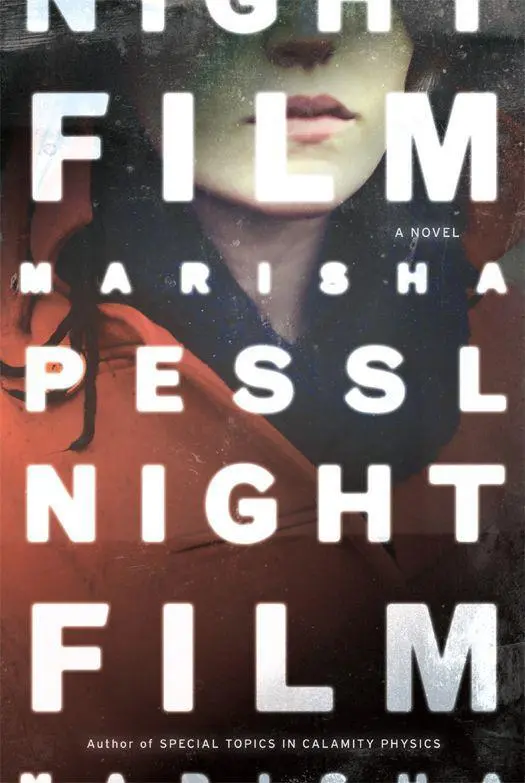
- Название:Night Film
- Автор:
- Издательство:Random House Trade Paperbacks
- Жанр:
- Год:2014
- ISBN:нет данных
- Рейтинг книги:5 / 5. Голосов: 1
-
Избранное:Добавить в избранное
- Отзывы:
-
Ваша оценка:
Night Film: краткое содержание, описание и аннотация
Предлагаем к чтению аннотацию, описание, краткое содержание или предисловие (зависит от того, что написал сам автор книги «Night Film»). Если вы не нашли необходимую информацию о книге — напишите в комментариях, мы постараемся отыскать её.
tells the haunting story of a journalist who becomes obsessed with the mysterious death of a troubled prodigy — the daughter of an iconic, reclusive filmmaker. On a damp October night, beautiful young Ashley Cordova is found dead in an abandoned warehouse in lower Manhattan. Though her death is ruled a suicide, veteran investigative journalist Scott McGrath suspects otherwise. As he probes the strange circumstances surrounding Ashley’s life and death, McGrath comes face-to-face with the legacy of her father: the legendary, reclusive cult-horror-film director Stanislas Cordova — a man who hasn’t been seen in public for more than thirty years.
For McGrath, another death connected to this seemingly cursed family dynasty seems more than just a coincidence. Though much has been written about Cordova’s dark and unsettling films, very little is known about the man himself.
Driven by revenge, curiosity, and a need for the truth, McGrath, with the aid of two strangers, is drawn deeper and deeper into Cordova’s eerie, hypnotic world.
The last time he got close to exposing the director, McGrath lost his marriage and his career. This time he might lose even more.
Night Film
Night Film — читать онлайн бесплатно полную книгу (весь текст) целиком
Ниже представлен текст книги, разбитый по страницам. Система сохранения места последней прочитанной страницы, позволяет с удобством читать онлайн бесплатно книгу «Night Film», без необходимости каждый раз заново искать на чём Вы остановились. Поставьте закладку, и сможете в любой момент перейти на страницу, на которой закончили чтение.
Интервал:
Закладка:
Visibly proud of this pronouncement, she gulped down the Heaven Hill, a drop sliding off her chin.
“The problem with Stanny,” she went on, wiping her mouth, “as with so many geniuses, was his insatiable needs. For life. For learning. For devouring. For fucking. For understanding why people did the things they did. He never judged, you see. Nothing was categorically wrong. It was all human in his eyes and thus worthy of inquiry, of examining from all sides.”
She squinted at us.
“You’re his fans, are you not?”
I couldn’t immediately answer. I was too stunned, not just by what she was saying but by her sudden energy and sanity, both of which seemed to increase in direct ratio to the amount of Heaven Hill she guzzled — now almost half the bottle.
“What do you know about his early life?” she demanded.
“He was the only child of a single mother,” I said. “Grew up in the Bronx.”
“And he was amazing at chess,” Nora added. “He used to play for money at the tables in Washington Square Park.”
“That was Kubrick. Not Cordova. Get your geniuses straight, for fuck’s sake.” Marlowe surveyed us. “That’s it ?”
When we said nothing, she scoffed.
“That’s what I’ve always found so pathetic about fans. They weep when they have a live glimpse of you, frame the fork you touched. Yet they’re impervious to doing anything with that inspiration, like enriching their own lives. It drove Stanny-boy crazy. He used to say to me, ‘ Huey’ —it was his nickname for me—‘ Huey, they see the films five times, write me fan letters, but the underlying meaning is lost on them. They take nothing away. Not heroism. Not courage. It’s all just entertainment. ’ ”
Huey sighed, taking another swig.
“Stanny was raised to be a good Catholic. His mother, Lola, worked two jobs as a maid in one of the big New York hotels. She was from a small village outside of Naples. Yet she knew a great deal about stregheria. You’ve heard of it, I suppose?”
“No,” Nora said, shaking her head.
“It’s an ancient Italian word for witchcraft. A seven-hundred-year-old tradition, passed along mostly in wives’ tales, yarns to scare children, make them eat their vegetables and go to bed early. Cordova’s father was from the Catalan region of Spain, a blacksmith. The family lived together in a small town outside Barcelona before they were due to immigrate to the States when Stanny was three years old. The day they were meant to leave, the father decided he couldn’t go. He didn’t want to leave his homeland. So, Lola took her son and set out for America. Within a year the father had a new family. Stanny never spoke to his father again. But he remembered his Spanish grandmother telling him about bruixeria, the Catalan tradition of witchcraft. He said she told him on New Year’s Eve witches have the utmost power, and that’s when they kidnap children. She told him to put the fire tongs in the form of a cross over the embers in the fireplace, sprinkle them with salt, and the boy would prevent a witch’s entry via the chimney. So, you see, my dears, Stanny grew up with superstition. Certainly not taken seriously, yet it was nevertheless present on both his mother’s and his father’s side of the family. And Stanny’s imagination on the worst of days is stronger than our realities. I think with a background like that, he was sadly predisposed to it … susceptible, you might say.”
She gazed at us, her fingers fiddling with the pearl ring, twisting it around and around her finger.
“He never told me how it happened. But shortly after building the fence around the property, he realized the townspeople were still trespassing.”
“How?” I asked.
“They came by boat. The estate is north of Lows Lake. If you leave from the public shore and make your way to the northern side and along a narrow river, eventually it will feed into a lake on The Peak property. When Stanislas found this breach, he had his men build a chain-link patch straight down to the bottom of the riverbed so only a thimble could get past. A week later he and his wife woke up to the sound of drumming. Voices. Screams. The next morning he went back to the fence and saw that the spot barring the way by the river had been sawed straight through. And he could see from the way the wires were cut it’d been done by somebody on the inside of the property, not the out. ”
“Someone living there,” I said.
She nodded but didn’t elaborate.
“Who? A servant?”
“Every paradise has its viper.” She smiled. “If Stanny had one weakness it was his belief that personality was fluid. He didn’t believe people could be evil, not in some pure form. He always liked a lot of people around him. Hangers-on, groupies, you’d call them, though he called them his allies. He hadn’t been living at The Peak a month when he met in town, quite by accident, a handsome young priest who’d also just moved to Crowthorpe to set up his parish. Stanny needed a religious adviser for a script he was working on, Thumbscrew, and the two men became friends. Within weeks, the priest was shacked up at The Peak. Genevra was furious. She loathed the man. He was hot as hell, a brawny Tyrone Power type with gold hair, blue eyes. Probably had one hell of a der Schwanz, if you catch my drift. He claimed to have been raised in the Iowan cornfields. But something was rancid about the man. Genevra tried to convince Stanny he was dangerous. An impostor. A leech. She was Italian, a staunch Catholic, and had noticed rather gaping holes in the man’s knowledge of the Church. She also believed he was unnaturally obsessed with her husband. Stanny told her to relax, that the man was fascinating, an inspiration.”
Marlowe took another long drink.
“I don’t know how it happened,” she said. “I suspect one night Stanny went down to the crossroads to confront these townspeople and ended up hiding, watching them. By the time he returned to the mansion at dawn, he had a wildly different perspective on the entire business. I don’t know what he saw or what they did. Nothing was proven, but Genevra always believed that the priest had everything to do with it. That he’d made some kind of deal with these people, was perhaps even one of them.”
She sighed.
“So Stanny began his life there. Creatively, he came into his own. Certainly, his previous pictures were electrifying, but this new body of work he was producing at The Peak, it was a different dimension. He began to craft his night films. He explained it once. ‘Huey,’ he said to me. ‘I love to put my characters in the dark. It’s only then that I can see exactly who they are.’ ”
She fumbled with her long satin sleeves, smoothing the fabric over her knees. I didn’t say anything, mesmerized by what she was telling us about Cordova, and also by Marlowe herself. She’d grown so lucid and animated, she seemed entirely different from the woman we’d encountered before.
“Eventually there was no need for him ever to leave that property,” she continued. “Everything, everyone, came to him. He had three hundred acres. He built his sets there, edited his films there. When he had to leave, it was because he’d found a shooting location close to Crowthorpe. It was as if he’d come to believe his power could only be harnessed when he was on those grounds. And it was true. The quality of performances he was able to capture was astounding. His energy had no bounds. He was Poseidon, his actors his school of minnows. When you were working with Stanny on a picture you stayed at The Peak. You ate your meals there, you never left, were allowed no contact with the outside world. You turned your life over to him, handed him the keys to your kingdom. That meant your mind as much as your body. It was all agreed to beforehand. You showed up on the first day of production, ignorant and blind. You knew nothing about the film, or who your character was, or really anything at all except that your life as you’d known it was over. You were setting off on a new journey down a wormhole into something unknown. When you finally emerged three or four months later and returned home, you were changed. You realized before, you’d been asleep.”
Читать дальшеИнтервал:
Закладка:
Похожие книги на «Night Film»
Представляем Вашему вниманию похожие книги на «Night Film» списком для выбора. Мы отобрали схожую по названию и смыслу литературу в надежде предоставить читателям больше вариантов отыскать новые, интересные, ещё непрочитанные произведения.





Обсуждение, отзывы о книге «Night Film» и просто собственные мнения читателей. Оставьте ваши комментарии, напишите, что Вы думаете о произведении, его смысле или главных героях. Укажите что конкретно понравилось, а что нет, и почему Вы так считаете.