Marisha Pessl - Night Film
Здесь есть возможность читать онлайн «Marisha Pessl - Night Film» весь текст электронной книги совершенно бесплатно (целиком полную версию без сокращений). В некоторых случаях можно слушать аудио, скачать через торрент в формате fb2 и присутствует краткое содержание. Год выпуска: 2014, Издательство: Random House Trade Paperbacks, Жанр: Современная проза, на английском языке. Описание произведения, (предисловие) а так же отзывы посетителей доступны на портале библиотеки ЛибКат.
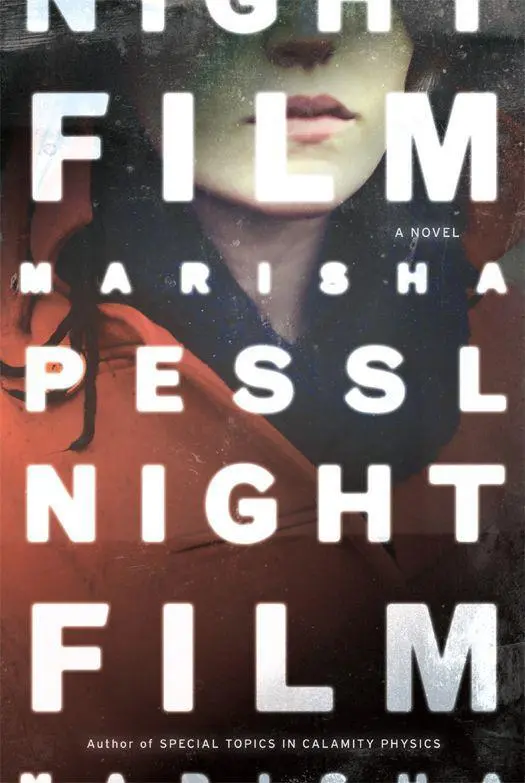
- Название:Night Film
- Автор:
- Издательство:Random House Trade Paperbacks
- Жанр:
- Год:2014
- ISBN:нет данных
- Рейтинг книги:5 / 5. Голосов: 1
-
Избранное:Добавить в избранное
- Отзывы:
-
Ваша оценка:
Night Film: краткое содержание, описание и аннотация
Предлагаем к чтению аннотацию, описание, краткое содержание или предисловие (зависит от того, что написал сам автор книги «Night Film»). Если вы не нашли необходимую информацию о книге — напишите в комментариях, мы постараемся отыскать её.
tells the haunting story of a journalist who becomes obsessed with the mysterious death of a troubled prodigy — the daughter of an iconic, reclusive filmmaker. On a damp October night, beautiful young Ashley Cordova is found dead in an abandoned warehouse in lower Manhattan. Though her death is ruled a suicide, veteran investigative journalist Scott McGrath suspects otherwise. As he probes the strange circumstances surrounding Ashley’s life and death, McGrath comes face-to-face with the legacy of her father: the legendary, reclusive cult-horror-film director Stanislas Cordova — a man who hasn’t been seen in public for more than thirty years.
For McGrath, another death connected to this seemingly cursed family dynasty seems more than just a coincidence. Though much has been written about Cordova’s dark and unsettling films, very little is known about the man himself.
Driven by revenge, curiosity, and a need for the truth, McGrath, with the aid of two strangers, is drawn deeper and deeper into Cordova’s eerie, hypnotic world.
The last time he got close to exposing the director, McGrath lost his marriage and his career. This time he might lose even more.
Night Film
Night Film — читать онлайн бесплатно полную книгу (весь текст) целиком
Ниже представлен текст книги, разбитый по страницам. Система сохранения места последней прочитанной страницы, позволяет с удобством читать онлайн бесплатно книгу «Night Film», без необходимости каждый раз заново искать на чём Вы остановились. Поставьте закладку, и сможете в любой момент перейти на страницу, на которой закончили чтение.
Интервал:
Закладка:
As I stepped toward the door, it banged forward and a diminutive figure shrouded in black satin, a voluminous hood hiding her face, jumped down from a countertop with a whoosh and came lunging at me, wielding a meat cleaver.
I easily deflected it — she had the strength of a dandelion — the knife clattering to the floor. Her shoulder was shockingly brittle — like grabbing a spike in a railing. I instinctively let go as she wheeled around, kicking me hard in the groin before darting out, the kitchen door swinging wildly. We lurched after, Hopper snatching the hood of her robe.
She shrieked as he clamped his arms around her, hauling her, flailing, into the living room and setting her down in a purple velvet chair underneath some fake palms.
“Calm down,” he said. “We’re not going to hurt you.”
Nora switched on the overhead lights, and Marlowe immediately curled up into a fetal position, burying her face in her knees as if she were some light-sensitive night bloom. Her silk robe covered her, the interior tomato red, so she was little more than a heap of fabric lumped on the chair.
“Turn the light off,” she whispered in a husky voice. “Turn it off. ”
I felt an icy chill on the back of my neck. It was her voice.
Marlowe had a very distinct one—“a voice that lounges in its bathrobe all day,” Pauline Kael had written in her rapturous New Yorker review of Lovechild. And it was true. Even when Marlowe was running from thugs, hanging off the side of a building, pouring gasoline over her blackmailer and lighting him with a match, her voice still came out slow honey sighs and goo.
After all these years, it sounded the same, if slightly slower and gooier.
I motioned to Nora, and she turned off the lights. I opened the curtains, and the orange neon light along FDR Drive lit the room, softening the décor, transforming the gaudiness into a garden at midnight. Fake roses, gilt chairs, a floral couch became mysterious tree stumps tangled with overgrowth and wildflowers.
Slowly Hughes raised her head and pale light caught the side of her face.
All three of us stared in awe, in shock. The famous cleft chin, the valentine face, the wide-set eyes were still there, yet so eroded as to be nearly unrecognizable. She was a temple in ruins. She’d had terrible plastic surgery, the kind that wasn’t a nip and tuck but vandalism : bulging cheekbones, her eyes and skin stretched as if life had literally pulled her apart at the seams. Her skin was waxy and ashen, her eyebrows drawn in shaky dark lines with what looked like a felt-tip pen.
If there was ever evidence that nothing lasted, that time ravaged all roses, it was here. My first thought was from a sci-fi movie, that her immense beauty had been an alien thing that had feasted upon her, eaten her alive, and when it had moved on, it left this ravaged skeleton.
“Have you come here to kill me?” Marlowe whispered gleefully, maybe even with hope, tilting her head as if posing for a camera, her profile gilded in the light. It had the same slopes and angles of her youth (“a profile you’d love to ski down,” Vincent Canby had rhapsodized in his Times review), but now it was a sluggish sketch of what it’d once been.
“No,” I said calmly, sitting on a chair in front of her. “We’re here because we want to know about Cordova.”
“Cordova.”
She said it with wonder, as if she hadn’t intoned the word in years, almost sucking on his name hungrily like a hard candy.
“His daughter’s dead as a doornail,” she blurted.
“What do you know about it?” I asked, surprised. Obviously we didn’t have the full picture of Marlowe’s mental state; she knew Ashley was dead.
“Girl never stood a chance,” she muttered under her breath.
“What did you say?” Hopper demanded, stepping toward her.
I wanted to kill him for interrupting her. She was gazing at him with a knowing smile as he sat down on an adjacent velvet chair.
“This must be Tarzan, Greystoke, Lord of the Apes. You’re missing a grunt and a club. Can’t wait to see you in your loincloth. Now, who else do we have here?” Enunciating this acidly, she leaned forward to survey Nora. “A chorus girl. You won’t be able to fuck your way to the middle, Debbie. And you. ” She turned to me. “A wannabe Warren straight from Reds. Every one of you, the farting demeanor of the artfully clueless. You people demand to know about Cordova ?” She scoffed dramatically, though it sounded like a handful of pebbles rasping in her throat. “And so fleas look up at the sky and wonder why stars. ”
“Drop the crazy actress shtick,” Hopper said.
“It’s not shtick,” whispered Nora, sitting stiffly on the couch.
“We’re not leaving until you start talking—”
“Hopper,” I cautioned.
“Then I suppose we’ll be shacking up together. You’ll sleep in the guest room. My days of bull riding are over. Though I warn you. The sheets haven’t been changed since I bedded Hans, so they’ll be sticky.”
Abruptly, Hopper stood up, strode to a lamp in the corner, and, switching it on, drenched the room suddenly in blue light. It was as if he’d thrown acid on her. Marlowe hunched forward, gasping, burying her face in her knees.
“Turn it off,” I said to him, though he didn’t appear to hear me. I realized this situation was swiftly eroding, though the more I reprimanded Hopper, the more it seemed to invigorate Marlowe.
“Ashley Cordova. What do you know?” he demanded, looming over her.
“Diddly squatkis! You deaf, Romeo?”
“Hopper.” I stood up.
“Poop,” chirped Marlowe. “Zilch-o. Goose egg. From the day she was born, she was toast.”
“She doesn’t know what she’s saying,” said Nora.
“Are you going to shake it out of me? Murder me? Good. I’ll finally get my postage stamp. Unlike Ashley. No one will remember her. She died for nothing.”
Before I could react, Hopper bent over her, roughly shaking her by the shoulders.
“You don’t hold a candle to her—”
I leapt forward and wrenched Hopper away from her, shoving him back onto the couch.
“What the hell’s the matter with you?” I shouted.
Hopper appeared to be as stunned by what he’d just done as I was. I turned back to Marlowe. She was slumped in the chair, motionless.
Jesus Christ.
It looked like he’d just shaken the last bit of life out of her.
Now we were all going to meet Old Sparky.
Nora raced back over to the lamp, switching it off, and the room again melted into dark drowsy vines and sharp rocks, Marlowe a slippery black animal lying wounded in the chair. After a moment, I realized with a wave of horror that Marlowe was whimpering, frail moans that sounded as if they were trickling out of some dark corner inside of her.
“We’re sorry,” Nora whispered, crouching beside her, putting a hand on her knee. “He didn’t mean to hurt you. Can we bring you something to drink? Some water, or …?”
Abruptly, Marlowe stopped crying — like someone had flicked an off switch.
She lifted her head.
“Oh, yes, child. There’s some, uh, club soda just”—she twisted around the armchair, craning her neck toward the other side of the room—“there, in the bookcase, second shelf; behind Treasure Island you’ll find some, uh, water. If you could just fetch it for me, dearie.”
She was pointing emphatically at the shelves lining the far side of the room, around them a painted fresco of trellised roses climbing to the ceiling. Nora ran to it, fumbling behind the rows of books.
Читать дальшеИнтервал:
Закладка:
Похожие книги на «Night Film»
Представляем Вашему вниманию похожие книги на «Night Film» списком для выбора. Мы отобрали схожую по названию и смыслу литературу в надежде предоставить читателям больше вариантов отыскать новые, интересные, ещё непрочитанные произведения.



Обсуждение, отзывы о книге «Night Film» и просто собственные мнения читателей. Оставьте ваши комментарии, напишите, что Вы думаете о произведении, его смысле или главных героях. Укажите что конкретно понравилось, а что нет, и почему Вы так считаете.