Marisha Pessl - Night Film
Здесь есть возможность читать онлайн «Marisha Pessl - Night Film» весь текст электронной книги совершенно бесплатно (целиком полную версию без сокращений). В некоторых случаях можно слушать аудио, скачать через торрент в формате fb2 и присутствует краткое содержание. Год выпуска: 2014, Издательство: Random House Trade Paperbacks, Жанр: Современная проза, на английском языке. Описание произведения, (предисловие) а так же отзывы посетителей доступны на портале библиотеки ЛибКат.
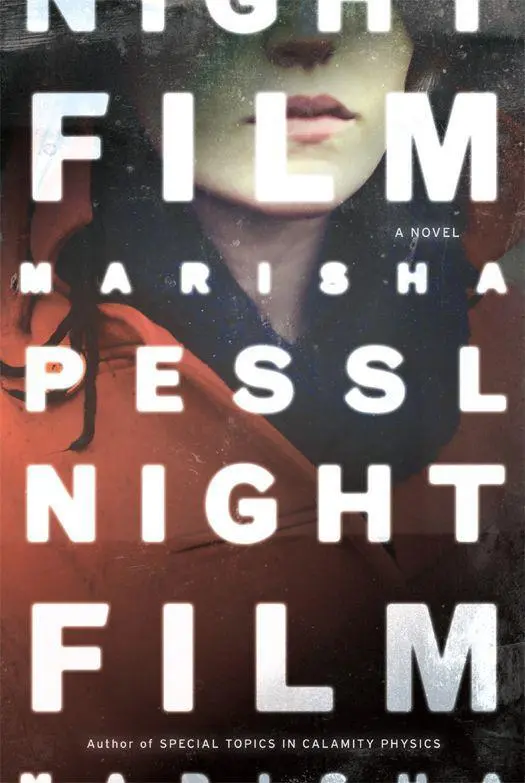
- Название:Night Film
- Автор:
- Издательство:Random House Trade Paperbacks
- Жанр:
- Год:2014
- ISBN:нет данных
- Рейтинг книги:5 / 5. Голосов: 1
-
Избранное:Добавить в избранное
- Отзывы:
-
Ваша оценка:
Night Film: краткое содержание, описание и аннотация
Предлагаем к чтению аннотацию, описание, краткое содержание или предисловие (зависит от того, что написал сам автор книги «Night Film»). Если вы не нашли необходимую информацию о книге — напишите в комментариях, мы постараемся отыскать её.
tells the haunting story of a journalist who becomes obsessed with the mysterious death of a troubled prodigy — the daughter of an iconic, reclusive filmmaker. On a damp October night, beautiful young Ashley Cordova is found dead in an abandoned warehouse in lower Manhattan. Though her death is ruled a suicide, veteran investigative journalist Scott McGrath suspects otherwise. As he probes the strange circumstances surrounding Ashley’s life and death, McGrath comes face-to-face with the legacy of her father: the legendary, reclusive cult-horror-film director Stanislas Cordova — a man who hasn’t been seen in public for more than thirty years.
For McGrath, another death connected to this seemingly cursed family dynasty seems more than just a coincidence. Though much has been written about Cordova’s dark and unsettling films, very little is known about the man himself.
Driven by revenge, curiosity, and a need for the truth, McGrath, with the aid of two strangers, is drawn deeper and deeper into Cordova’s eerie, hypnotic world.
The last time he got close to exposing the director, McGrath lost his marriage and his career. This time he might lose even more.
Night Film
Night Film — читать онлайн бесплатно полную книгу (весь текст) целиком
Ниже представлен текст книги, разбитый по страницам. Система сохранения места последней прочитанной страницы, позволяет с удобством читать онлайн бесплатно книгу «Night Film», без необходимости каждый раз заново искать на чём Вы остановились. Поставьте закладку, и сможете в любой момент перейти на страницу, на которой закончили чтение.
Интервал:
Закладка:
“Astrid naturally didn’t want to believe it. But then there was a terrifying incident that changed her perspective. In the middle of the night, the whole house woke up to a man screaming in his bed. It was the priest. The pajamas the man was wearing, as well as the black clerical clothes in his closet, were on fire. He was on fire. The family managed to snuff out the flames, and Astrid put the man, barely conscious, into the back of her car, so she could drive him to the hospital, because Cordova, of course, could no longer drive. He refused to leave the property. They didn’t want to call an ambulance for fear of the terrible publicity. So, in Astrid’s frenzied state, driving like hell, she rounded a hairpin turn, lost control, and hit a tree, totaling her car. Theo rescued the man in a van, as this priest, drifting in and out of consciousness, moaning from the pain, inched toward death. He dropped him off at a rural hospital outside of Albany and took off. The priest was admitted under the name John Doe, third-degree burns covering his entire body. Ashley had seemingly slept through the entire incident. But the next morning, Astrid noticed her daughter had a terrible burn mark on her left hand. Astrid knew she was responsible. It was the moment she started to believe Stanny, that this devil’s curse was real.” Marlowe shook her head. “The priest survived, though I heard he vanished from the hospital a month after his admittance and was never seen again, not at The Peak, not anywhere else.”
I could hardly believe it. Marlowe had described in immaculate detail the incident I’d unearthed five years ago when I was researching Cordova. The motel desk clerk, Kate Miller, had witnessed a car accident in the early hours of a late-May morning. Astrid Cordova was behind the wheel. Astrid claimed to be alone in the car, but Kate had sworn there was someone else, a man in the backseat dressed in black clothing, his face covered in bandages — a man she claimed was Cordova.
It had been the priest, burned alive.
“How old was Ashley at the time of this incident?” I asked.
Marlowe shrugged. “Fifteen? Sixteen? Afterward, they sent her away.”
“Where?”
“Some camp for unruly teens. It was a final, rather futile attempt to pretend the problem with Ashley was ordinary.”
I turned to Hopper. He was slumped down in the chair, ankle crossed on his knee, watching Marlowe intently.
“Astrid was irate, demanded her husband fix it. He did have an idea. He believed it just might be possible to reverse this curse if they exchanged Ashley’s soul for another’s. A swap. With another child. This led to the rift between Ashley and her family. Because when it was finally explained to her, Ashley wanted to accept her fate. But Cordova was always searching for a way out. He did until the very end. He became consumed with it. To make another film was out of the question. There was only this. It ate him alive, cannibalized the family. There would be times when Ashley was perfectly normal, when they’d hope that whatever darkness she was succumbing to was entirely in their heads. But then something would happen and they’d know it was happening. He’d be coming for her.”
“He?” Hopper demanded suddenly. “Who?”
Marlowe turned to him.
“Why, the devil, of course.”
He chuckled. “Right.”
She stared him down, her masklike face immobile.
“ Iblis in Islam,” she whispered. “ Mara in Buddhism. Set in Ancient Egypt. Satan in Western civilizations. It’s surprising when you take the time to look at history how universally accepted he actually is. ”
Marlowe thoughtfully tilted her head, turning toward me.
“Stanislas believed it would happen when she was twenty-four, twenty-five —some calculation of the full moons and all that. I don’t know the nature of what went on, but at some point the entire family became complicit in this design to transfer the promise onto some other child. Sadly, it wasn’t that outlandish a concept. These cults prey on runaways, children who wouldn’t be missed if they went missing. Many of these people get pregnant for the purpose of sacrificing the infant child on an altar. Occult crimes are very real in this country, only they’re shoved under the rug by police because it’s nearly impossible to convict in a court of law. Not because there isn’t evidence. Oh, no. These people can’t help but leave evidence of their terrifying rituals. It’s hard to clean up after yourself, if you spill blood weekly. No. It’s because juries can never quite believe. It’s a fantastical leap that they can’t make. It sounds like something out of a night film. Not real life.”
She fell silent. In a mechanical reflex she fastidiously unscrewed the bottle, put it to her lips, but at last noticed, stunned, that there was nothing left in there, not a drop.
“How do you know so much about all of it?” asked Nora quietly.
Marlowe turned, seemingly about to berate her, but then lost steam, only gazed down at her hands, crumpled on her knees. She considered them as if they weren’t part of her, but strange insects that’d crawled up her legs and she was too weary to brush them away.
“Stanny trusted me. He told me everything. He knew I’d understand the pain. Once I experienced such loss, it gutted me. It left me just my skin. When you love like that and lose, you never recover. Stanny knew I’d know how it felt. I’d spent time with Ashley. I certainly didn’t believe any of it when he first told me. But then I took her with me on vacation when she was about eight. We were sitting on the beach near Côté Plongée in Antibes and I’d catch her staring at me. It was as if she saw my past and my future — even my soul where it was headed when I died, writhing forever in limbo. It was as if she saw it all and she pitied me.”
This gutting loss had to be a reference to Marlowe’s dashing fiancé, Knightly, dumping her for her sister, Olivia.
“This priest,” I said, after a moment. “Do you remember his name?”
“People just called him Priest, sort of playfully sarcastic. I remember him during the shooting of Lovechild. He liked to spend his day fishing. I’d spot him from a distance standing on the shore by the lake all in black, like an accidental inkblot seeping into the bright landscape of sky and blue lakes and trees. I wouldn’t know what he was doing until I was near him and noticed his long fishing rod and tackle box, that he was standing there so immobile, patiently waiting for a fish. He looked like he had the self-control to wait forever. Genevra gave him the nickname Ragno. The spider.”
“What?” I asked.
“S — spider.” She slurred the word. “How he moved. So silent. ”
“Was his real name Hugo Villarde?”
“I … I don’t really know.”
Marlowe was slipping away again, growing feeble, hunched back in the chair so no light hit her and she was little more than a ghostly white face floating in the dark. When she’d started talking, I’d had little confidence that what she told us would be sentient, much less the honest truth. Yet again and again she’d surprised me, disclosing details that corroborated everything I’d uncovered.
And now: this revelation about the Spider.
“Did you ever meet Cordova’s assistant, Inez Gallo?” I asked.
Marlowe shuddered with distaste. “ Coyote? But of course. Wherever Cordova went, his little Coyote followed. She loved him, of course. Did his every bidding, every menial chore, no matter how cruel. All she asked of him in return was to breathe his air. It was Stanny who came up with the title To Breathe with Kings, after her, Coyote’s, sheer pathetic- ness. I think she actually wished he’d eat her alive, so at last she’d be the closest to him of everyone, living out the rest of her days huddled in the darkest corners of his belly.”
Читать дальшеИнтервал:
Закладка:
Похожие книги на «Night Film»
Представляем Вашему вниманию похожие книги на «Night Film» списком для выбора. Мы отобрали схожую по названию и смыслу литературу в надежде предоставить читателям больше вариантов отыскать новые, интересные, ещё непрочитанные произведения.






Обсуждение, отзывы о книге «Night Film» и просто собственные мнения читателей. Оставьте ваши комментарии, напишите, что Вы думаете о произведении, его смысле или главных героях. Укажите что конкретно понравилось, а что нет, и почему Вы так считаете.