Marisha Pessl - Night Film
Здесь есть возможность читать онлайн «Marisha Pessl - Night Film» весь текст электронной книги совершенно бесплатно (целиком полную версию без сокращений). В некоторых случаях можно слушать аудио, скачать через торрент в формате fb2 и присутствует краткое содержание. Год выпуска: 2014, Издательство: Random House Trade Paperbacks, Жанр: Современная проза, на английском языке. Описание произведения, (предисловие) а так же отзывы посетителей доступны на портале библиотеки ЛибКат.
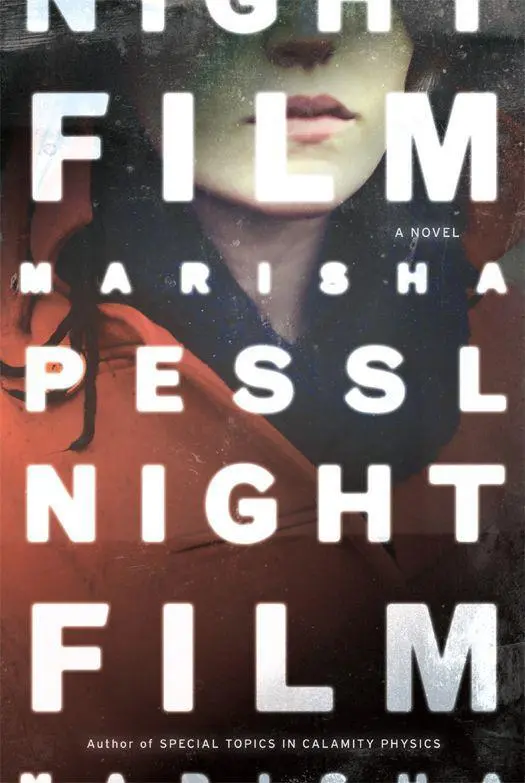
- Название:Night Film
- Автор:
- Издательство:Random House Trade Paperbacks
- Жанр:
- Год:2014
- ISBN:нет данных
- Рейтинг книги:5 / 5. Голосов: 1
-
Избранное:Добавить в избранное
- Отзывы:
-
Ваша оценка:
Night Film: краткое содержание, описание и аннотация
Предлагаем к чтению аннотацию, описание, краткое содержание или предисловие (зависит от того, что написал сам автор книги «Night Film»). Если вы не нашли необходимую информацию о книге — напишите в комментариях, мы постараемся отыскать её.
tells the haunting story of a journalist who becomes obsessed with the mysterious death of a troubled prodigy — the daughter of an iconic, reclusive filmmaker. On a damp October night, beautiful young Ashley Cordova is found dead in an abandoned warehouse in lower Manhattan. Though her death is ruled a suicide, veteran investigative journalist Scott McGrath suspects otherwise. As he probes the strange circumstances surrounding Ashley’s life and death, McGrath comes face-to-face with the legacy of her father: the legendary, reclusive cult-horror-film director Stanislas Cordova — a man who hasn’t been seen in public for more than thirty years.
For McGrath, another death connected to this seemingly cursed family dynasty seems more than just a coincidence. Though much has been written about Cordova’s dark and unsettling films, very little is known about the man himself.
Driven by revenge, curiosity, and a need for the truth, McGrath, with the aid of two strangers, is drawn deeper and deeper into Cordova’s eerie, hypnotic world.
The last time he got close to exposing the director, McGrath lost his marriage and his career. This time he might lose even more.
Night Film
Night Film — читать онлайн бесплатно полную книгу (весь текст) целиком
Ниже представлен текст книги, разбитый по страницам. Система сохранения места последней прочитанной страницы, позволяет с удобством читать онлайн бесплатно книгу «Night Film», без необходимости каждый раз заново искать на чём Вы остановились. Поставьте закладку, и сможете в любой момент перейти на страницу, на которой закончили чтение.
Интервал:
Закладка:
“I’ll go over the specifics with you in private,” Poole said. “But in a nutshell, every patient is assigned a level of surveillance, which ranges from general observation, when the patient is checked by staff every thirty minutes throughout the day and night, to constant observation, when the patient must remain within arm’s length of a trained technician at all times and may use only a spoon at mealtimes. When she arrives, Lisa will be evaluated and assigned the appropriate level.”
“Have there been any recent incidents of escape?” I asked.
The question caught her by surprise. “Escape?”
“Sorry. Don’t mean to make it sound like Alcatraz. It’s just, if Lisa sees an opportunity, she’ll make a run for it.”
Poole nodded. If she was reminded of Ashley Cordova’s breakout, she gave no indication.
“We have forty-six acres,” she said. “The perimeter is fenced in and secured with video surveillance. A twenty-four-hour detail at the gatehouse entrance monitors every vehicle entering or exiting.” She smiled thinly. “Patient safety is our biggest priority.”
So that was the official statement on Ashley’s escape: It never happened.
“The funny thing is,” she continued, “once people settle in it’s harder to get them to leave than stay. Briarwood is a sanctuary. It’s the real world that’s brutal.”
“I can see that. This is a beautiful place.”
“Isn’t it?”
I smiled in agreement. As beautiful as an injection of morphine.
A vast, immaculate lawn spanned out on either side of us, smooth, flat, and ruthlessly green. Far off to our right stood a massive oak tree, an empty black bench beneath it. It looked like the front of a condolence card. The grounds were eerily deserted, except for an occasional smiling nurse striding past us in purple pants with a matching festively patterned shirt— to distract you, no doubt, as she fed you your meds. Farther off, a bald man hurried purposefully between brick buildings.
Though Poole had explained that at this hour everyone in the clinic— clinic seemed to be code for psych ward —was in a behavior therapy session, the place had a creepy, muzzled feel. Any second now, I wouldn’t have been surprised to hear a man’s gut-wrenching scream pierce the chirping birds and the breeze. Or to see one of those doors fly open — a door to one of the buildings Poole had expressly skipped on our tour; “Just another dormitory,” she’d said when I’d inquired what it was — and some patient in white pajamas come out, trying to make a run for it before he was tackled by a male nurse and hauled off to his electroconvulsive therapy session, leaving the landscape stiffly serene.
“How many patients do you have?” I asked, glancing back at Nora.
She was lagging even farther behind.
“One hundred and nineteen adults between our mental health and substance abuse programs. That doesn’t include outpatients.”
“And psychologists work closely with each person?”
“Oh, yes.” She stopped walking to bend down and brush off a brown leaf that was stuck in Sweetie’s fur. “Upon admission, each resident is assigned a personal health-care team. That includes a physician, a pharmacologist, and a psychologist.”
“And how often do they meet?”
“It depends. Often daily. Sometimes twice daily.”
“Where?”
“In Straffen.” She pointed to our left at a redbrick building half concealed by pine trees. “We’ll head over there in a minute. First, we’ll take a look at Buford.”
We veered off the path, heading toward a gray stone building, Sweetie trotting along right by my feet.
“This is where residents dine and meet for extracurricular activities.” Poole moved up the steps, opening the wooden door ahead of me. “Three times a week we have professors from SUNY Purchase give talks in the auditorium on everything from global warming to endangered species to World War One. Part of our philosophy for healing is giving our patients a global perspective and a sense of history.”
I nodded and smiled, looking over my shoulder to see where the hell Nora was. She’d stopped following us, standing back at the center of the lawn. She was shading her eyes, surveying something behind her.
“I can see your trouble with her,” Poole said, following my gaze. “Girls can have a tough time at her age. Where’s Mrs. Dean in all of this, if you don’t mind me asking?”
“She’s out of the picture.”
Poole nodded. Nora looked like she was debating making a run for it. But then she shuffled toward us with slumpy posture, stopping to give Poole a Dr. Evil look before skipping up the steps. Poole led us through the foyer, which smelled strongly of disinfectant, and into the dining hall. It was a large, sunlit room with round wooden tables, arched windows. A handful of female staff were busy arranging place settings.
“This is where residents take all meals,” said Poole. “Obviously we promote physical health as well as mental, so the menu has a low-fat option, also vegetarian, vegan, and kosher. Our head chef used to work at a Michelin-star restaurant in Sacramento.”
“When do I get to meet the people who live here so I know they’re not all psychotic?” asked Nora.
Poole blinked in shock, glanced at me — I stared back sheepishly — and then, recovering, she smiled.
“You won’t be meeting anyone today, ” she said diplomatically, holding out an arm to usher us down the hall, as Sweetie floated along beside her, nails clacking on the floor. “But if you come, you’ll find the people here are as diverse as the people anywhere.”
Poole stopped abruptly beside a dark alcove and, after a pause, switched on an overhead light. The walls were covered in bulletin boards decked with sign-up sheets and photos of activities at Briarwood.
“As you can see,” Poole said, gesturing inside, “people are really quite happy. We keep everyone busy, physically and mentally.”
Scowling, Nora stepped inside. “When were these pictures taken?” she asked.
“The last few months,” said Poole.
Nora glared skeptically, then inspected the pictures, her arms crossed over her stomach. I figured she’d really lost it, decided to do an imitation of Angie in Girl, Interrupted, when I realized what she was doing.
She was looking for Ashley.
It wasn’t a bad idea. I moved past Poole to take a look. The photos were of patients involved in relay races, nature hikes. A few looked legitimately happy, though most appeared too thin and fatigued. Ashley would be obvious, wouldn’t she? The dark-haired girl a little bit alone, with a challenging gaze. I scanned photos of a music recital, but seated at the piano was a man with dreadlocks. There were quite a few shots of a summer barbecue on the main lawn, patients crowded around picnic tables, eating burgers — no sign of Ashley anywhere.
I glanced back at the doorway and realized Poole was looking at us, faintly alarmed. We must have been inspecting a little too intently.
“Everyone looks so happy,” I said.
She coolly stared back. “Why don’t we move along?”
I stepped out of the alcove, that little doily of a dog twirling in circles as it stared up at me, panting as if I had beef jerky in my pocket. Nora was flipping through the pages of a sign-up sheet for Briarwood Book Club, noticeably reading all the names.
“Lisa,” I said. “Let’s go. ”
Poole led us back outside, across the lawn to Straffen Hall, where we headed straight to the second floor — devoted to music, painting, and yoga. It was clear from Poole’s clipped descriptions and tightened tone that she really didn’t care for me or my huffy daughter. I tried to fawn over the facilities, but she only smiled stiffly.
Читать дальшеИнтервал:
Закладка:
Похожие книги на «Night Film»
Представляем Вашему вниманию похожие книги на «Night Film» списком для выбора. Мы отобрали схожую по названию и смыслу литературу в надежде предоставить читателям больше вариантов отыскать новые, интересные, ещё непрочитанные произведения.








Обсуждение, отзывы о книге «Night Film» и просто собственные мнения читателей. Оставьте ваши комментарии, напишите, что Вы думаете о произведении, его смысле или главных героях. Укажите что конкретно понравилось, а что нет, и почему Вы так считаете.