Marisha Pessl - Night Film
Здесь есть возможность читать онлайн «Marisha Pessl - Night Film» весь текст электронной книги совершенно бесплатно (целиком полную версию без сокращений). В некоторых случаях можно слушать аудио, скачать через торрент в формате fb2 и присутствует краткое содержание. Год выпуска: 2014, Издательство: Random House Trade Paperbacks, Жанр: Современная проза, на английском языке. Описание произведения, (предисловие) а так же отзывы посетителей доступны на портале библиотеки ЛибКат.
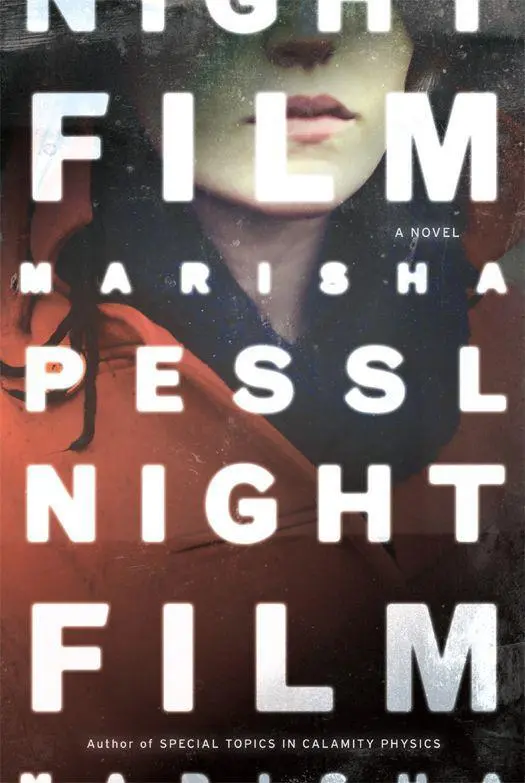
- Название:Night Film
- Автор:
- Издательство:Random House Trade Paperbacks
- Жанр:
- Год:2014
- ISBN:нет данных
- Рейтинг книги:5 / 5. Голосов: 1
-
Избранное:Добавить в избранное
- Отзывы:
-
Ваша оценка:
Night Film: краткое содержание, описание и аннотация
Предлагаем к чтению аннотацию, описание, краткое содержание или предисловие (зависит от того, что написал сам автор книги «Night Film»). Если вы не нашли необходимую информацию о книге — напишите в комментариях, мы постараемся отыскать её.
tells the haunting story of a journalist who becomes obsessed with the mysterious death of a troubled prodigy — the daughter of an iconic, reclusive filmmaker. On a damp October night, beautiful young Ashley Cordova is found dead in an abandoned warehouse in lower Manhattan. Though her death is ruled a suicide, veteran investigative journalist Scott McGrath suspects otherwise. As he probes the strange circumstances surrounding Ashley’s life and death, McGrath comes face-to-face with the legacy of her father: the legendary, reclusive cult-horror-film director Stanislas Cordova — a man who hasn’t been seen in public for more than thirty years.
For McGrath, another death connected to this seemingly cursed family dynasty seems more than just a coincidence. Though much has been written about Cordova’s dark and unsettling films, very little is known about the man himself.
Driven by revenge, curiosity, and a need for the truth, McGrath, with the aid of two strangers, is drawn deeper and deeper into Cordova’s eerie, hypnotic world.
The last time he got close to exposing the director, McGrath lost his marriage and his career. This time he might lose even more.
Night Film
Night Film — читать онлайн бесплатно полную книгу (весь текст) целиком
Ниже представлен текст книги, разбитый по страницам. Система сохранения места последней прочитанной страницы, позволяет с удобством читать онлайн бесплатно книгу «Night Film», без необходимости каждый раз заново искать на чём Вы остановились. Поставьте закладку, и сможете в любой момент перейти на страницу, на которой закончили чтение.
Интервал:
Закладка:
“You’ll do everything I say at all times.” I unlocked the trunk, shoved the Whole Foods bag inside. “You’ll be a silent operative with no personality. You’ll simply process and execute my orders like a machine.”
“Oh, sure. ”
I climbed in, yanking on my seatbelt and starting the car.
“I don’t want feedback. Or yammering. I don’t chit, and I sure as hell don’t chat. ”
“Okay, but we can’t leave yet.” She leaned forward, turning on the radio.
“Why not?”
“Hopper’s coming.”
“No. He’s not. This isn’t a fucking fourth-grade class trip.”
“But he wanted to meet up with us. You really hate people, huh?”
I ignored that comment, inching out onto Perry, though a taxi barreling down the street behind me laid on the horn. I slammed on the brakes and was forced to retreat meekly back to the curb as a motorcade of cars passed, piling up at the light, trapping us in the space.
“You remind me of this man back at Terra Hermosa.”
“What the hell’s Terra Hermosa?”
“A retirement community. His name was Hank Weed. At mealtimes he’d always take the good table by the window and put his walker against the empty seat so no one else could sit down and see the view. He died like that.”
I didn’t answer, silenced by the sudden realization that I had absolutely no idea if any of what came out of this girl’s mouth was true. Maybe she was really good at improv. I couldn’t be certain she was nineteen or that her name really was Nora Halliday. Maybe she was like one of those sweaters with an innocent little thread hanging off of it: One pull, the whole thing unraveled.
“Do you drive?” I asked.
“Sure.”
“Give me your license.”
“Why?”
“I have to make sure there’s not an Amber Alert out for you. Or that you weren’t profiled on Dateline as some kind of tween criminal.”
Smirking, she leaned forward, dug around in that hulking bag, removing a green nylon LeSportsac wallet, so stained and filthy it looked like it’d floated for a couple of years down the Nile. She flipped through a few snapshots encased in plastic — deliberately turning the wallet away so I couldn’t view them — and slipped out the license, handing it to me.
In the picture she looked about fourteen.
Nora Edge Halliday. 4406 Brave Lane. Saint Cloud, FL. Eyes: blue. Hair: blond. Born June 28, 1992.
She was nineteen.
I handed it back, saying nothing. Both Edge as a middle name and Brave Lane — not to mention the year of her birth, which was pretty much yesterday —were enough to render me mute.
The light turned green. I put the car in drive, easing out.
“If you want to wait for Hopper, be my guest. I have work to do.”
“But he’s here,” she yelped excitedly.
Sure enough, Hopper was shuffling down the sidewalk in his gray coat. Before I could stop her, Nora reached over and repeatedly honked the horn. Seconds later, in a blast of cold air, cigarette smoke, and booze, Hopper collapsed in the backseat.
“What’s up, cholo s?”
The kid was bombed again.
I accelerated through the yellow light, speeding across Seventh Avenue. Hopper muttered something incomprehensible. A half-hour later he asked me to pull over on the side of the New Jersey Turnpike and got sick.
It didn’t look like he’d been home all night; he was still wearing the white GIFFORD’S FAMOUS ICE CREAM T-shirt from yesterday. TRY OUR 13 HONEY-PIE FLAVORS! it whispered in faded letters. When he finished, he seemed to want to sit down on the guardrail and watch the traffic blasting inches from my car like cannonballs, so Nora climbed out to help him, guiding him back to the car. She did this with remarkable tenderness and care. I couldn’t help but sense she’d done such a thing many times before. For whom? The dead mother? The convict father possibly awaiting Old Sparky? Grandmother Eel Eye?
Why the hell did she care about Ashley Cordova — about any of this? And Hopper — was a stuffed monkey anonymously mailed to him really why he chose to be with me on a Wednesday morning, not in bed with Chloe or Reinking or some other downtown girl reeking of cigarettes and indie bands?
These two kids clearly knew a hell of a lot more than they let on. But if they were hiding something, I’d learn what it was soon enough. Secrets —even in hardened criminals, they were just air pockets lodged under debris at the bottom of an ocean. It might take an earthquake, or you scuba diving down there, sifting through the sludge, but their natural proclivity was always to head straight to the surface— to get out.
Nora loaded Hopper into the back. He mumbled something as she removed his sunglasses, and then, stretching out across the seat with a boozy sigh, he slung his arm behind his head and conked out. Nora resumed scanning the radio. She stopped on a folk song—“False Knight on the Road,” read the display — and sat back, staring out the window at the ragged fields.
The morning seemed to tiredly sponge off the sky, washing the road signs and windshields in dull, bathwater light as the rhythm of the highway thumped under the tires.
I didn’t feel like talking, either. I was too surprised at where I found myself: with two total strangers, an assortment of stories behind us and who the hell knew what in front of us, but for the time being, our lives three frail lines running side by side.
We made our way toward Briarwood.
15
“We don’t think of our guests as patients, ” Elizabeth Poole told me as we strolled down the sidewalk. “They’re part of the Briarwood family for life. Now, tell me more about your daughter, Lisa.” She glanced back at Nora — known for the time being as Lisa —who’d fallen twenty paces behind us. “What year is she?”
“She was a college freshman,” I said. “But she dropped out.”
She waited for me to elaborate, but I only smiled and tried to look uncomfortable, which was easy.
Elizabeth Poole was a short, plump woman in her fifties with such a sour expression I initially assumed she was sucking on some type of hard candy, only to realize as the minutes ticked by that expression showed no sign of subsiding. She wore high-waisted mom jeans, her thin brown hair slicked into a ponytail.
Nora and I had left Hopper passed out in my backseat and found Poole’s office on the ground floor of Dycon, a redbrick building that housed Briarwood’s administration, which didn’t so much sit on the pristine hill as nail it down with long boxy annexes and gray tendrils of sidewalks. I’d taken just one look at Poole — then, as it jingled out from behind her desk, her snow-white, pink-barretted Maltese, Sweetie, who glided around her office like a tiny Thanksgiving Day parade float — and immediately wanted to call off our ruse.
Making matters considerably worse was Nora’s acting ability — or alarming lack thereof.
As we’d sat down, I’d explained that my daughter, Lisa, had disciplinary issues. Nora had grimaced and stared at the floor. I was sure the many hard, knowing looks Poole shot me were not compassionate but coolly accusatory, as if she knew my daughter was a sham. Just when I was certain she was going to order us off the premises, however, Poole — and panting, tingling Sweetie — had kick-started the tour, leading us out of Dycon and across Briarwood’s sprawling grounds.
“What sort of security do you have in place?” I asked her now.
Poole slowed to consider Nora again, who was glowering at the sidewalk (a look Sue Ellen gave Miss Ellie throughout season twelve of Dallas ).
Читать дальшеИнтервал:
Закладка:
Похожие книги на «Night Film»
Представляем Вашему вниманию похожие книги на «Night Film» списком для выбора. Мы отобрали схожую по названию и смыслу литературу в надежде предоставить читателям больше вариантов отыскать новые, интересные, ещё непрочитанные произведения.






Обсуждение, отзывы о книге «Night Film» и просто собственные мнения читателей. Оставьте ваши комментарии, напишите, что Вы думаете о произведении, его смысле или главных героях. Укажите что конкретно понравилось, а что нет, и почему Вы так считаете.