John Banville - The Blue Guitar
Здесь есть возможность читать онлайн «John Banville - The Blue Guitar» весь текст электронной книги совершенно бесплатно (целиком полную версию без сокращений). В некоторых случаях можно слушать аудио, скачать через торрент в формате fb2 и присутствует краткое содержание. Год выпуска: 2015, Издательство: Knopf, Жанр: Современная проза, на английском языке. Описание произведения, (предисловие) а так же отзывы посетителей доступны на портале библиотеки ЛибКат.
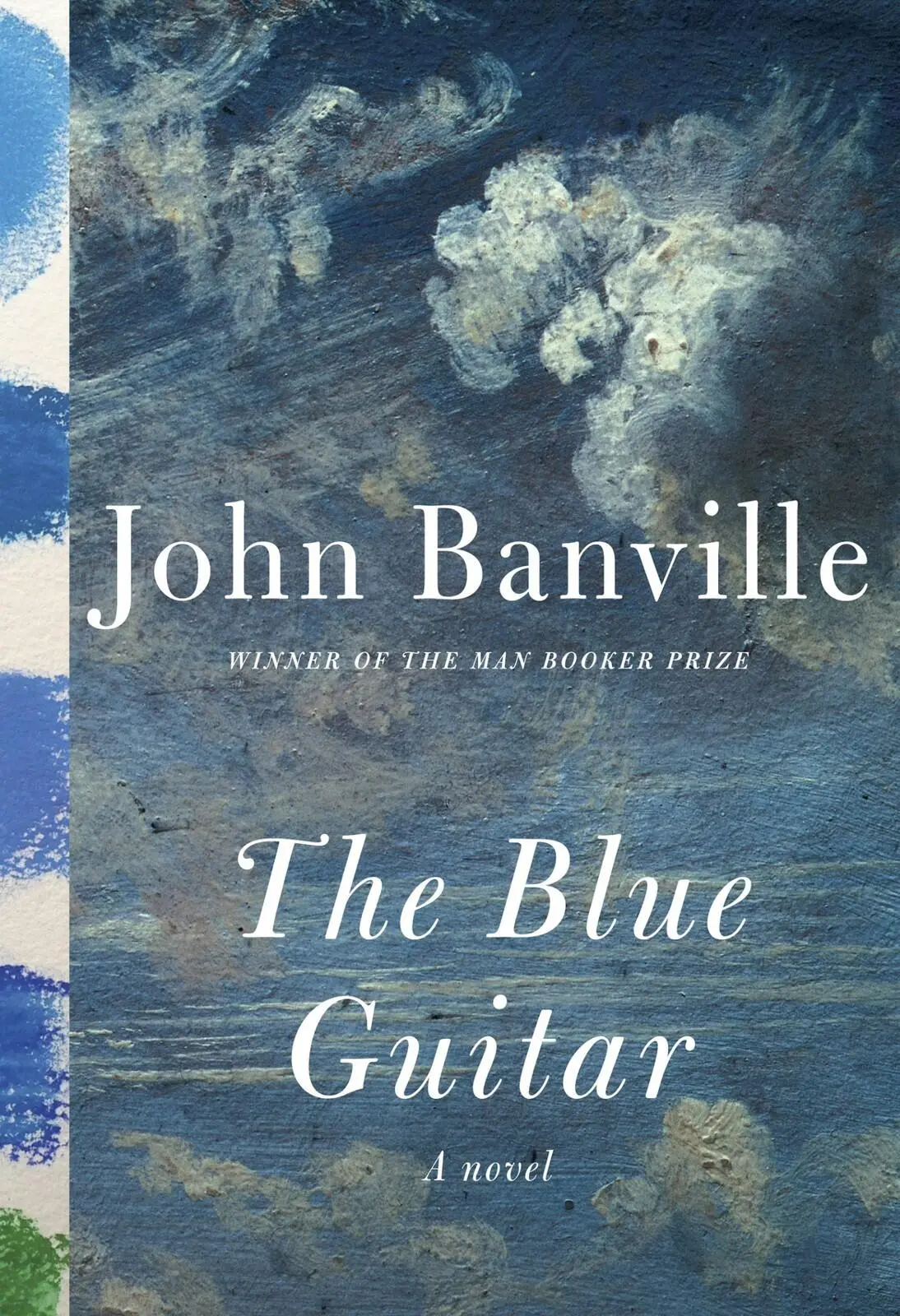
- Название:The Blue Guitar
- Автор:
- Издательство:Knopf
- Жанр:
- Год:2015
- ISBN:нет данных
- Рейтинг книги:4 / 5. Голосов: 1
-
Избранное:Добавить в избранное
- Отзывы:
-
Ваша оценка:
The Blue Guitar: краткое содержание, описание и аннотация
Предлагаем к чтению аннотацию, описание, краткое содержание или предисловие (зависит от того, что написал сам автор книги «The Blue Guitar»). Если вы не нашли необходимую информацию о книге — напишите в комментариях, мы постараемся отыскать её.
and
a new novel-at once trenchant, witty, and shattering-about the intricacies of artistic creation and theft, and about the ways in which we learn to possess one another, and to hold on to ourselves. Equally self-aggrandizing and self-deprecating, our narrator, Oliver Otway Orme, is a painter of some renown, and a petty thief who does not steal for profit and has never before been caught. But he's pushing fifty, feels like a hundred, and things have not been going so well lately. Having recognized the "man-killing crevasse" that exists between what he sees and any representation he might make of it-any attempt to make what he sees his own-he's stopped painting. And his last purloined possession-aquired the last time he felt the "secret shiver of bliss" in thievery-has been discovered. The fact that it was the wife of the man who was, perhaps, his best friend, has compelled him to run away: from his mistress, his home, his wife, from whatever remains of his impulse to paint and from the tragedy that haunts him, and to sequester himself in the house where he was born, trying to uncover in himself the answer to how and why things have turned out as they did. Excavating memories of family, of places he's called home, and of the way he has apprehended the world around him ("no matter what else is going on, one of my eyes is always swivelling towards the world beyond"), Ollie reveals the very essence of a man who, in some way, has always been waiting to be rescued from himself.
The Blue Guitar — читать онлайн бесплатно полную книгу (весь текст) целиком
Ниже представлен текст книги, разбитый по страницам. Система сохранения места последней прочитанной страницы, позволяет с удобством читать онлайн бесплатно книгу «The Blue Guitar», без необходимости каждый раз заново искать на чём Вы остановились. Поставьте закладку, и сможете в любой момент перейти на страницу, на которой закончили чтение.
Интервал:
Закладка:
Once, when I was in the middle of a particularly vigorous bout of guilty self-laceration, Polly said to me, not without a touch of impatience, that I wasn’t as bad as I thought I was. I might have pointed out, but didn’t, that what this really meant was that she thought I wasn’t as bad as she thought I was. There’s no limit to how finely Orme’s Razor can slice. Gloria the unwitting sophist said to me one day, “At least be honest and admit you’re a liar.” Kept me mulling for days, that one did; I mull over it yet.
I looked about. The rim of the sink was chipped, its brass taps were flecked with green. I gazed at a blackened kettle, a tarnished teapot, at the dresser with its cups and plates — delph, we used to call it — and felt, unwillingly, dismayingly, and with awful complacency, at home.
Olive asked if I would like a cup of tea. I said I could do with a drink. I was acutely conscious of Dodo’s baleful monitoring — it was giving me the fidgets. “I don’t think we have any drink,” Olive said, frowning. It was as if I had asked for a draught of laudanum, or a pinch of moly. She rummaged through cupboards, making a great clatter. “There’s a bottle of stout here,” she said doubtfully. “God knows how old it is.” I watched her glug the blackish-brown stuff into a glass that was fogged all up the sides with the grime of ages. Yellow froth like sea spume, the taste of wormwood. I thought straight off of my father, whose tipple was a pint at evening, just the one. Sometimes the self, the famously inexistent self, can sob all of its own accord, inwardly, without making a sound.
Olive, leaning at the sink, watched me as I drank. She was smoking another cigarette, with one arm folded across her concave chest. “Remember how I used to make a googy-egg for you?” she said. “A boiled egg chopped up with breadcrumbs and butter in a cup — remember? I bet you don’t, I bet you’ve forgotten. I know you, you only remember what suits you.” This was said with amused forbearance, which is the way in which she habitually treats me. She regards me, I think, as a sort of guileless charlatan, who early on mastered a set of cheap though effective tricks and has been getting away with them ever since, fooling everyone except her, yet all the while remaining, like my father before me, essentially innocent, or just plain dim. “Ah, yes,” she said, “you’ve forgotten who took care of you when you were little and our Ma was off gallivanting.” She laughed at my look. An inch of cigarette ash tumbled down the front of her apron; it always seems to me that ash when it falls like that should make a sound, the far-off rush and rumble of a distant avalanche. “You didn’t know about that, did you, about Ma and her fellas? There’s a lot you didn’t know, and don’t, though you think you’re such a clever-boots.”
She bent and opened the stove and fed a log into the sudden inferno of its mouth, then kicked the iron door shut again with one of her slippered, foot-long feet.
Dodo was keeping an unremitting watch on me with her bird’s little glossy black eye. “And him not taking a bit of notice,” she said, disdainful and indignant, and looked from Olive to me and back again, setting her mouth in sulky defiance.
This time Olive ignored her. “Come out and I’ll show you my workshop,” she said to me, plucking me by the sleeve.
She dropped the butt of her cigarette into the sink, where it made a hiss that to my ear sounded a definitely derisive note.
We picked our way across the garden. Under a stunted, forlorn and skeletal tree a cloud of tiny flies, gold-tinted in the chill sunlight, were shuttling energetically up and down, like the fast-running parts of an intricate engine made of air. Wonderful little creatures, to be out and so busy this late in the season. Where would they go to, when the real cold came? I imagined them letting the engine wind down as they subsided slowly into the sparse shelter of the winter grass, where they would lie on, little scattered flecks of fading gold, waiting for the spring. Pure fancy, of course; they’ll simply die.
“Are you still doing your stories?” Olive asked.
The pathway was uneven and muddy, and I had to watch the ground to keep from slopping into a puddle or tripping over my feet.
“Stories?” I said. “What do you mean, stories? It’s pictures I do — did. I’m a painter. Was.”
“Oh. I thought it was stories.”
“Well, it isn’t. Wasn’t.”
She nodded, thinking. “Why?” she said.
“What?”
“Why did you stop? Painting pictures, or whatever.”
“I don’t know.”
“Oh, well, it makes no odds anyhow.”
This, I should say, was a perfectly typical exchange between my sister and me. I don’t know if she gets things wrong on purpose, to annoy me, or if she really is becoming confused — she’s a good ten years older than I am. And living with Dodo, of course, can hardly be conducive to mental agility.
What, I wonder, does she make of life, my gangly and unlovely sister, or does she make anything of it at all? Surely she has some notion, some opinion, of what it is to be a sentient being, alive on the surface of this earth. It’s a thing I often ask myself about other people, not just Olive. When she was young, seventeen or so, she was sweet on a boy who wasn’t sweet on her. I can’t remember his name; a grinning lout with crooked teeth and a quiff, is what I recall. I saw her weeping over him, the day she finally had to admit to herself that he would not have her. It was high summer. She was in the parlour. There was a seat there, in the bay of the front window, no more than a built-in bench, really, hard and uncomfortable, covered with fake leather that had an unpleasant, slightly faecal and yet oddly reassuring smell, like the smell of an elderly pet. It was there Olive had flung herself down, in an awkward pose, seated squarely, with her big feet, in a pair of pink sandals — I see them, those sandals — planted side by side on the floor, while her torso was twisted violently sideways from the waist and draped along the leather-covered bench. She was facing down, with her forehead pressed on her folded arms, sobbing. My mother was there too, kneeling on the floor beside her, stroking with one hand her daughter’s tangled, wiry mop of hair, in which already there were premature streaks of grey, while the other rested on the girl’s heaving shoulder. The sun through the window fell full upon them, bathing them in a great harsh blaze. I remember my mother’s expression of almost panic-stricken helplessness. Even to my young eye, the scene — fey matron comforting weeping maiden — seemed quaintly overdone and much too brightly coloured, like something by Rossetti or Burne-Jones. Nevertheless I looked on agog with fascination and mortal fright, hidden behind the half-open door. I had never seen anyone weep with such passion, such unselfconscious abandon, unashamedly; suddenly my sister had become transfigured, was a creature of mysterious portent, a sacrificial victim laid out upon an altar, awaiting the high priest and his knife. For a long time afterwards I was haunted by a sense of having seen something I should not have been allowed to see, of having stumbled clumsily upon a secret ritual that my presence had grossly polluted. Even a little boy, or a little boy especially, has an eye for the numinous, and out of such instances of transgression and sacred terror the gods were born, in the childhood of the world. Poor Olive. I think that day marked the end of what hopes she might have had for even a half-contented life. Thereafter, the tobacco pipe, the jacket and tie, the mannish lope, these were the ways she found of spitting in the world’s eye.
Her workshop was a sort of pitch-pine shed propped against the back wall of the garden. It had a sloping roof and a sagging door with a square window to either side of it. There was a wooden work bench, as massive as a butcher’s block, with a huge, oil-blackened iron vice bolted to it. The floor was covered with a thick pile of wood shavings that were pleasantly crunchy underfoot. Her tools hung on a long board fixed to the back wall, ranged neatly according to use and size. On the bench were her mitre-boxes, her miniature saws and hammers, her sanding boards and tubes of glue and sticky pots of varnish.
Читать дальшеИнтервал:
Закладка:
Похожие книги на «The Blue Guitar»
Представляем Вашему вниманию похожие книги на «The Blue Guitar» списком для выбора. Мы отобрали схожую по названию и смыслу литературу в надежде предоставить читателям больше вариантов отыскать новые, интересные, ещё непрочитанные произведения.









Обсуждение, отзывы о книге «The Blue Guitar» и просто собственные мнения читателей. Оставьте ваши комментарии, напишите, что Вы думаете о произведении, его смысле или главных героях. Укажите что конкретно понравилось, а что нет, и почему Вы так считаете.