John Banville - The Blue Guitar
Здесь есть возможность читать онлайн «John Banville - The Blue Guitar» весь текст электронной книги совершенно бесплатно (целиком полную версию без сокращений). В некоторых случаях можно слушать аудио, скачать через торрент в формате fb2 и присутствует краткое содержание. Год выпуска: 2015, Издательство: Knopf, Жанр: Современная проза, на английском языке. Описание произведения, (предисловие) а так же отзывы посетителей доступны на портале библиотеки ЛибКат.
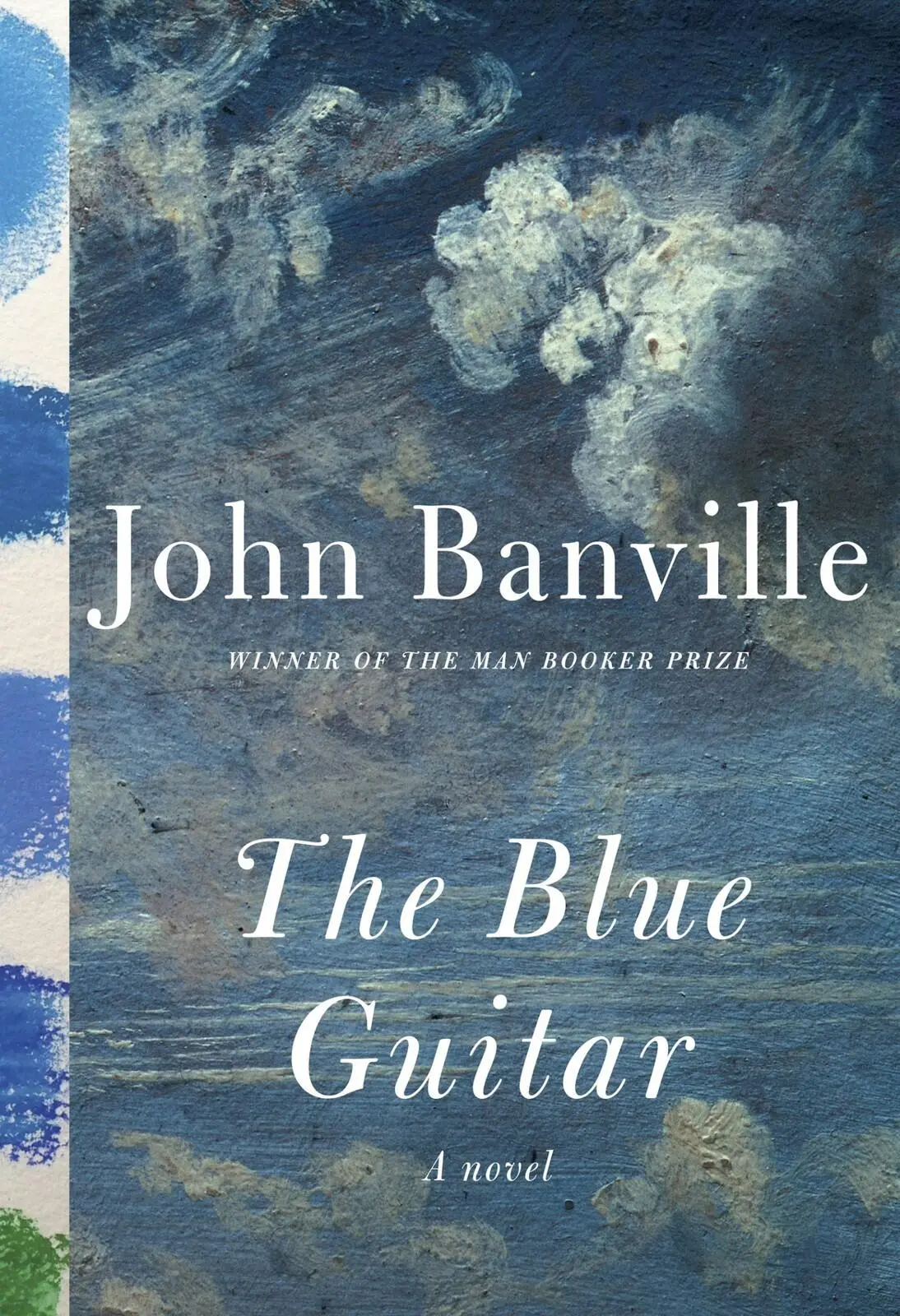
- Название:The Blue Guitar
- Автор:
- Издательство:Knopf
- Жанр:
- Год:2015
- ISBN:нет данных
- Рейтинг книги:4 / 5. Голосов: 1
-
Избранное:Добавить в избранное
- Отзывы:
-
Ваша оценка:
The Blue Guitar: краткое содержание, описание и аннотация
Предлагаем к чтению аннотацию, описание, краткое содержание или предисловие (зависит от того, что написал сам автор книги «The Blue Guitar»). Если вы не нашли необходимую информацию о книге — напишите в комментариях, мы постараемся отыскать её.
and
a new novel-at once trenchant, witty, and shattering-about the intricacies of artistic creation and theft, and about the ways in which we learn to possess one another, and to hold on to ourselves. Equally self-aggrandizing and self-deprecating, our narrator, Oliver Otway Orme, is a painter of some renown, and a petty thief who does not steal for profit and has never before been caught. But he's pushing fifty, feels like a hundred, and things have not been going so well lately. Having recognized the "man-killing crevasse" that exists between what he sees and any representation he might make of it-any attempt to make what he sees his own-he's stopped painting. And his last purloined possession-aquired the last time he felt the "secret shiver of bliss" in thievery-has been discovered. The fact that it was the wife of the man who was, perhaps, his best friend, has compelled him to run away: from his mistress, his home, his wife, from whatever remains of his impulse to paint and from the tragedy that haunts him, and to sequester himself in the house where he was born, trying to uncover in himself the answer to how and why things have turned out as they did. Excavating memories of family, of places he's called home, and of the way he has apprehended the world around him ("no matter what else is going on, one of my eyes is always swivelling towards the world beyond"), Ollie reveals the very essence of a man who, in some way, has always been waiting to be rescued from himself.
The Blue Guitar — читать онлайн бесплатно полную книгу (весь текст) целиком
Ниже представлен текст книги, разбитый по страницам. Система сохранения места последней прочитанной страницы, позволяет с удобством читать онлайн бесплатно книгу «The Blue Guitar», без необходимости каждый раз заново искать на чём Вы остановились. Поставьте закладку, и сможете в любой момент перейти на страницу, на которой закончили чтение.
Интервал:
Закладка:
“I suppose I’ll have to leave him,” she said, in an oddly mild, matter-of-fact tone, sitting up straight and squaring her shoulders, as if already preparing herself for the task. “That is, if he doesn’t leave me first.”
I made no comment. I was hardly listening. There had come to my mind, or slithered into it, more like, a fragment of memory from my earliest days with Polly. We were here one afternoon, in the studio, she and I, eating cream crackers and sharing a bottle of bad wine. She wasn’t in the habit of drinking, certainly not in the daytime, but a glass or two always had a calming effect on her and on her conscience — she was still amazed at herself and this thing she was daring to do with me. After the second glass she slipped demurely into the cramped, whitewashed closet in the corner, and I put my fingers resolutely in my ears — why is so little said, so little acknowledged, about the minor awkwardnesses, the squeamish delicacies, but also the courtly forbearances that mark the shared erotic lives of men and women?
Just outside the lavatory, on the wall to the right, there is a big square antique mirror, framed in rococo gilt and flaking round the edges, in which I used to test the composition of a picture in progress; a mirror image offers an entirely new perspective and will always show up the weakness of a line.
After a minute or two I saw the lavatory door opening, and quickly dropped my hands from my ears.
My, how they unnerve me, mirrors. We hear so much these days about the multiplicity of universes we unknowingly move in the midst of, but who remarks the wholly other world that exists in the depths of the looking-glass? It appears so plausible, doesn’t it, that pristine, crystalline version of this tawdry realm where we’re condemned to live out our one-dimensional lives? How still and calm all is in there, how vigilantly that reversed world attends us and our every action, letting us away with nothing, not the faintest gesture, the stealthiest glance.
When Polly stepped out of the lavatory, the door, before she closed it, was behind her, hiding her from my view, but in the mirror, to which she had turned — which of us can resist a glance at ourselves in the glass? — she was facing me, and our eyes met, our reflected eyes, that is. Perhaps it was the intervention of the mirror, or the interpolation of it, I should say, for the faint hint of treachery the word insinuates, that made us seem, just for a second, not to recognise each other, indeed, not to know each other at all. We might have been, in that instant, strangers — no, more than strangers, worse than strangers: we might have been creatures from entirely different worlds. And perhaps, thanks to the transformative sly magic of mirrors, we were. Doesn’t the new science say of mirror symmetry that certain particles seeming to find exact reflections of themselves are in fact the interaction of two separate realities, that indeed they are not particles at all but pinholes in the fabric of invisibly intersecting universes? No, I don’t understand it either, but it sounds compelling, doesn’t it?
Of course, I’m thinking now of Marcus, the last time I saw him, in Maggie Mallon’s shop as was, saying that he didn’t know his wife any more. He too had suffered his estranging moment with her, when she had sat on the side of the bed that morning and looked up at him in furious and unforgiving silence.
Anyway, that passage of unrecognition had left us shaken, Polly and me. We didn’t speak of it — what would we have said? — and continued on together as if it hadn’t occurred. Though unnerving, and deeply so, for the time it lasted, it was hardly unique: life, pinholed life, is punctuated by such glimpses into the unfathomable mysteriousness of being here, all of us together and irreconcilably alone. Yet I can’t help wondering now if Polly and I came back fully from whatever other reality, whatever looking-glass world it was, that we had strayed into, however briefly, in that instant. Early on though it was in our affair, was that the moment when, all unknowing, we began to draw apart? I have the impression, and I credit it, that in certain cases a union is no sooner forged than the seed of separation sprouts.
When she had gone, tearful, anxious, and full of tender concern for me and for herself and for the two of us together, I took to my heels and fled. I didn’t even pack a bag, I just went. It was a wild evening on the roads, the trees lashing their branches together and a full moon flashing through flying clouds like a fat eye blinking at me in stern reproval. But what did I care for the elements? I had my topcoat, my boots, my trusty malacca. I clamped a hand on my hat and lifted my face, in a kind of tearful ecstasy, like Bernini’s swooning St. Teresa, to the wind and the rain, as in other times I used to offer it to the salt-laden sunlight of the south. I saw myself as the wandering hero in some old saga, sore of heart, maddened from loss and longing, and sick with self-doubt. I hardly knew what I was doing, or where I was going. White horses were rearing on the black waters of the estuary. Twilight and storm, in the world and in me both. On the ancient metal bridge at Ferry Point a farmer stopped and offered me a lift in his lorry. He was your genuine old-timer, with a toothless, collapsed mouth and stubble growing every which way on chin and cheeks and a pipe jammed between glistening gums. He smelt of hay and pigs and rank tobacco, and it’s a sound bet his trousers were held up with a belt made of binder twine. The lorry juddered and gasped like a work-horse on its last legs. Old MacDonald drove at high speed and with lunatic abandon, yanking the gear-stick and spinning the steering-wheel as though intent on unscrewing it from its post. As we went along he told me with relish of a suicide committed in this place years ago. “Drownded himself, he did, after his girl jilted him.” He chuckled. I pulled the brim of my hat low over my eyes. Before us the yellow headlights probed the gathering dark. To be no one, to be nothing, astray in tempestuous night! “They found him down there under the bridge,” the old man wheezed, “with his two arms wrapped stiff around one of them wooden piles under the water — would you credit that, now?”
Polly Polly Polly Polly Polly
The house when I arrived was
—
I think that’s Gloria’s car I hear pulling up outside. Dear me.
II
THE SILENCE WAS the thing that struck me first. It settled on the house like a hard frost and under it everything went frozen and stiff. I thought of winter evenings in childhood — yes, here it comes, the past again — when our country neighbours’ sons from round about, and daughters, too, those raucous tomboys, would gather on the hill outside the gate-lodge and sluice bucketfuls of water down the road to make a slide. I imagined I could see the frost falling as the night came on, a glistening grey mist sifting out of the sky’s dome of gleaming deep-blue darkness. I seemed to hear it, too, a hushed metallic tinkling everywhere around me in the stinging air. And later on, when the slide was hard as polished stone, how blackly the ice would shine in the starlight, as enticing as it was daunting, daring me to take my turn and sprint forwards like the others and let myself go skimming down the hill, my knees braced and trembling and the cold air searing my lungs. But I was timid and didn’t dare, and hung back in the sheltering shadows of the gate-lodge, watching enviously. The voices of the sliders rang sharply in the glossy darkness, and the trees stood motionless, like silent spectators at this wild play, and the countless stars too seemed to be looking on, with a flinty, spiteful glitter. Whenever a motor car approached the children would scatter amid shrieks of laughter, and the driver would roll down his window and hurl curses after them and threaten to call the guards.
Читать дальшеИнтервал:
Закладка:
Похожие книги на «The Blue Guitar»
Представляем Вашему вниманию похожие книги на «The Blue Guitar» списком для выбора. Мы отобрали схожую по названию и смыслу литературу в надежде предоставить читателям больше вариантов отыскать новые, интересные, ещё непрочитанные произведения.



Обсуждение, отзывы о книге «The Blue Guitar» и просто собственные мнения читателей. Оставьте ваши комментарии, напишите, что Вы думаете о произведении, его смысле или главных героях. Укажите что конкретно понравилось, а что нет, и почему Вы так считаете.