John Banville - The Blue Guitar
Здесь есть возможность читать онлайн «John Banville - The Blue Guitar» весь текст электронной книги совершенно бесплатно (целиком полную версию без сокращений). В некоторых случаях можно слушать аудио, скачать через торрент в формате fb2 и присутствует краткое содержание. Год выпуска: 2015, Издательство: Knopf, Жанр: Современная проза, на английском языке. Описание произведения, (предисловие) а так же отзывы посетителей доступны на портале библиотеки ЛибКат.
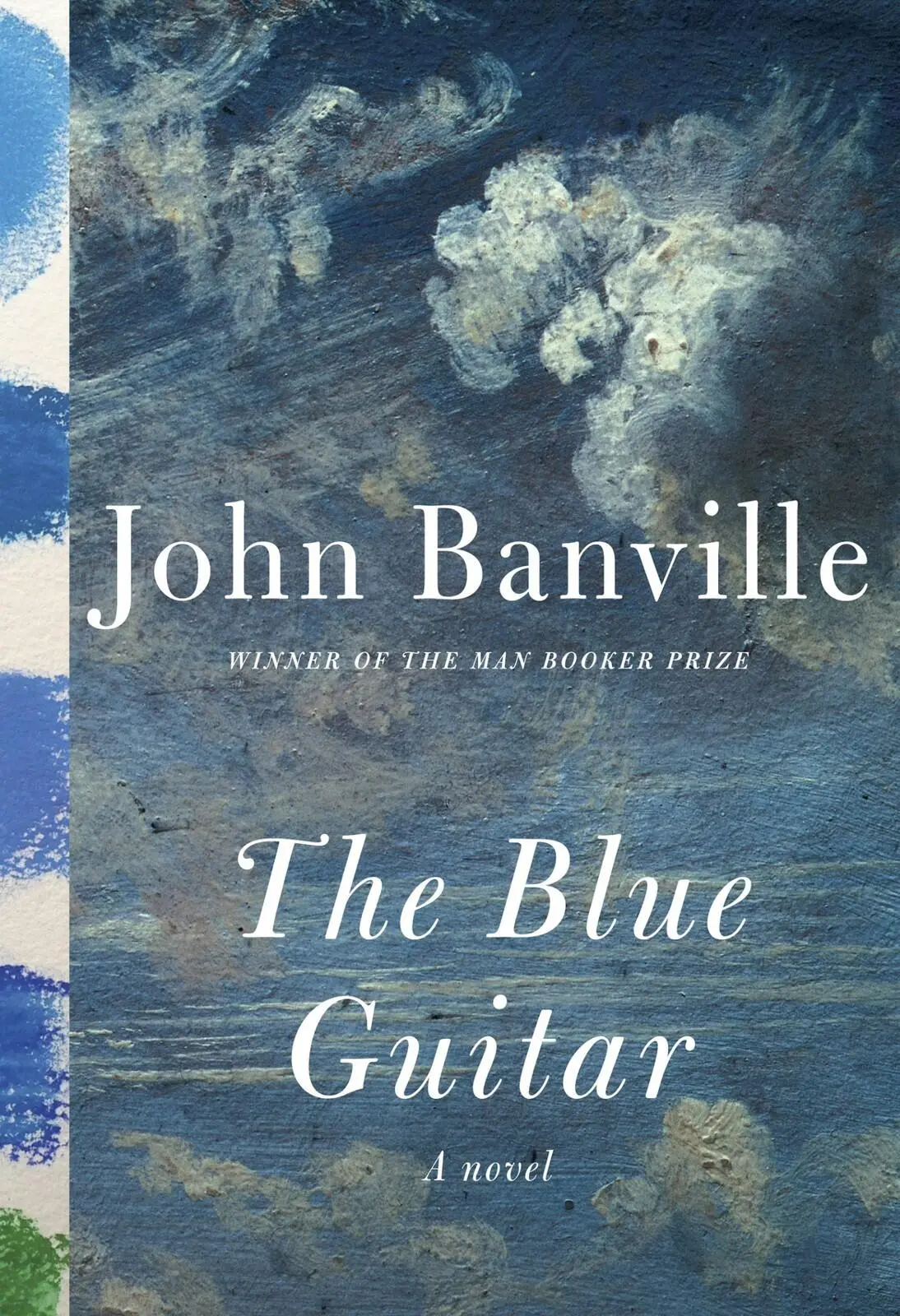
- Название:The Blue Guitar
- Автор:
- Издательство:Knopf
- Жанр:
- Год:2015
- ISBN:нет данных
- Рейтинг книги:4 / 5. Голосов: 1
-
Избранное:Добавить в избранное
- Отзывы:
-
Ваша оценка:
The Blue Guitar: краткое содержание, описание и аннотация
Предлагаем к чтению аннотацию, описание, краткое содержание или предисловие (зависит от того, что написал сам автор книги «The Blue Guitar»). Если вы не нашли необходимую информацию о книге — напишите в комментариях, мы постараемся отыскать её.
and
a new novel-at once trenchant, witty, and shattering-about the intricacies of artistic creation and theft, and about the ways in which we learn to possess one another, and to hold on to ourselves. Equally self-aggrandizing and self-deprecating, our narrator, Oliver Otway Orme, is a painter of some renown, and a petty thief who does not steal for profit and has never before been caught. But he's pushing fifty, feels like a hundred, and things have not been going so well lately. Having recognized the "man-killing crevasse" that exists between what he sees and any representation he might make of it-any attempt to make what he sees his own-he's stopped painting. And his last purloined possession-aquired the last time he felt the "secret shiver of bliss" in thievery-has been discovered. The fact that it was the wife of the man who was, perhaps, his best friend, has compelled him to run away: from his mistress, his home, his wife, from whatever remains of his impulse to paint and from the tragedy that haunts him, and to sequester himself in the house where he was born, trying to uncover in himself the answer to how and why things have turned out as they did. Excavating memories of family, of places he's called home, and of the way he has apprehended the world around him ("no matter what else is going on, one of my eyes is always swivelling towards the world beyond"), Ollie reveals the very essence of a man who, in some way, has always been waiting to be rescued from himself.
The Blue Guitar — читать онлайн бесплатно полную книгу (весь текст) целиком
Ниже представлен текст книги, разбитый по страницам. Система сохранения места последней прочитанной страницы, позволяет с удобством читать онлайн бесплатно книгу «The Blue Guitar», без необходимости каждый раз заново искать на чём Вы остановились. Поставьте закладку, и сможете в любой момент перейти на страницу, на которой закончили чтение.
Интервал:
Закладка:
Speaking of death — and I hardly seem to speak of anything else, these days, even when the subject is supposedly the living — I want to tell of a fatal accident that I witnessed as a young man, more than witnessed, and that haunts me still. It happened in Paris. I was there as a student, working in the atelier of a third-rate academician who had grudgingly taken me on for the summer through the good offices of an older Francophile painter whom my mother somehow knew, and whom she had charmed into giving me a letter of introduction to Maître Mouton. I lodged in a cheap hotel on the rue Molière, in a maid’s room on the fifth floor, directly under the roof. It was stiflingly hot, and the ceiling was so low that I couldn’t stand fully upright. Also the flights of stairs, that were of a normal width lower down, grew steadily narrower the higher they went, and coming home at night, when the minuterie on the second landing had clicked off, I would have to negotiate the top flight in darkness and on hands and knees, feeling as if I were scrambling up the inside of a chimney. I was penniless, hungry, and mostly miserable, passing my days in that state, one that is peculiar to the young, I believe, of torpid boredom mingled with thrashing desperation. One overcast, airless afternoon along the quays I was waiting at a corner for the traffic lights to change. A young Frenchman of about my own age was standing beside me, in a splendidly crumpled white linen suit. I remember how that suit glowed, giving off a sort of aura, despite or perhaps because of the day’s humid gloom, and, envious, in my imagination I made him into the spoiled son of a rich plantation owner sent home to pretend to finish his studies at some impossibly exclusive grande école. His head was turned back and he was speaking over his shoulder, volubly and gaily, to someone close behind him, a girl, I imagine, though I don’t remember her. The traffic clanked and rattled past in the way that it does on those broad thoroughfares, seeming to be not a series of individual vehicles but one immense ramshackle engine, welded together from innumerable ill-fitting components, a clamorous, smoking and endlessly extended juggernaut. The young man in white, laughing now, was turning to face forwards again, and somehow lost his footing — whenever, passing into sleep, I seem to misstep and start awake, it’s him I see at once, in his impossibly shining garb, there on the quai des Grands Augustins, opposite the Pont Neuf — and stumbled off the pavement just as an olive-green army lorry was approaching, close in to the gutter and travelling at breakneck — the apt word — speed. It was high and square with a rapidly shuddering tarpaulin stretched over the back of it. A big mirror stuck far out at the driver’s side, riveted in place on two or three steel struts. It was this mirror that struck the young man full in the face as he teetered on the side of the footpath, trying to regain his balance. I used to wonder if there had been time for him, in the last instant, to catch a glimpse of himself, startled and incredulous, as self and reflection met and annihilated each other in the glass, until I realised that, of course, the mirror would have been turned the other way, and that it was the metal back of it that had hit him. And did I really see a perfect corona of blood exploding around his head at the moment of impact? I’m doubtful, since it’s the kind of thing the imagination, ever eager for a gory detail, likes to imagine; also it’s suspiciously an echo of that halo of light I had noted surrounding his suit. As he toppled backwards, it was into my instinctively offered arms that he collapsed. I recall the damp warmth of his armpits and the tap-dancer’s brief, rapid tattoo that his heels played on the pavement. Slight and slender though he was I hadn’t the strength to support him — he was already a dead weight — and when he slipped out of my arms and flopped to the ground his smashed-up head fell back between my splayed feet and struck the pavement with a soggy thud. One leg of his trousers, the right one, had been neatly severed above the knee, don’t ask me how, and the bottom part of it was concertinaed around his ankle. The leg that was thus exposed was tanned, smooth and hairless; he wore, I saw, no socks, in the casual French way that I emulated, if Polly’s memory of me the first time I called into Marcus’s workshop can be trusted. The unfortunate fellow’s face — ah, that face. You’ll have seen it in more than one of my early things, particularly that awful Bacchae triptych — how the mere thought of my past work taunts and shames me! — where it looms low above the corpse-strewn plain, a featureless disc, ghastly and glaring, the bluish-red of a freshly flayed side of beef and dripping gumdrops of glistening pink gore. I went blue in the face myself from having to assure purblind commentators over and over that this smeared and ruddied blob wasn’t a case of deliberate distortion in the manner of Pontormo, say, or Bosch the devil-dreamer — and many did say it — but on the contrary was a careful and accurate rendering of a real sight I had seen, with my own eyes, and felt called on to commemorate, repeatedly, in paint.
Everything up to the moment of the young man’s death I remembered with stinging clarity, but everything after it was wiped from my mind. People must have gathered round, there must have been police, and an ambulance, all that, but for me the aftermath of the accident is a blessed blank. I do remember the army lorry careering on regardless — what to it was one more death, among the so many it must have witnessed in its time? But what about the girl the young man had been talking to, if it was a girl? Did she crouch beside him and cradle his poor pulped head in her lap? Did she throw back her own head and howl? How protectively the mind suppresses things. Some things.
It fell to me to get rid of our Olivia’s effects — does a child of three have effects? — her suits and smocks and pink bootees. I was supposed to take them to the church round the corner for distribution to the poor, but instead I rolled them into a big ball that I tied up with string and dropped into the river on a tearily indistinct midnight hour. The ball didn’t sink, of course, but bobbed away on the tide towards the docks and the open sea. For months afterwards I worried that it would wash up on the riverbank somewhere and be found by a rag-picker, and that one day I, or, worse, Gloria, would spot a toddler in the street, all togged out in a heartbreakingly familiar outfit.
One of the phenomena I sorely miss, from the days when I was still painting, is the stillness that used to generate itself around me when I was at work, and into which I was able to make some sort of temporary escape from myself. That kind of peace and quiet you don’t get by any other means, or I don’t, anyway. For instance, it differed entirely, in depth and resonance, from the stealthy hush that accompanies a theft. At the easel, the silence that fell upon everything was like the silence I imagine spreading over the world after I am dead. Oh, I don’t delude myself that the world will shut down its clamour just because I’ve made my final brushstroke. But there will be a special little corner of tranquillity once my perturbations have ceased. Think of some back alley, in some dank suburb, on a grey afternoon between seasons; the wind whips up the dust in spirals, turns over scraps of paper, rolls a bit of dirty rag this way and that; then all stops, seemingly for no reason, a calm descends, and quiet prevails. Not amid celestial light and the voices of angels, but there, in that kind of nothingness, in that kind of nowhereness, my imagination operates most happily and forges its profoundest fancies.
You will want to hear about our time down there in the warm south, with the mistral snapping those sunshades in the place du Marché, and our hands entwined on the table amid the dishes of olives and the glasses of greyed pastis, and the delightful strolls we took and the colourfully disreputable people we encountered, and the straw-coloured wine we used to drink with dinner in that little place under the ramparts where we went every evening, and the funny old house we leased from the eccentric lady who kept cats, and the bullfighter who took a shine to Gloria, and my brief but tempestuous affaire with the expatriate titled Englishwoman, the lovely Lady O. — all that. Well, you can want away. I grant you it’s an earthly paradise in those parts, but a tainted paradise it was, for us, with many a serpent slithering among the convoluted vines. Don’t misunderstand me, it was no worse there than anywhere else, for two poor numbed souls lost in listless mourning, but not much better, either, once the bloom wore off the fabled douceur de vivre and the beaded bubbles winking at the brim had all winked out. Forget your ideas of an idyll. I seem to have spent most of my time in supermarket car parks, baking in the passenger seat of our little grey Deux Chevaux and listening to some heart-stricken chanteuse sobbing about love on the car radio, while Gloria was off in a shaded corner having a smoke and yet another quiet cry.
Читать дальшеИнтервал:
Закладка:
Похожие книги на «The Blue Guitar»
Представляем Вашему вниманию похожие книги на «The Blue Guitar» списком для выбора. Мы отобрали схожую по названию и смыслу литературу в надежде предоставить читателям больше вариантов отыскать новые, интересные, ещё непрочитанные произведения.




Обсуждение, отзывы о книге «The Blue Guitar» и просто собственные мнения читателей. Оставьте ваши комментарии, напишите, что Вы думаете о произведении, его смысле или главных героях. Укажите что конкретно понравилось, а что нет, и почему Вы так считаете.