Roy Scranton - War Porn
Здесь есть возможность читать онлайн «Roy Scranton - War Porn» весь текст электронной книги совершенно бесплатно (целиком полную версию без сокращений). В некоторых случаях можно слушать аудио, скачать через торрент в формате fb2 и присутствует краткое содержание. Город: New York, Год выпуска: 2016, ISBN: 2016, Издательство: Soho Press, Жанр: prose_military, Современная проза, на английском языке. Описание произведения, (предисловие) а так же отзывы посетителей доступны на портале библиотеки ЛибКат.
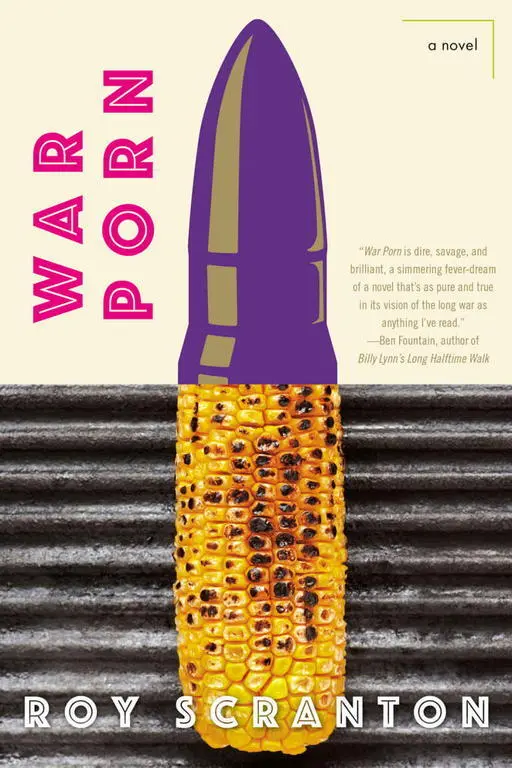
- Название:War Porn
- Автор:
- Издательство:Soho Press
- Жанр:
- Год:2016
- Город:New York
- ISBN:978-1-61695-715-5
- Рейтинг книги:5 / 5. Голосов: 1
-
Избранное:Добавить в избранное
- Отзывы:
-
Ваша оценка:
War Porn: краткое содержание, описание и аннотация
Предлагаем к чтению аннотацию, описание, краткое содержание или предисловие (зависит от того, что написал сам автор книги «War Porn»). Если вы не нашли необходимую информацию о книге — напишите в комментариях, мы постараемся отыскать её.
Videos, images, and narratives featuring graphic violence, often brought back from combat zones, viewed voyeuristically or for emotional gratification. Such media are often presented and circulated without context, though they may be used as evidence of war crimes. War porn is also, in Roy Scranton’s searing debut novel, a metaphor for the experience of war in the age of the War on Terror, the fracturing and fragmentation of perspective, time, and self that afflicts soldiers and civilians alike, and the global networks and face-to-face moments that suture our fragmented lives together. In
three lives fit inside one another like nesting dolls: a restless young woman at an end-of-summer barbecue in Utah; an American soldier in occupied Baghdad; and Qasim al-Zabadi, an Iraqi math professor, who faces the US invasion of his country with fear, denial, and perseverance. As
cuts from America to Iraq and back again, as home and hell merge, we come to see America through the eyes of the occupied, even as we see Qasim become a prisoner of the occupation. Through the looking glass of
, Scranton reveals the fragile humanity that connects Americans and Iraqis, torturers and the tortured, victors and their victims.
War Porn — читать онлайн бесплатно полную книгу (весь текст) целиком
Ниже представлен текст книги, разбитый по страницам. Система сохранения места последней прочитанной страницы, позволяет с удобством читать онлайн бесплатно книгу «War Porn», без необходимости каждый раз заново искать на чём Вы остановились. Поставьте закладку, и сможете в любой момент перейти на страницу, на которой закончили чтение.
Интервал:
Закладка:
He hated the men who’d murdered his brothers and uncles and father, it was true, but it was an abstract hatred locked so deep within himself that it was no more than a cold violet idea, having little to do with his day-to-day life. He’d recognized early that the strong and forceful climb to the top, and since he was neither, his only hope lay in cunning. Justice was for the mighty; Salman vowed to survive. So when his draft notice came up, he dutifully went away and served in the infantry, and when Lieutenant Azimaya approached him about serving the greater glory of Iraq, the only question in his mind was how far it would take him.
It got him all the way to Saddam University, and after he finished his BSc with a dual major in business and maths, it got him into the Economics Department at Al-Mustansiriya University to work on a master’s. While taking economics classes he worked as a TA in the maths department, but even what he got for teaching, added to what he got paid for informing, didn’t quite make ends meet. Not only was he supporting his mother and sisters back home, but he was trying to save up for a wife, so he drove a taxi three, sometimes four nights a week, and could be found for certain odd jobs if the price was right. He’d hoped when he finished his MA to get a cushy government position—maybe join the Party—then find himself a bride.
The upcoming invasion made a mockery of all that. He knew he’d survive, no matter what, maybe even thrive in the chaos, but nobody wants war except soldiers and fools, and Salman was neither. Salman was shrewd. Salman was observant.
Anouf, for example, he’d been watching for a long time, and not just because she had a face like an Egyptian movie star and a figure to match. The other students gossiped about her because of her modern clothes and her blue jeans, but also because of the men who picked her up from school, whispering that she supported herself as a prostitute for high-placed government officials and was an informer for the Mukhabarat besides. Salman had wondered himself, at first, but the truth, which he’d uncovered in time, was that her brother was of one of Baghdad’s biggest embargo cats—the loose gang of black marketeers and smugglers who made their money supplying people with everything prohibited by the UN and Saddam. The thuggish men who picked Anouf up from campus every day were her brother’s runners.
Salman doubted Qasim’s interest in Anouf had anything to do with her brother. Frankly, it was a miracle Qasim managed to get out of bed every morning without cracking his head open. He certainly wasn’t tough enough to hang with the likes of Hamadaya. Perhaps he needed something, though, some paperwork, a visa, or maybe with the war coming… what? Maybe it went the other way: he worked as an accountant for his uncle, so maybe Anouf’s brother was having trouble with his books? Most likely, it was just school drama. Qasim had a crush on Anouf or vice versa. Al-Zabadi wasn’t handsome, manly, or distinguished, he wore glasses, he had a crooked nose and a ratty mustache, he was unkempt and awkward, but for some baffling reason, his female students were always having crushes on him. Pity, Salman suspected—the same gush of emotion they’d feel for a sick cat.
So maybe they’re flirting. Maybe Anouf has a crush. Maybe Qasim has finally grown tired of living apart from his wife. Maybe he’s more of a man than he seems. Whatever it is, we’ll see. We’ll see what it’s good for.
Qasim barely caught Luqman as the rotund physics professor blew out the door for home. His wife had called, said the Hizbis were digging a trench right next to their house, and demanded he do something. She said they’d even threatened to lock her up. Lock her up! Luqman didn’t know what he could possibly say, but he hoped when he got home, somebody would listen to reason. It was too bad the Hizbis had picked his house to set up next to, but what could he do? They had guns! They were Hizbis!
“I will be glad, nephew, when the Americans have freed us from this plague.” Luqman turned down the radio, which was playing a patriotic song from the war with Iran.
“You really think it’ll work?” Qasim asked, staring out the window at the city streaming by in a blurred mosaic of brown and gray.
“Nephew! Look at MTV. Look at CNN. We’ll vote, we’ll have a constitution, we’ll elect our president. Think of it! No more Hizbis! No more secret police! No more Abu Ghraib! It’ll be like it was in the seventies, before the Mother of All Morons attacked Iran. I’m telling you, everybody had a new car and nice clothes. Not this shit I wear now, but good stuff from Egypt.”
“You don’t think they just want our oil?”
“Of course they want our oil! But they don’t want to steal it, they want us to sell it to them, just like the Saudis. They just want to make sure we’re loyal. Okay, then. We’ll be loyal. We’ll be good, loyal friends, and with the US behind us, we can stand up to the Zionists, we can stand up to the Persians, we can stand up to those pricks in Kuwait. And we’ll all have satellite TV. Freedom, Qasim. Freedom! And satellite TV! We won’t have to hide anymore!”
Qasim loved how Luqman was, outside of work, willing to say anything. One day he cursed Humam Abd al-Khaliq Abd al-Ghafur, the minister of education—or, as Luqman called him, “the rancid curd of a faggot sheep’s syphilitic foreskin”—for twenty minutes nonstop. Yet despite Luqman’s hopeful levity, Qasim’s mind kept returning to the coming bombs, his problems with Lateefah, and his strange conversation with Salman. Why had Salman asked him about Anouf? And could it be true what he’d said, that her brother was a gangster?
He’d noticed her the first day of class. As beautiful as she was, there was no way he couldn’t have. He was shy, though, and considered himself a professional, so he tried to put her out of his mind. When she started making cow eyes at him and laughing at all his dumb jokes, he thought it was just because he was her teacher. He remained stony, unresponsive—for the first few assignments, at least, until she proved she could do the maths and wasn’t baiting him for a grade. After that… well… She must know I’m married, he thought, so he never told her. He assumed she was single and available, so he never inquired.
Anouf would wait after class, hovering at his desk to ask him about some knotty algebraic conundrum, her skin rich and luminous, her eyes quick like oil in the sun, her face delicate and open. One time their hands had brushed, and a terrific shock lit through Qasim’s belly. It took everything he had to keep from grabbing her wrists and pulling her across his desk.
Yet he restrained himself. He had as yet dishonored neither himself nor Miss Hamadaya and had no intention of so doing. With the war coming, though, sometimes things just happened. Maybe he and Anouf would be caught in a bombing raid. She’d come to him for help… rescue… trapped in a dark basement, alone, while bombs fell above, her hands sliding down his shirt to his belt, her heaving bosom crushed against his chest, her breath slow and warm on his neck—
But Salman said she was leaving. Why, then, did she say that she’s staying? And why would she tell me to call her and let her know I was safe? Why would she smile so happily when I told her I was staying, too? Was it all some trick? Or was Salman lying? One of them was, that’s for sure. And what was that about Munir Muhanned, the gangster Salman said her brother worked for? Cheating on your wife, that’s one thing; besmirching a gangster’s sister was something else entirely. Salman must be lying—but why?
Qasim interrupted Luqman’s monologue. “You ever heard of Munir Muhanned?”
“The gangster?”
Читать дальшеИнтервал:
Закладка:
Похожие книги на «War Porn»
Представляем Вашему вниманию похожие книги на «War Porn» списком для выбора. Мы отобрали схожую по названию и смыслу литературу в надежде предоставить читателям больше вариантов отыскать новые, интересные, ещё непрочитанные произведения.







Обсуждение, отзывы о книге «War Porn» и просто собственные мнения читателей. Оставьте ваши комментарии, напишите, что Вы думаете о произведении, его смысле или главных героях. Укажите что конкретно понравилось, а что нет, и почему Вы так считаете.