Roy Scranton - War Porn
Здесь есть возможность читать онлайн «Roy Scranton - War Porn» весь текст электронной книги совершенно бесплатно (целиком полную версию без сокращений). В некоторых случаях можно слушать аудио, скачать через торрент в формате fb2 и присутствует краткое содержание. Город: New York, Год выпуска: 2016, ISBN: 2016, Издательство: Soho Press, Жанр: prose_military, Современная проза, на английском языке. Описание произведения, (предисловие) а так же отзывы посетителей доступны на портале библиотеки ЛибКат.
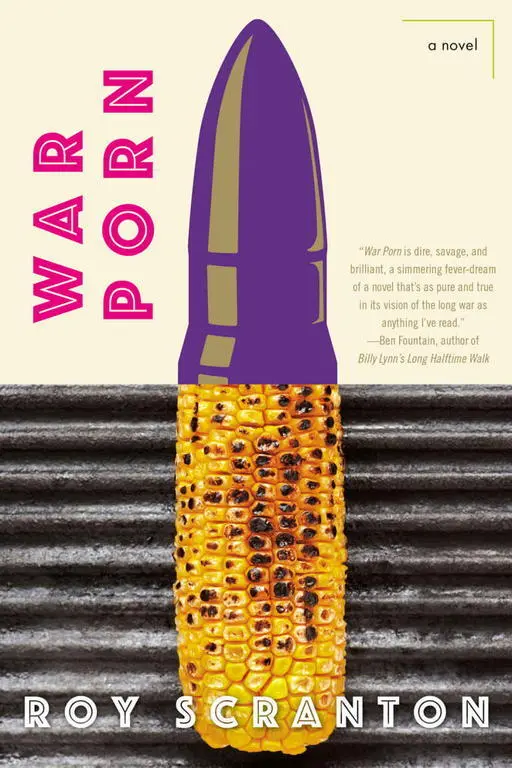
- Название:War Porn
- Автор:
- Издательство:Soho Press
- Жанр:
- Год:2016
- Город:New York
- ISBN:978-1-61695-715-5
- Рейтинг книги:5 / 5. Голосов: 1
-
Избранное:Добавить в избранное
- Отзывы:
-
Ваша оценка:
War Porn: краткое содержание, описание и аннотация
Предлагаем к чтению аннотацию, описание, краткое содержание или предисловие (зависит от того, что написал сам автор книги «War Porn»). Если вы не нашли необходимую информацию о книге — напишите в комментариях, мы постараемся отыскать её.
Videos, images, and narratives featuring graphic violence, often brought back from combat zones, viewed voyeuristically or for emotional gratification. Such media are often presented and circulated without context, though they may be used as evidence of war crimes. War porn is also, in Roy Scranton’s searing debut novel, a metaphor for the experience of war in the age of the War on Terror, the fracturing and fragmentation of perspective, time, and self that afflicts soldiers and civilians alike, and the global networks and face-to-face moments that suture our fragmented lives together. In
three lives fit inside one another like nesting dolls: a restless young woman at an end-of-summer barbecue in Utah; an American soldier in occupied Baghdad; and Qasim al-Zabadi, an Iraqi math professor, who faces the US invasion of his country with fear, denial, and perseverance. As
cuts from America to Iraq and back again, as home and hell merge, we come to see America through the eyes of the occupied, even as we see Qasim become a prisoner of the occupation. Through the looking glass of
, Scranton reveals the fragile humanity that connects Americans and Iraqis, torturers and the tortured, victors and their victims.
War Porn — читать онлайн бесплатно полную книгу (весь текст) целиком
Ниже представлен текст книги, разбитый по страницам. Система сохранения места последней прочитанной страницы, позволяет с удобством читать онлайн бесплатно книгу «War Porn», без необходимости каждый раз заново искать на чём Вы остановились. Поставьте закладку, и сможете в любой момент перейти на страницу, на которой закончили чтение.
Интервал:
Закладка:
Qasim’s heart sank. “Yeah.”
“Oh, some. You know. They say he’s like Abu Alich from Wolves of the Night. I heard one story about him, about some cop who wouldn’t take his payoff and started locking up his men, putting the squeeze on him, so Munir Muhanned paid off the cop’s boss, then just killed him.”
“The boss?”
“No, the cop.”
“And they didn’t do anything?”
“There was a stink, but Muhanned greased all the right palms and they left him alone. The best part is, they took the cop out into the desert and buried him up to his neck. Left him for three days. When they came back, he was still alive. He’d almost dug himself out. So they tied him to the bumper of their truck and drove home to Baghdad. By the time they hit Firdos Square, all that was left was the rope.”
In Qasim’s mind, he became the cop and Anouf’s brother was Munir Muhanned—Qasim pictured a cross between Saddam and Al Pacino. “I ain’t gonna kill you,” he said, slapping a wrench in his open palm, “because that wouldn’t hurt enough. But you’re gonna pay for what you did to my sister.”
“I didn’t do anything!” Qasim hissed.
“What?”
“Nothing.”
“I’m gonna drop you here because I gotta run,” Luqman said, pulling off across from the Yarmouk gas station. Traffic was sparse: the Ba’athists had set up checkpoints all over, discouraging people from going out. “The wife is having fits about these Hizbis. God keep you safe, Nephew.”
Qasim watched Luqman pull away into the dusk and turned heavily toward home. He walked slowly across Jordan Street, dodging a truck full of sheep, two taxis, and a passenger bus with no lights on, then went around the far side of the gas station to avoid the long line of cars waiting to fill up. Aside from the gas station, the neighborhood was quiet. Lights were coming on in the upper stories of the houses, glowing warmly through latticework window screens and ugly taped Xs, but nobody was out, nothing seemed to be happening. It felt as if the city had curled in on itself, waiting, afraid. It wasn’t far to his uncle’s, only a few short blocks along some old railroad tracks and through a vacant lot, but it seemed that night as if he were crossing a vast cavity, an eternal lostness.
What would happen to his city, his country? Every farewell stuck in his throat, each goodbye seeming, in some way, the last, because in a week nothing would ever be the same again, even if, God willing, Luqman and Anouf and Lateefah and his uncle Mohammed and everybody important to him survived. It was as if the calendar went up to the deadline and stopped: everything after, blank.
Except it won’t be blank. It’ll be terror and death and fire from the sky. It’ll be like before, with power outages and burst water mains and no food and police crackdowns. The UN will come in with their humiliating aid and we’ll stand and beg for a bag of rice.
Something snarled, so close he seemed to feel it more than hear it, and he spun hard, his pulse banging in his temples. Maybe six meters away—two dogs fighting over a pile of trash. One was much smaller than the other, and sicklier too, but appeared that much more vicious.
Qasim watched as they growled, circling, then the little one pounced. The big one went low and came up under the other, tearing at its chest with his teeth. The little one bit at the bigger one’s ear, his shoulder, then leapt back bloodied. The big one stepped forward and the little one ducked right and went for the neck. The big one met him jaw to jaw and the two merged in a tumble of fur and teeth, standing on their hind legs, snarling furiously and pawing like boxers. Qasim’s heart pounded in his hands.
The dogs came apart again, the little one jumping back limping. Both were bleeding, but the little one was clearly getting the worst of it. Their tongues lolled between their shiny white teeth, their eyes flashing like stainless steel.
The big one leapt, going for the kill. The little one dodged left, but the big one was faster, clamping down on his neck and shaking him by the throat. Qasim picked up a rock and threw it, hitting the big dog on the flank.
“Hey,” he yelled.
He picked up another rock and threw, this time nailing the big dog in the head. The dog’s jaw opened and his victim fell free.
“Hey! Piss off!”
He let fly another rock, which the big dog ducked, then another and another. The dog turned and loped a few meters away, then stopped and growled at Qasim, who threw again, hitting the dog square in the side and sending him fleeing.
The little one lay in the garbage, panting heavily, bleeding from its side, throat, and muzzle, one eye slashed and oozing, paw twitching. Qasim crept up, rock in hand, closer and closer to the wounded dog. It seemed oblivious, its good eye unfocused. Qasim thought it must be dying.
He crouched above the tiny beast, his nostrils full of blood and trash and dog scent. The dog’s body heaved with breath, moist and red, its fur darkly matted. Qasim reached out his left hand toward the gaping wound on the dog’s neck, toward its head.
The dog jerked up and snapped down. Qasim flinched and screamed. The dog bit harder, and Qasim stumbled back, lifting the bloody dog in the air. He shrieked and shook his arm, but the dog hung on, legs wriggling. Then Qasim swung and smashed the dog to the earth, knocking it loose. It pushed unsteadily to its feet, snarling and wheezing at him. Qasim stumbled back and kicked. The dog limped out of the way. Holding his bleeding hand, backing up staring at the dog, Qasim cursed wildly. The dog growled and barked. Qasim watched it as he backed away, both of them now silent, and when he was far enough, turned and walked off, checking twice over his shoulder, down the street and around the corner to his uncle’s.
He pushed open the gate with his shoulder, holding his bloody hand to his chest, dizzy with the waves of pain now shuddering up his arm. As he went in through the front door, he heard gunfire and an explosion and thought for a split second it’s started, before he realized it was the TV in the living room and Arnold Schwarzenegger saying “Now daht’s a vake-up kahll!”
His aunt Thurayya called from the kitchen: “Is that you, Father?”
“No, Auntie,” Qasim said. “It’s me.”
He stumbled through the parlor into the back room where his cousins were watching TV, then into the bathroom. He put his hand in the sink and turned on the water. His dizziness swept in waves, now pain, now cold. His auntie came up behind him.
“Are you alright, Nephew? You sound upset.”
“I hurt myself,” he said, turning away.
“Let me see.” She grabbed at him.
“It’s fine,” he said, wrapping his hand in a towel. “I just need a bandage.”
Aunt Thurayya was quick for a middle-aged woman, and tenacious, but Qasim was tall enough and the bathroom cramped enough he could keep her out.
“Let me see, Nephew.”
“It’s fine. I just caught it on some metal.”
“You need the tetanus.”
“I had the tetanus.”
“It’s not a vaccine! You need it each time.”
“It’s fine.”
“You’ll do it wrong. Let me see if you need the tetanus.”
“I don’t need the tetanus!”
“You need the tetanus!”
Qasim swung on her and shouted, “Leave me alone, old woman!”
Thurayya backed up a step and stretched to her full height. “You will not speak to your uncle’s wife in such a tone.”
“Enough meddling! Go!”
“Mind your tongue, boy!”
“Woman, leave me be!”
Thurayya glared at him, then turned and swept into the living room, storming in front of the television and yelling at Maha, Nazahah, and Siraj. She shut off the movie and made them go do chores. Qasim was shaking again and could barely hold himself up. He went to the kitchen and found a bandage.
Читать дальшеИнтервал:
Закладка:
Похожие книги на «War Porn»
Представляем Вашему вниманию похожие книги на «War Porn» списком для выбора. Мы отобрали схожую по названию и смыслу литературу в надежде предоставить читателям больше вариантов отыскать новые, интересные, ещё непрочитанные произведения.







Обсуждение, отзывы о книге «War Porn» и просто собственные мнения читателей. Оставьте ваши комментарии, напишите, что Вы думаете о произведении, его смысле или главных героях. Укажите что конкретно понравилось, а что нет, и почему Вы так считаете.