Roy Scranton - War Porn
Здесь есть возможность читать онлайн «Roy Scranton - War Porn» весь текст электронной книги совершенно бесплатно (целиком полную версию без сокращений). В некоторых случаях можно слушать аудио, скачать через торрент в формате fb2 и присутствует краткое содержание. Город: New York, Год выпуска: 2016, ISBN: 2016, Издательство: Soho Press, Жанр: prose_military, Современная проза, на английском языке. Описание произведения, (предисловие) а так же отзывы посетителей доступны на портале библиотеки ЛибКат.
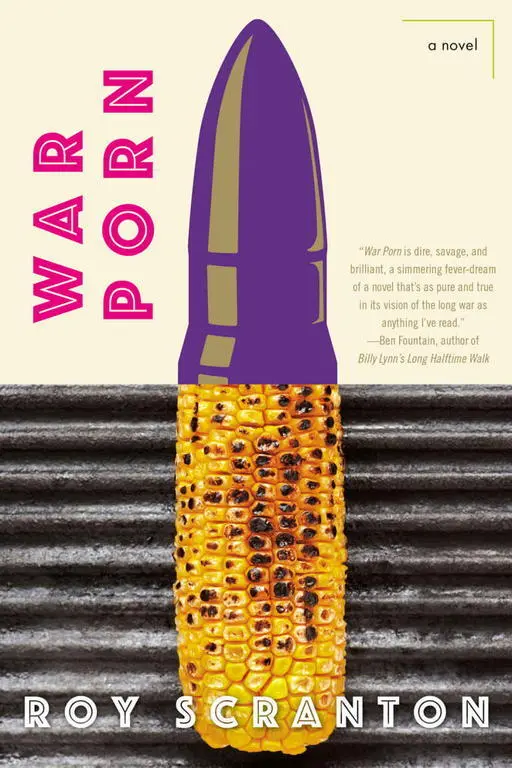
- Название:War Porn
- Автор:
- Издательство:Soho Press
- Жанр:
- Год:2016
- Город:New York
- ISBN:978-1-61695-715-5
- Рейтинг книги:5 / 5. Голосов: 1
-
Избранное:Добавить в избранное
- Отзывы:
-
Ваша оценка:
War Porn: краткое содержание, описание и аннотация
Предлагаем к чтению аннотацию, описание, краткое содержание или предисловие (зависит от того, что написал сам автор книги «War Porn»). Если вы не нашли необходимую информацию о книге — напишите в комментариях, мы постараемся отыскать её.
Videos, images, and narratives featuring graphic violence, often brought back from combat zones, viewed voyeuristically or for emotional gratification. Such media are often presented and circulated without context, though they may be used as evidence of war crimes. War porn is also, in Roy Scranton’s searing debut novel, a metaphor for the experience of war in the age of the War on Terror, the fracturing and fragmentation of perspective, time, and self that afflicts soldiers and civilians alike, and the global networks and face-to-face moments that suture our fragmented lives together. In
three lives fit inside one another like nesting dolls: a restless young woman at an end-of-summer barbecue in Utah; an American soldier in occupied Baghdad; and Qasim al-Zabadi, an Iraqi math professor, who faces the US invasion of his country with fear, denial, and perseverance. As
cuts from America to Iraq and back again, as home and hell merge, we come to see America through the eyes of the occupied, even as we see Qasim become a prisoner of the occupation. Through the looking glass of
, Scranton reveals the fragile humanity that connects Americans and Iraqis, torturers and the tortured, victors and their victims.
War Porn — читать онлайн бесплатно полную книгу (весь текст) целиком
Ниже представлен текст книги, разбитый по страницам. Система сохранения места последней прочитанной страницы, позволяет с удобством читать онлайн бесплатно книгу «War Porn», без необходимости каждый раз заново искать на чём Вы остановились. Поставьте закладку, и сможете в любой момент перейти на страницу, на которой закончили чтение.
Интервал:
Закладка:
The office was windowless, unventilated, stale. Three desks crammed against each other left a narrow perimeter for chairs. Qasim sat alone, leaning, pencil in his mouth, staring at Saddam, the Americans’ deadline barely a week away.
Home? Or stay? For the forty-ninth time, Qasim heard Professor Hureshi tell him, “Go if you must, but I can’t promise you anything. You know I have done everything I can to keep you on, but if you leave before defending, I would be very hard-pressed to justify holding your teaching position when there are others whose service recommends them. Who have advocates. You have been given every opportunity, Qasim—”
“But Professor, my wife…”
“You have been protected like a son.”
“Let me… let me talk to my uncle. Please, Professor. Just a few more days.”
And your wheedling worked, again, and Hureshi gave you till Wednesday, the last day of classes before the deadline. And now? Give up everything after working so hard… or stay here, cut off from Lateefah and mother, while…
Qasim twisted the end of his mustache, replaying the hours of teaching uninterested students, the longer hours grading, the years of study, tutoring, working odd jobs, doing accounting for his uncle, all the effort he’d put into the dissertation. And now when he phoned Lateefah, drained to the point of hopelessness, she only made it worse. Punishing him with her silence. Blaming him.
Maybe going back would give us another chance. You don’t have to be a mathematician. Take some job in the Ministry of Water, teach high school geometry. It won’t make up for… but maybe Lateefah—maybe she and I…
The door swung open and Adham flew in, throwing down a pile of manila folders, slumping into his chair: “What, my cousin, can you tell me, is so bloody hard about turning in your homework?” Adham raised one hand to heaven and covered his heart with the other. “I understand yes, the end is coming. I understand, yes, the Zionist crusaders are going to bomb us to rubble. I understand—am I not understanding?—that there is a better than fair chance almighty God in his infinite compassion has willed that our beloved university will be destroyed, our city wiped from the face of the earth, our friends and relatives charred to ash so that even the vultures and rats will be left starving in a waste so total it will make the Mongols’ sack of the libraries seem like Eid al-Fitr, but my cousin, my brother, my friend, as a fellow mathematician and as a fellow teacher, let me ask you: is that any reason to not turn in your homework?”
“Well…”
“Do you know how many of my students turned in their work this week? Two! Barely half the class even bothered to show up! And Mundhir Hashir, the deputy minister of education’s miserable bastard, you know what he says to me? Professor, please, can I get an extension till next week? Next week! Because he has drill with the Hizbis. Oh sure, Mundhir. Whatever you like. Just the way I passed you on the midterm. Whatever you want, just don’t sic your daddy on me.”
“Adham…” Qasim twisted his mustache and squinted meaningfully at the third desk, where their colleague Salman worked and—if department rumors were true—kept files on nearly everyone.
“Pfah! Have you even seen the birdwatcher today?”
“No. No, not yet. Cousin, I know what you mean. Every class gets smaller and the ones that show up barely pay attention. But there is a war coming.”
“And those who cannot dance complain the floor is crooked. They’re students. They should attend class and turn in their homework. It’s very simple. Determination is the key to everything.”
“I can understand their trouble. I haven’t touched my dissertation in weeks.”
Adham jabbed a bony finger at Qasim. “Then the carpenter’s door is loose.”
“But the Americans…”
“But! But! There is always something! Nowhere in the Qur’an does it say life will be easy!”
“Well maybe the Qur’an can help me decide whether or not I should return to Baqubah.”
“‘Righteousness does not consist in whether you face east or west. The righteous man is he who believes in God and the Last Day, in the angels and the Book and the prophets.’”
“So?”
“So listen for the voice of God and the prophets.”
“Right. Of course. And you? What have God and the prophets told you?”
“Oh, I’m going home. My father insists on it. He says things will be much safer in Fallujah.”
“But your teaching…”
“I talked with Hureshi, and he told me to take all the time I need.”
Qasim blinked slowly and gritted his teeth, thinking, goatfucker! You backward, camel-riding bumpkin with your book and your kaffiyeh! You who maybe, yes, you’re in the party, but you don’t even believe in a secular state! You?
“Your wife is in Baqubah, isn’t she?”
Qasim exhaled through his nose. “Yes. My Lateefah. And the rest of my family.”
“Who’s taking care of them?”
“My uncle Jibril, my cousin Faruq, who lives in town, my little brother—I don’t know. There are too many of us.”
Adham spread his palms. “Cousin, it’s simple: Go. In times like this, you must lead your family. ‘Consider those who fled their homes in their thousands for fear of death. God said to them, You shall perish.’”
“But if I go…”
“Yes?”
“Nothing. Just… My sister-in-law will be there too. With their children.”
“Not your brother?”
“He’s in the army. He drives a tank.”
“God grant him victory.”
“God!” Qasim barked. “The same God that put him there on the front lines? The same God that brings the Americans?”
“Don’t be blasphemous, cousin.”
“No, Adham, please. Tell me what we’ve done to deserve this.”
Adham leaned forward, crossing the desk so his gleaming face hung before Qasim’s, his words harsh whispers. “Let me tell you, cousin, about what I believe. The fate God weaves is a song of many voices, and things that seem to be disasters today may be openings through which God’s hand will pass tomorrow. There are many of us who wait for the day when we will lead our people back to the virtues of our fathers, back to the Book and the Caliphate, to the days before petrodollars and satellite dishes and nationalism. Sometimes, cousin, a storm scatters our tents because it’s time for us to move on. When the wind blows, you ride it.”
“Well, I think we’re done for.”
“Fine. That is what you think.” Adham turned to his students’ papers. “Your pessimism is a tool of the deceiver.”
Qasim snorted and stood, grabbing his satchel. Tool of the deceiver! I cannot believe the things that come out of his mouth. I need to get out of here. I should see when Luqman is leaving—God willing, soon, so I can call mother and make arrangements for going to Baqubah.
Is that what you’re doing now, Qasim, going home?
Yes. No. Yes.
Maybe.
The blind man stood in the courtyard feeling the sun on his face. He was very old and very frail, and where his eyes should have been were two pale and clotted scars. Hair like white wire sprouted from his brows, from within his ears and nose, from his cheeks and lips and chin, thickening over his neck in a tangled wave. In one hand he held his stick and in the other, his book and pen. From his bony shoulders hung a threadbare dishdasha.
“Ah-ham,” he croaked to himself and nodded, shuffling toward his bench along the wall. Soon, yes, he could feel it, coming from the sky. His little birds knew. Didn’t they always?
“Ah-ham,” he croaked, reminding them.
Near his feet, the one-legged half-wit echoed back “Aham!”
The blind man smiled and nodded. When a wound is tired of crying, it will begin to sing, he thought, sitting on his bench and listening to the life of the yard around him: the three men arguing, the others slapping down dominos, the idiots and cripples and crooks. He could just make out the voices in the women’s yard beyond the wall, and the sound of lunch being prepared in the prison kitchen.
Читать дальшеИнтервал:
Закладка:
Похожие книги на «War Porn»
Представляем Вашему вниманию похожие книги на «War Porn» списком для выбора. Мы отобрали схожую по названию и смыслу литературу в надежде предоставить читателям больше вариантов отыскать новые, интересные, ещё непрочитанные произведения.







Обсуждение, отзывы о книге «War Porn» и просто собственные мнения читателей. Оставьте ваши комментарии, напишите, что Вы думаете о произведении, его смысле или главных героях. Укажите что конкретно понравилось, а что нет, и почему Вы так считаете.