Theodore Odrach - Wave of Terror
Здесь есть возможность читать онлайн «Theodore Odrach - Wave of Terror» весь текст электронной книги совершенно бесплатно (целиком полную версию без сокращений). В некоторых случаях можно слушать аудио, скачать через торрент в формате fb2 и присутствует краткое содержание. Год выпуска: 2008, Издательство: Chicago Review Press, Жанр: prose_military, Историческая проза, на английском языке. Описание произведения, (предисловие) а так же отзывы посетителей доступны на портале библиотеки ЛибКат.
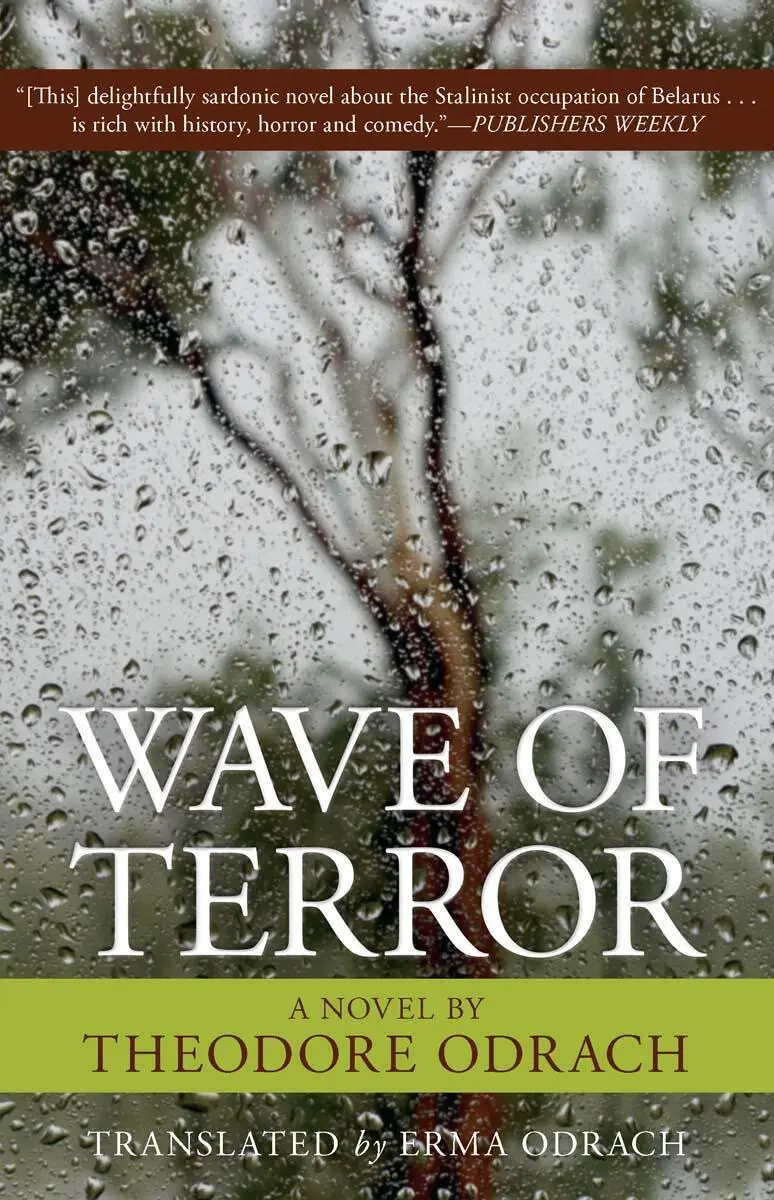
- Название:Wave of Terror
- Автор:
- Издательство:Chicago Review Press
- Жанр:
- Год:2008
- ISBN:нет данных
- Рейтинг книги:4 / 5. Голосов: 2
-
Избранное:Добавить в избранное
- Отзывы:
-
Ваша оценка:
Wave of Terror: краткое содержание, описание и аннотация
Предлагаем к чтению аннотацию, описание, краткое содержание или предисловие (зависит от того, что написал сам автор книги «Wave of Terror»). Если вы не нашли необходимую информацию о книге — напишите в комментариях, мы постараемся отыскать её.
Wave of Terror — читать онлайн бесплатно полную книгу (весь текст) целиком
Ниже представлен текст книги, разбитый по страницам. Система сохранения места последней прочитанной страницы, позволяет с удобством читать онлайн бесплатно книгу «Wave of Terror», без необходимости каждый раз заново искать на чём Вы остановились. Поставьте закладку, и сможете в любой момент перейти на страницу, на которой закончили чтение.
Интервал:
Закладка:
Pausing to take some tea, after a moment he started up again. “Oh, the heart of a young man, it’s like the spring rain, it will pour for about a month, then by summer everything will dry up. And so it goes. Their household has fallen apart completely and now poverty has consumed them like fleas on a dog. Everything Paraska touches turns to smoke and dust. That’s the kind of daughter-in-law I have, as useless as an old shoe.”
Paraska burst into tears, and fled the room, banging the door behind her. She could be heard sobbing in the hallway.
Kulik responded to this little domestic scene with amazement and sorrow. Finding himself confronted with the complexities of other people’s lives always caused him to feel awkward and embarrassed. But his heart went out to Paraska. Her life was hard enough without the old man breathing down her neck at every turn. Kulik felt she did a more than adequate job tidying the classrooms and preparing his meals. She was always punctual and efficient and never left until her work was finished. Not knowing what to do, Kulik said nothing, hoping that the old man would stop his bitter harangue and go home. But he went on for another hour, describing each private interlude in detail and coming to lengthy, tiresome conclusions. Kulik only half listened, trying without success to think of ways to change the subject.
As the clock struck three, the old man finally prepared to take his leave. Kulik helped him out of the chair, and taking him by the arm, accompanied him to the door. The old man stopped to look Kulik in the face.
“I can tell by your eyes you’ve had a good upbringing and you’re a decent man. But I can also see you’re too much on the soft side.” In the yard, turning around, he called out as if in warning, “About my daughter-in-law, don’t forget what I told you. She’s neglectful and irresponsible and doesn’t care about anything. May you live a hundred years for the delicious rolls and tea. God bless you!”
Kulik watched the old man hobble along the narrow, snow-beaten path to his house. Back inside the school, Kulik did not return to his office, but headed for the grade one classroom, where he noticed the light had been turned on. He was delighted to find it spotless and in perfect order: the floor had been scrubbed, the desks washed, and the blackboards and slates wiped clean. Obviously while he had entertained his visitor, Paraska had busied herself tidying up. When he retired to his quarters, he was startled to find her there, slouched on a footstool, throwing logs into the tile stove. Her face was red and swollen and she sat lost in meditation, as if hypnotized by the fire’s glow. When she noticed Kulik standing over her, she buried her head in her hands, and broke into a fit of weeping.
“I don’t know how much more of this I can take. That old man probably went on and on about me. He doesn’t give me a moment’s rest. I’m sick and tired of him. I’m just grateful I can get away from him when I’m at the school.”
She stoked the logs every so often, while she sobbed.
“My life is so wretched. Nothing turned out the way it was supposed to. When I was young I wanted to be free and travel the world, but instead I married and bore my children. That’s when things really started to go bad. Something crept into my heart and tore away at it. Now my children cry all night and I can’t get any sleep. Then the old man starts in on me. And that’s only part of my troubles. Bad luck has settled in all around me and there’s no escape.”
Kulik looked sympathetically at her. “Is there anything I can do to help?”
Paraska shook her head. “It’s my husband, Philip. He’s terribly sick. He’s dying. When he was sent to work in the forest he became gravely ill. Some kind of lump appeared on his head and now there’s another one. He’s suffering. Cornelius and that bastard Leyzarov, may they both rot in hell, chased him into the forest and worked him to the bone until he collapsed. It’s nothing but slave labor. With other men he hauled wood from Hvador to Pinsk, then past Pinsk all the way to the Bugsy-Dnieprovsky Canal. From anywhere and everywhere our men are chased into the forest to cut down trees and haul them to that damned canal. They want to open it up for ships by springtime. It’ll be the new gateway to Moscow, they say. Our so-called saviors are just working our men to death.”
Holding back her tears, the anguish in her eyes deepened into fear. “And now there’s talk about war. Everything’s pointing to it.”
“There’s not going to be any war, Paraska. People are always talking.” Kulik tried to console her, but he had trouble believing his own words.
A brief silence followed. Lowering his voice and looking directly at her, he said earnestly, “Let me give you a word of advice. You mustn’t speak so openly. It’s a very dangerous thing to do and it can only lead to a bad end. The eyes of the Party are everywhere.”
Paraska said timidly, “But I only say these sorts of things to you, Director, because I know you’re one of us. About my Philip, I’m at a complete loss. I don’t know what to do or think anymore. Those lumps on his head won’t heal and they’re getting bigger. His head throbs night and day and he screams from pain. He wants to go to Pinsk to the doctor but Cornelius won’t issue him a pass. The bastard only laughs and accuses Philip of being lazy and trying to wangle his way out of working.”
As Paraska went on, all at once there was a scratching on the window which was so thick with frost it was impossible to see who was out there. Someone could be heard calling from the other side. The voice called again, and it soon became evident it was Grandfather Cemen.
“Paraska! Paraska!” he shouted. “Go home, Philip needs you!”
Jumping to her feet, already halfway out the door, she turned to look at Kulik, and cried desperately, “Please, Director, I beg you, don’t dismiss me from the school. I don’t know what would become of my children. I’m all they’ve got!”
CHAPTER 5
That night Kulik tossed and turned into the early morning hours and did not get a moment’s rest. When six o’clock finally struck he rolled out of bed, went to the washbasin and splattered his face with water. Immediately he felt revived. He puttered around the kitchen, put on the kettle, and sat down to a breakfast of buttered black bread and boiled eggs. To his great relief today was a special day; he did not have to hurry to his office and he was able to enjoy a second cup of coffee. Yesterday the children had been dismissed for the winter holidays and he did not have to prepare lessons and organize the day’s activities. This break in the monotony of school life was a most welcome change.
At a quarter past nine he began unpacking his trunk and suitcases and organizing his rooms, something he had not yet found time to do since arriving in Hlaby. In the evening Paraska appeared, refilled the tile stove in the kitchen and prepared him a meal of unground buckwheat with small chunks of stewed beef. The windows were heavily covered with frost and a north wind rushing in from over the frozen fields made the panes rattle. Outside, the land was cold and desolate. The sub-zero temperature cut straight to the bone and the slightest breath froze in the air. The residents of Hlaby could not remember such a brutal winter. But in his quarters Kulik felt warm and snug, as if he were in a cocoon; his thoughts drifted. Suddenly he was startled by a loud, shrill bird-like cry coming from somewhere outside. After a few minutes it came again. Where had he heard that sound before? Then silence. He waited for the cry to start up once more but it never did and he decided that it was just the wind.
He began to think about Pinsk. In two days’ time he would be attending a regional teachers’ conference there, along with teachers from the surrounding towns and villages. The aim of the conference was to initiate a political re-education of all those in the profession. Although he was not particularly keen on making the trip or of spending countless hours in some lecture hall listening to long, drawn-out speeches, he was interested in change and change was something Pinsk had to offer.
Читать дальшеИнтервал:
Закладка:
Похожие книги на «Wave of Terror»
Представляем Вашему вниманию похожие книги на «Wave of Terror» списком для выбора. Мы отобрали схожую по названию и смыслу литературу в надежде предоставить читателям больше вариантов отыскать новые, интересные, ещё непрочитанные произведения.




Обсуждение, отзывы о книге «Wave of Terror» и просто собственные мнения читателей. Оставьте ваши комментарии, напишите, что Вы думаете о произведении, его смысле или главных героях. Укажите что конкретно понравилось, а что нет, и почему Вы так считаете.