Alan Moorehead - Gallipoli
Здесь есть возможность читать онлайн «Alan Moorehead - Gallipoli» весь текст электронной книги совершенно бесплатно (целиком полную версию без сокращений). В некоторых случаях можно слушать аудио, скачать через торрент в формате fb2 и присутствует краткое содержание. Год выпуска: 0101, ISBN: 0101, Издательство: Rockport Publishers, Жанр: prose_military, military_history, на английском языке. Описание произведения, (предисловие) а так же отзывы посетителей доступны на портале библиотеки ЛибКат.
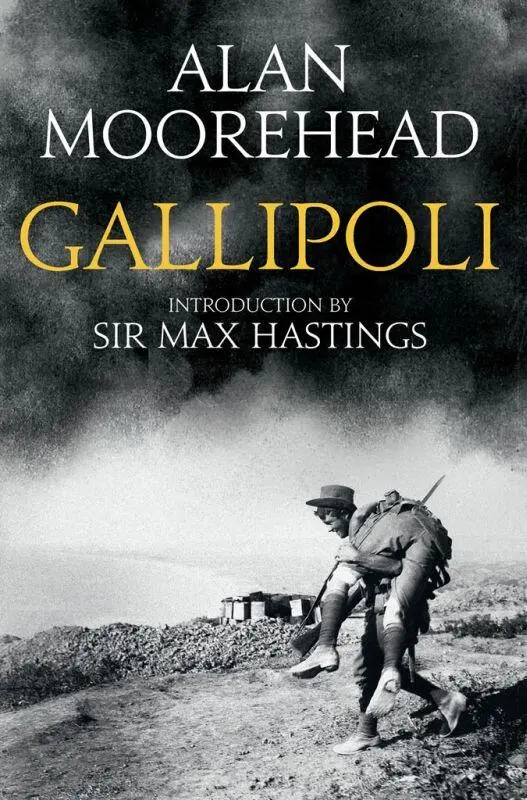
- Название:Gallipoli
- Автор:
- Издательство:Rockport Publishers
- Жанр:
- Год:0101
- ISBN:9781781314852
- Рейтинг книги:5 / 5. Голосов: 1
-
Избранное:Добавить в избранное
- Отзывы:
-
Ваша оценка:
Gallipoli: краткое содержание, описание и аннотация
Предлагаем к чтению аннотацию, описание, краткое содержание или предисловие (зависит от того, что написал сам автор книги «Gallipoli»). Если вы не нашли необходимую информацию о книге — напишите в комментариях, мы постараемся отыскать её.
Gallipoli — читать онлайн бесплатно полную книгу (весь текст) целиком
Ниже представлен текст книги, разбитый по страницам. Система сохранения места последней прочитанной страницы, позволяет с удобством читать онлайн бесплатно книгу «Gallipoli», без необходимости каждый раз заново искать на чём Вы остановились. Поставьте закладку, и сможете в любой момент перейти на страницу, на которой закончили чтение.
Интервал:
Закладка:
One particularly appalling winter in Constantinople Aubrey Herbert had been moved to write:
‘There falls perpetual snow upon a broken plain,
And through the twilight filled with flakes the white earth joins the sky.
Grim as a famished wounded wolf, his lean neck in a chain,
The Turk stands up to die.’
Kemal, no doubt, really did see himself in this light, and there must have been many others like him.
Herbert wrote again: ‘In 1913, when the Balkans gained one smashing victory after another over the unequipped and unorganized Turkish forces every Greek café in Pera shouted its song of triumph.’
Nor was it only the Greeks, the Armenians and the other foreign minorities who were witnessing the Turks’ humiliation; the great Christian powers had established sovereign prerogatives in Turkey. They controlled her foreign trade, they administered her armed services and the police, they granted loans to the bankrupt government according to their judgment of its behaviour, and their own nationals residing in Turkey were above the law: under the system of capitulations Western Europeans could only be tried for offences in their own courts. The obvious implication was that the Turk was not only incompetent to manage his own affairs, he was not yet civilized. He was Caliban, a dangerous but now docile monster; and the Christian powers were Prospero, controlling him for his own good.
For the first five months of the war there had been very little change in these conditions. However much their religion and their instincts taught them to regard foreigners and Christians as unclean slaves, lower than animals, the Young Turks still desired to be modern, to be Western, and they still affected to despise the methods of Abdul Hamid. Enver, it is true, had talked about abolishing capitulations and of making foreign residents pay special taxes, but he soon dropped these ideas when he heard Baron von Wangenheim was against him.
The security measures taken in Constantinople and the other cities, therefore, had not been excessive. Greeks and Armenians were deprived of their arms and were conscripted into the labour battalions of the Army. In some cases their property was requisitioned but this was a fairly general thing, and it probably fell as heavily upon the Moslem peasant as upon anyone else, since his stock and grain were seized to feed the Army. Bedri, the police chief in Constantinople, had gone out of his way to try and humiliate Sir Louis Mallet and the French Ambassador when they left the country on the outbreak of war by holding up their special trains and making other difficulties. But some 3,000 British and French nationals who had made their homes in Turkey had remained behind and they were not interned.
In Constantinople the street signs which for years had been written in French were obliterated; no shop could display a placard in a foreign language; merchants were required to dismiss their foreign employees and take on Turks instead. There was a mild spy hunt. Nobody in time of war could have seriously objected to these and the other measures that were imposed, since very much the same sort of thing, or worse, was happening in the other belligerent countries in western Europe.
But March 18 changed all this. Now at last the Turkish soldier was something in the world again. The British battle-fleet was the strongest armament in existence, its very name had been enough to strike terror among its enemies in every ocean, and no one had given the Turks the ghost of a chance against it. Yet by some miracle they had driven it away. Constantinople had been saved at the last moment. The Turk could hold up his head again.
Not unnaturally and perhaps not unfairly Enver and Talaat claimed the credit for all this, and indeed the victory of March 18 was for them absolutely vital. Up to this time they had never been really secure in office, they had steered a breathless course from day to day, and they had been very largely driven by events. But now they found themselves borne up on a wave of popularity and patriotic pride. The Army’s success was their success. At last they represented Turkey. It was even more than this: they stood for the Turk himself, for Islam with all its xenophobia and its hunger for revenge on the patronizing, dominating foreigner.
And so in their elation — their sudden emotional transition from fear to not-fear, from weakness and doubt to strength and certainty — they did a thing which was nothing new in the East, or anywhere else for that matter: they set about hunting down their racial and political opponents. They were now strong enough to express their hatred and they wanted victims.
At this stage there could be no question of attacking the British and French nationals: the American ambassador was looking after their interests, and in any case there was still the possibility that the Allies might win the war. The Greeks too could count on some sort of protection from the neutral government in Athens. But the Armenians were in a very different case. In nearly every way they fitted the role of the perfect scapegoat. The Armenians were Christians and yet there was no foreign Christian government which was responsible for them. For years they had hoped to set up an independent Armenian state in Turkey, and no matter how quiet they might be lying at the moment, it was obvious that they staked their future on the victory of the Allies. Herbert probably went too far when he said, ‘though the Armenians had a future before them in the development and the improvement of Turkey, they were seduced by Europe and flattered to suicide.’ Yet there were grounds for the Turkish belief that the Armenians were a fifth column inside the country, and that, no less than the Greeks, they had gloated over every Turkish reverse in the Balkan wars.
Then too the Armenians were supposed to be rich: they lent money, a thing forbidden to the Moslems, and many of them handled commerce in the city while the Turkish peasant remained on the land. They had a reputation for cleverness, for outwitting the lazier, less efficient Turks, and they had not always disguised the fact that they regarded themselves as a superior race, better educated than the Moslems, more Westernized. A long skein of trivial jealousy was woven around these gifted people in every village.
These things applied of course in equal measure to the Greeks and the Jews, but the Turks had another particular grudge against the Armenians. It was thought that they had been disloyal in the recent campaign in the Caucasus, that they had sent information across to the Russians, and that some of their young men had even crossed the border to join the Russian army. Soon a rumour spread that the Armenians were secreting arms with the idea of raising a revolution.
There had been massacres in Turkey before this, but nothing could compare with the ferocity, the organized brutal hatred with which the Turks now launched themselves in their revenge. In some places like Smyrna the massacres were comparatively mild; in others like Van, where the Armenians did put up a successful defence for a while, the slaughter was complete. The system used — and it was entirely a system planned by Talaat and the Committee — was to goad the Armenians to the point where they attempted to resist. At first their goods were requisitioned, then the women were molested, and finally the shooting began. It was customary, once an Armenian village had been quelled, to torture the men so that they would reveal where their arms and money were hidden, then to take them out into the country, tied together in batches of four, and shoot them dead. In some cases the women were given the opportunity of becoming Moslems, but more usually the attractive ones were simply taken off to the harems by the local Turkish garrison. The remainder, with the old men and the boys, were then assembled with what goods they could carry and put on the road to the Mesopotamian deserts in the south. Very few of them arrived; those who were not waylaid and stripped naked by marauding bands soon died of hunger and exposure.
Читать дальшеИнтервал:
Закладка:
Похожие книги на «Gallipoli»
Представляем Вашему вниманию похожие книги на «Gallipoli» списком для выбора. Мы отобрали схожую по названию и смыслу литературу в надежде предоставить читателям больше вариантов отыскать новые, интересные, ещё непрочитанные произведения.










Обсуждение, отзывы о книге «Gallipoli» и просто собственные мнения читателей. Оставьте ваши комментарии, напишите, что Вы думаете о произведении, его смысле или главных героях. Укажите что конкретно понравилось, а что нет, и почему Вы так считаете.