William Gerhardie - Futility
Здесь есть возможность читать онлайн «William Gerhardie - Futility» весь текст электронной книги совершенно бесплатно (целиком полную версию без сокращений). В некоторых случаях можно слушать аудио, скачать через торрент в формате fb2 и присутствует краткое содержание. Год выпуска: 2012, Издательство: Melville House, Жанр: Классическая проза, на английском языке. Описание произведения, (предисловие) а так же отзывы посетителей доступны на портале библиотеки ЛибКат.
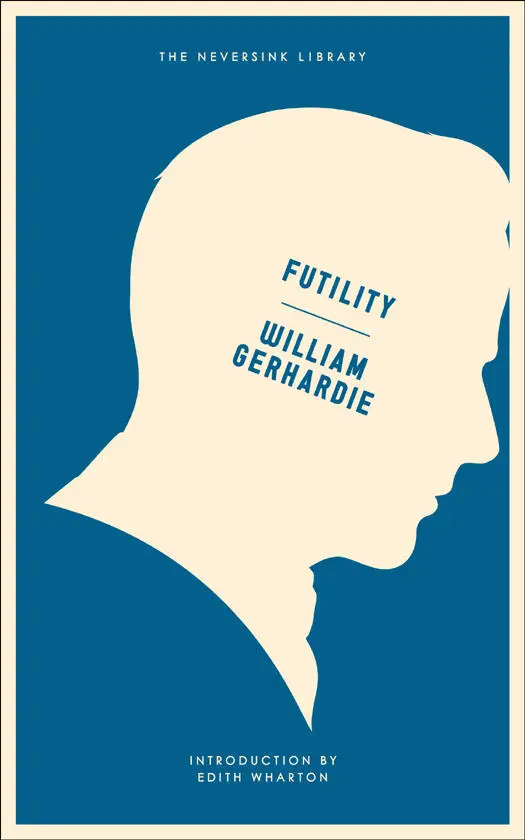
- Название:Futility
- Автор:
- Издательство:Melville House
- Жанр:
- Год:2012
- ISBN:нет данных
- Рейтинг книги:4 / 5. Голосов: 1
-
Избранное:Добавить в избранное
- Отзывы:
-
Ваша оценка:
Futility: краткое содержание, описание и аннотация
Предлагаем к чтению аннотацию, описание, краткое содержание или предисловие (зависит от того, что написал сам автор книги «Futility»). Если вы не нашли необходимую информацию о книге — напишите в комментариях, мы постараемся отыскать её.
one of the century's neglected masterpieces.
It tells the story of someone very similar to Gerhardie himself: a young Englishman raised in Russia who returns to St. Petersburg and falls in love with the daughter of a hilariously dysfunctional family-all played out with the armies of the Russian Revolution marching back and forth outside the parlor window.
Part British romantic comedy, part Russian social realism, and with a large cast of memorable characters, this astoundingly funny and poignant novel is the tale of people persisting in love and hope despite the odds.
Futility — читать онлайн бесплатно полную книгу (весь текст) целиком
Ниже представлен текст книги, разбитый по страницам. Система сохранения места последней прочитанной страницы, позволяет с удобством читать онлайн бесплатно книгу «Futility», без необходимости каждый раз заново искать на чём Вы остановились. Поставьте закладку, и сможете в любой момент перейти на страницу, на которой закончили чтение.
Интервал:
Закладка:
But no; it was not quite that. There was something fatalistic, and yet almost defiant, in her look. A blend of optimistic resignation. What was it? What was she discovering? Why that smile? It was as though in desperation she had given him full rein and found, to her amazement, that he did not seem to pull as hard as when she held him tight.
I perceived that my dinner-party promised well. I caught Fanny Ivanovna’s eye and raised my glass; and instantly I had her glass refilled. My head began to swim. I discovered an agreeable warmth in my body, and the expression that had come on my face seemed to be getting out of my control. “Fanny Ivanovna,” I cried, “never mind my expression: I know it is stupid. It has come on of its own accord, and I cannot quite remove it, though I feel that a smile may develop of itself at any moment.”
“Look,” Nina said to Sonia, “how awfully funnily his face changes from smile to seriousness. Look!”
I smiled a drunken smile.
“Look: there again!”
I should have explained here that I had a passion for that white and pasty substance that Russians eat at Easter — paskha, and when I was in Russia I made it my habit to eat it in and out of season. I had a pyramid of considerable dimensions locked up in the safe.… And now, at the close of dinner, the secret was betrayed. A dash was made for it. The guests armed themselves with knives, forks, and spoons and dug into the substance and cleared it away in less than twenty minutes. They then lay moaning and suffering not a little from its effect on their abounding stomachs.
We were jolly, exuberant, self-centred and sentimental. I felt distinctly pleased with myself. I knew not why; that is the secret of good wine. Some people laughed, others after the manner of the Slav were fain to weep; and outside there raged the snowstorm of a Siberian winter night.
Fanny Ivanovna, Magda Nikolaevna, Čečedek, Eisenstein, Nikolai Vasilievich, reclined on sofas and arm-chairs, smoked and sipped liqueurs; and Sonia, Nina, Vera, Zina and her sisters and Baron Wunderhausen made a noise in the adjoining rooms and did wild things with the furniture.
Uncle Kostia stood on the hearth-rug, dazed and very red in the face, and held forth at great length: his Russian soul a reservoir of overflowing feeling. “I feel positively strange,” he said. “I swear I never felt like this before. I nodded, do you know, to some point in an argument with which at the time I happened to agree, and to my great embarrassment I somehow kept on nodding quite in spite of myself, and keep on nodding — do you see me, Fanny Ivanovna? — though the portion of the argument with which I had expressed agreement long died in oblivion. I know it is the wine. It is good wine, and — to make a long story short — I am drunk. But I don’t care. This is an exceptional night. It is a memorable night. Fanny Ivanovna and Nikolai Vasilievich and Magda Nikolaevna, Moesei Moeseiech, Zina, Sonia, Nina, Vera, Kniaz: I swear I never felt so near to you as I do feel to-night. I feel beastly sentimental. I feel that I could howl aloud. I feel that presently I will go round and kiss each one of you in turn. Look into your own hearts. What is the use of pretending? We are all one family and Nikolai Vasilievich, our dearly beloved, much-respected Nikolai Vasilievich, is our parent and guardian. He stood by us well in our hour of need. His task has been an uphill task; but has he complained of us? Not once. He has borne the burden of many families without a sigh of protest. Speaking for myself, we men of letters have to lean for our support on stalwart men like Nikolai Vasilievich, and it is indeed largely on their generous help that art and literature must depend. As you know, we men of letters are no business men, but if as a writer and a student of life and human nature I may presume to give advice: don’t lose courage, Nikolai Vasilievich. Remember, we are all behind you; we shall follow you, if need be, to the end of the earth. Courage, Nikolai Vasilievich! Keep hard at it! Keep hard at it!”
We became agitated. We all spoke at once, perhaps for no other reason than that we had been deprived of speaking for so long. And then, suddenly, we subsided, for on the floor above us, occupied by a Russian family, some one was playing the piano. It was Chopin. We listened to the music and grew still, and our souls were all music as though he had touched their strings. And the house seemed charmed, and the gruff Siberian night looked in through the window and listened in silence.… For his is the grace and sweet melancholy of romance, and his the laughter of silver trumpets, and tears as bright as the dew at dawn. His sorrows are no graver than the sorrow of the gold-red sunset, and his sobs are the sobs of the sea, the echo of the waves weeping on the rocks. And it has all been to him a dream in music, and when we hear it we dream with him.…
“And Fanny Ivanovna,” said Nikolai Vasilievich, “is now a widow!”
A thought flashed across my brain. “Fanny Ivanovna,” I cried, “I had meant to ask you what was that funeral procession you all followed yesterday?”
“My husband’s,” she said, and I was struck unpleasantly by her tone of mirth and triumph.
“Eberheim?”
“Yes,” smiled Nikolai Vasilievich; “she is a widow now. A merry widow !” And Fanny Ivanovna laughed in a loud and jarring manner. It seemed odd why I had not guessed so obvious a candidate when I had seen the funeral procession pass by my window, and had supposed that the corpse had been some victim of the Gaida outbreak. We all felt that it was the best thing for the man, and nothing more was said on the subject. Eisenstein, in an impossible condition, sang sentimental gipsy songs to his own accompaniment on the piano, and his voice was such that the cat hid itself in the house and could not be found for three days afterwards; and Nikolai Vasilievich was assisting him in a rather timid staccato baritone. Sonia, Nina, Vera, Zina and her sisters, Baron Wunderhausen and I were jazzing in the adjoining room. Fanny Ivanovna and Magda Nikolaevna, seated side by side on the sofa, were discussing, somewhat timidly it seemed, Magda Nikolaevna’s proposal that they should start a millinery establishment together, procuring fashionable “Parisian” hats from Peking and Shanghai and selling them at great profit in Vladivostok; and Zina’s father was sleeping, mouth wide open, in his chair.
IX
SHE WAS GOING ALONG QUICKLY, WRAPPED IN the familiar fur; and it was snowing merrily. “Nina!”
She turned round and stopped, smiling. And the bright white winter day seemed to be smiling with her. It was the day of the Social Revolutionary coup d’état . Early in the morning troops of revolutionary partisans had occupied the city peacefully and taken possession of the public buildings, to wild cheering from the local crowds. The Russian national flag had been hauled down and a red one hoisted in its stead. Processions had appeared with revolutionary banners, and the town was decorated in red. “Have you heard the news?” she said. “Pàvel Pàvlovich, the Baron, has fled to Japan overnight, without telling us a word.”
“Of course, he was in danger of being arrested by the Reds,” I said. “But I suppose he’ll come back some day.”
She shook her head. “I don’t think so.”
“What does Sonia think?”
“She’s glad.”
“Glad?”
“Yes. She was going to leave him herself … to marry Holdcroft. But now …”
“Now what?”
“But now he’s left her.”
“Well, all the better, then. Saves trouble.”
“It’s … humiliating.”
We went on together and, nearing home, we cut through masses of new snow. It was one o’clock. The sun shone yellow. She put her hand into my coat pocket. Tender flecks, falling from the sky, would linger on her brows and lashes. We fumbled and wrangled in the snow; and, with that birdlike look of hers, she said, “To-day … I like you.”
Читать дальшеИнтервал:
Закладка:
Похожие книги на «Futility»
Представляем Вашему вниманию похожие книги на «Futility» списком для выбора. Мы отобрали схожую по названию и смыслу литературу в надежде предоставить читателям больше вариантов отыскать новые, интересные, ещё непрочитанные произведения.









Обсуждение, отзывы о книге «Futility» и просто собственные мнения читателей. Оставьте ваши комментарии, напишите, что Вы думаете о произведении, его смысле или главных героях. Укажите что конкретно понравилось, а что нет, и почему Вы так считаете.