Jan Slauerhoff - The Forbidden Kingdom
Здесь есть возможность читать онлайн «Jan Slauerhoff - The Forbidden Kingdom» весь текст электронной книги совершенно бесплатно (целиком полную версию без сокращений). В некоторых случаях можно слушать аудио, скачать через торрент в формате fb2 и присутствует краткое содержание. Год выпуска: 2013, Издательство: Pushkin Press, Жанр: Классическая проза, на английском языке. Описание произведения, (предисловие) а так же отзывы посетителей доступны на портале библиотеки ЛибКат.
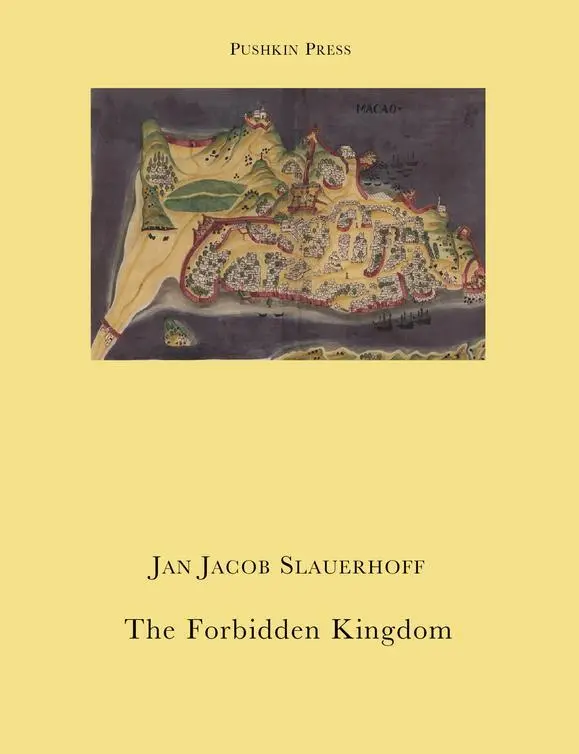
- Название:The Forbidden Kingdom
- Автор:
- Издательство:Pushkin Press
- Жанр:
- Год:2013
- ISBN:нет данных
- Рейтинг книги:5 / 5. Голосов: 1
-
Избранное:Добавить в избранное
- Отзывы:
-
Ваша оценка:
The Forbidden Kingdom: краткое содержание, описание и аннотация
Предлагаем к чтению аннотацию, описание, краткое содержание или предисловие (зависит от того, что написал сам автор книги «The Forbidden Kingdom»). Если вы не нашли необходимую информацию о книге — напишите в комментариях, мы постараемся отыскать её.
brings together the seemingly unrelated lives of a twentieth-century ship's radio operator and the sixteenth-century Portuguese poet-in-exile Luis Camoes.
Jacob Slauerhoff draws his reader into a dazzling world of exoticism, betrayal, and exile, where past and present merge and the possibility of death is never far away.
Born in The Netherlands in 1898, upon graduating from university
signed up as a ship's surgeon with the Dutch East India Company. He was at sea throughout his life, voyaging to the Far East, Latin America, and Africa.
The Forbidden Kingdom — читать онлайн бесплатно полную книгу (весь текст) целиком
Ниже представлен текст книги, разбитый по страницам. Система сохранения места последней прочитанной страницы, позволяет с удобством читать онлайн бесплатно книгу «The Forbidden Kingdom», без необходимости каждый раз заново искать на чём Вы остановились. Поставьте закладку, и сможете в любой момент перейти на страницу, на которой закончили чтение.
Интервал:
Закладка:
A young cow was tethered by a rope. I released the animal, but changed my mind just in time, tied it up again and tried to milk it. I remembered with a start that raw milk is the antidote to scurvy: I had almost let my chance of survival escape! The small amount that I was able to swallow — I could scarcely open my mouth any longer — did me good. I made a mental note of where the animal was and continued on my way. I now reached the edge of a field that had been regularly planted. I was not familiar with the crop, but ate it raw and unwashed anyway in my desire to survive, possibly risking a more serious disease.
So I wandered around until a new danger threatened: that of being seen, since it was becoming light. I found a cleft in the rock and spent the day dozing and suffering cramps. Sometimes I peered outside, but never saw a living soul.
The next night the cow had disappeared, but I found a different, better kind of root vegetable and finally chanced upon a house. During the following day, I kept watch on it from the trees. It appeared to be deserted. At night I broke in and found food in earthenware jars, but it was disgusting. Only then did my desperate situation come home to me: my own people would put me in prison, while the Chinese could not understand me, and I could not live on their food. I could not go back to the sea. As I was reflecting on this, I felt a roaring in my ears and collapsed. I tried to get up but could no longer manage to and lay on the bumpy clay floor.
IV
THE CHINESE PEASANTS WHO, returning from harvesting, found the blond barbarian in their home, did not kill him or hand him over. They let him wander at will, did not stop him from picking and eating vegetables, and taking the leftover rice from their bowls. It was impossible to decide from their faces or gestures whether they even saw him. This denial of his existence was even more painful for Camões than enmity or imprisonment. It was as if he had landed on another planet, whose inhabitants, equipped with different senses, were unaware of his presence. There was no way that he could connect, through either laughter or gestures, with this outside world. It was a loneliness more dreadful than that far out at sea or in an icy waste, more oppressive than confinement in the ship’s hold. Still, in the midst of this mental torment his physical strength slowly returned. Driven by instinct, he dragged himself up the slope to the highest point on the island. The hillside was not steep, but he was still so weak that it took him days. On the town side the mountain fell away quite steeply and the summit surveyed the bay and the surroundings. Only now could Luís view the new world.
Despite his wretched state, the wide vista gave him some sense of liberation. All around there were islands in the water, and the mainland could be seen in the distance, while across the bay the town lay on the side of three hills. On the top was the lighthouse, which had continued to blaze above the darkness of the town; on the second hill, in an angular garland, were the ramparts of the citadel; and on the third stood the cathedral with a great cross on its spire. Beneath lay the town, with white, brown and grey buildings and between them many boulders and clumps of trees. Out to sea the junks had swarmed across the water in dense flocks; even when the fishing fleet took refuge in the Tagus from an Atlantic storm, there were not as many masts on view as this.
Below him, on the island, the roofs of the fishermen’s huts stuck up like pointed saddles that had been scattered about; on the beach, pulled up well above the tide line, were the sampans. Luís scanned the line of the coast as far as he could, and at the far end, in a wood, was something that resembled a white roof. This had the same effect on him as a sail on a shipwrecked mariner floating around in the sea: he was determined to make for it, unconcerned whether it belonged to a pirate or a friendly vessel. He descended from the summit and tried to follow the most direct path. But he had to avoid villages and ravines and finally lost his way completely, so that he had to climb back to the summit to find it again; when he descended again he tried to keep on course, but again went astray.
Toward night-time, too tired to go any further or to look for a hiding place, he dug a trench in a ploughed field and covered himself with leaves, too weary and feverish to sleep. Late at night ethereal singing reached his ear from a very long distance away. He sat up to listen; it must be the night wind carrying the sound, as in the intervals of calm it could not be heard. Camões leapt out of the trench, and walked into the wind, stopping when it fell silent, continuing when it was audible again. But it became fainter and fainter, and it also began to rain and grew lighter and he found himself back in the same grey field. The wind had turned; even the wind and rain were conspiring against him. He spent a night in his trench. At night it began again: he pretended not to listen and gnawed a few roots; it became louder, he crawled deeper into his hole, but it continued and finally he lifted his head. There was not a breath of wind, so that the wind could not mislead him; he went cautiously in the direction of the sound, and realized he was walking along the bed of a stream. Suddenly the sound stopped, but he continued to follow the stream and came to a high wall. He felt his way along it, but his hands found no door; suddenly the ground gave way and he found himself knee-deep in the water. He now started exploring the wall in the other direction. Again he finished in the stream, but noticed that it was not becoming any deeper; also, the moon was rising, so that he ventured farther. Finally the wall turned inwards. In the moonlight he could see a small dome, just above the water: a slender arched roof on six thin pillars, between which wound chains of flowers that occasionally twirled in the wind.
With a great effort he hoisted himself into the dome, after which he had to lie still to get his breath back. When he stood up, he saw that his dirty, wet clothes had left the crude outline of his body on the mosaic of the floor. It was as if he suddenly saw his present appearance in a mirror; he tried to wipe away the smudge from the white floor, was unable to and for a moment melancholy overcame his dulled state of mind, before being dispelled by the urge to go on.
An extremely narrow bridge had been built across three or four boulders to the shore, without any railings. Below, the waves were churning around the rocks. He walked unsteadily across and again was met by a wall. In the centre was a barred oval opening, with creepers trailing up the bars, and beyond was the green vista of a garden.
He shook the bars one by one, but they would not budge. Why did he want to go inside, where it might be a prison? After all, there was no more awful prison than the hunger and loneliness of the outside world! He slipped as he was holding the outermost bar; the bars turned, and he tumbled into the garden. The gate closed behind him, branches and bunches of leaves forced him back, and there was scarcely room for him between the wall and the outermost bushes; hitherto unknown scents alarmed him like the presentiment of an existence subject to such severe conditions that he could never live up to them.
CHAPTER 5
I
IF ONE COULD EVOKE DEATH as easily as love by thinking of it, then every night many would go to bed and never rise again. But the body is too powerful: at the slightest movement, the grasping of a gun, the pouring of a few drops into a glass, it rebels and asserts its sluggishness and its attachment to the earth, perhaps most of all when grievously ill. Fortunately the spirit can detach itself, if not immediately for ever, and can cross the river of oblivion, leave suffering behind on the near shore and once back with the body can no longer recognize what it had endured in its company, in its imprisonment.
Читать дальшеИнтервал:
Закладка:
Похожие книги на «The Forbidden Kingdom»
Представляем Вашему вниманию похожие книги на «The Forbidden Kingdom» списком для выбора. Мы отобрали схожую по названию и смыслу литературу в надежде предоставить читателям больше вариантов отыскать новые, интересные, ещё непрочитанные произведения.







Обсуждение, отзывы о книге «The Forbidden Kingdom» и просто собственные мнения читателей. Оставьте ваши комментарии, напишите, что Вы думаете о произведении, его смысле или главных героях. Укажите что конкретно понравилось, а что нет, и почему Вы так считаете.