Jan Slauerhoff - The Forbidden Kingdom
Здесь есть возможность читать онлайн «Jan Slauerhoff - The Forbidden Kingdom» весь текст электронной книги совершенно бесплатно (целиком полную версию без сокращений). В некоторых случаях можно слушать аудио, скачать через торрент в формате fb2 и присутствует краткое содержание. Год выпуска: 2013, Издательство: Pushkin Press, Жанр: Классическая проза, на английском языке. Описание произведения, (предисловие) а так же отзывы посетителей доступны на портале библиотеки ЛибКат.
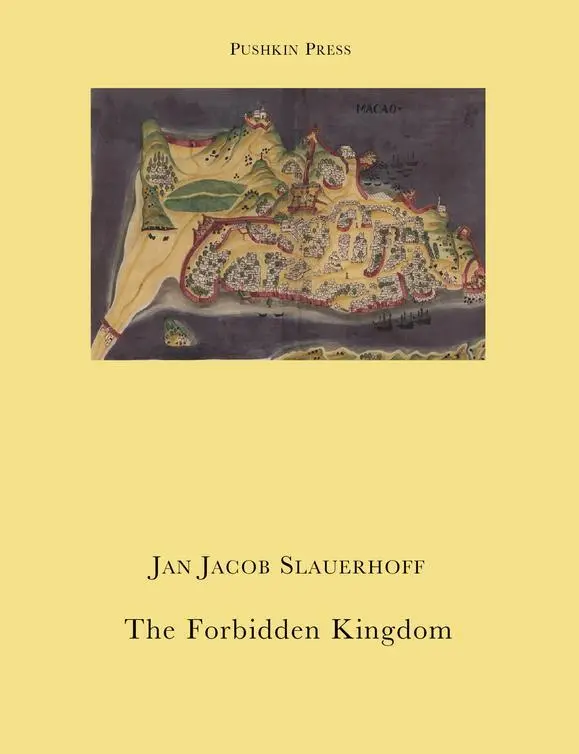
- Название:The Forbidden Kingdom
- Автор:
- Издательство:Pushkin Press
- Жанр:
- Год:2013
- ISBN:нет данных
- Рейтинг книги:5 / 5. Голосов: 1
-
Избранное:Добавить в избранное
- Отзывы:
-
Ваша оценка:
The Forbidden Kingdom: краткое содержание, описание и аннотация
Предлагаем к чтению аннотацию, описание, краткое содержание или предисловие (зависит от того, что написал сам автор книги «The Forbidden Kingdom»). Если вы не нашли необходимую информацию о книге — напишите в комментариях, мы постараемся отыскать её.
brings together the seemingly unrelated lives of a twentieth-century ship's radio operator and the sixteenth-century Portuguese poet-in-exile Luis Camoes.
Jacob Slauerhoff draws his reader into a dazzling world of exoticism, betrayal, and exile, where past and present merge and the possibility of death is never far away.
Born in The Netherlands in 1898, upon graduating from university
signed up as a ship's surgeon with the Dutch East India Company. He was at sea throughout his life, voyaging to the Far East, Latin America, and Africa.
The Forbidden Kingdom — читать онлайн бесплатно полную книгу (весь текст) целиком
Ниже представлен текст книги, разбитый по страницам. Система сохранения места последней прочитанной страницы, позволяет с удобством читать онлайн бесплатно книгу «The Forbidden Kingdom», без необходимости каждый раз заново искать на чём Вы остановились. Поставьте закладку, и сможете в любой момент перейти на страницу, на которой закончили чтение.
Интервал:
Закладка:
But what good was that to me, when I had to climb the mast with my stiff limbs to help with lowering the sails, squaring yards and doing other rough work I had never been trained for?
Prior to my imprisonment the deck and quarters were full of seamen. Those not on duty got in the way of the others. Now there were scarcely enough hands to manoeuvre the ship. Even black slaves had to help. Had disease or desertion taken such a toll that every crewman was precious? One of the ship’s surgeons told me that scurvy in particular had claimed many victims. The new admiral was an energetic man. In order to gain time, we had not stopped off at Madagascar, where fresh meat and vegetables were taken on board for the crossing. Supplies were inadequate. Then came the great epidemic: hundreds of deaths in a few days. Many ships had lost more than half their crews. There was not enough sailcloth to sew the bodies into, no lead shot to weigh down the feet, no time to heave to each time. Every morning there was a clear-up; six sailors who performed the work for double pay, dragged the bodies between-decks and pushed them out through an open gun port. The procession of sharks following the ships grew and grew.
How had he managed to survive down below, where the sun never shone and there was never any fruit with meals? Was there a tacit agreement between disasters who should be struck by them and who not?
In order to keep those who were left healthy, a lemon and a cucumber were handed out every day. I enjoyed these more than I did the choicest foods I used to eat. I relished my freedom — the wind most of all — and refused to be embittered by my exhaustion, my gashed hands, inflamed eyes and gums. I hoped that a storm would set me free in time, for I knew that in Macao I would first be thrown back in prison.
Once, when I was scrubbing the deck, the captain came by. He had grown thin, I noted with satisfaction. I stopped, but did not move aside and looked him in the eye. He made as if to fly at my throat, but thought better of it, spat on the deck and went on. We had both been in mortal danger: he from my eager hands, I from a hemp noose that was always at the ready. His cowardice saved him, and saved my life too.
Since Malacca the weather had stayed calm. The swell was less than on the other side of the archipelago and was often dead calm. The wind was weak but constant. One day we sailed past the coast of Cambodia, and the next day the sea was empty and I knew that the next time a coast came into view my imprisonment would recommence. The weather became ever calmer, the wind gentle and the sea seemed to be stretching in slow, lazy waves and on board people were become more and more anxious that a storm would blow up from this treacherous calm, just before we reached the coast where Macao lay. The longer it remained calm the more frightened we became of encountering a storm before we arrived.
It was Easter. A High Mass was celebrated; the holy banner blessed by the Pope was taken round in procession. Those who wished could kiss the hem of the flag. Most did so, to be on the safe side.
I hung over the railings and saw a distant blue coastline: Hainan. Three more days, if all went well.
The sky was as blue and calm as the coast, apart from some feathery clouds that seemed to be flocking to some meeting place deep below the horizon.
That night the storm arrived. At twelve o’clock when I came off watch it was still calm but also pitch-black and brooding, as if the full moon and a sun that had set in flames had been smothered in the thick layer of clouds and the fire of the celestial bodies was smouldering close to the earth, without flaring up. Almost no one was left in the crew’s quarters, since most people were sleeping on deck or among the cannon, which always retained a little coolness. The terminally ill and dying lay in the bunks and squeaked at me for water when they heard me. I gave them whatever I found, and then collapsed myself, faint with apprehension, oppressed by the premonition that I would soon awake and would then not be able to sleep for a long time. It cannot have been long before I woke and was lying on the boarding that divided the crew’s quarters from the bow. Sick sailors had grabbed hold of me, then that board flooring became the ceiling. We rolled back and the quarters were already half full of water. I grabbed hold of the stairs and did not let go, shook everyone off me and reached the deck bruised, scratched and perhaps infected.
Neither the figurehead nor the crosses helped. Who gave them any thought in a wind that now seemed to come from all directions at once, pressing one’s mouth closed and every object against the deck, now sucked everything up again, as if the atmosphere were escaping this part of the earth?
At first the waves came quite slowly and regularly like rearing mountains, and the ship moved without juddering from peak to trough, sometimes rising steeply, sometimes almost flat on its side. Afterwards it was surrounded by mountains of water that all collapsed at the same time, so that it was constantly under water.
At first I was grateful that this was happening, that I was experiencing this violence, that the ship that had imprisoned me for six months, where I had been robbed of all I possessed, down to my name and my shirt, was being destroyed, but that intoxication of freedom had passed in five minutes and all I did was yearn for peace and quiet: all thought was suspended.
When the storm subsided the coast was still in sight. The wind had dropped again, but the waves were still rising above the hull. At night we saw a wide expanse of flickering light and above it a great steady glow: that was Macao with its lighthouse. I was worried that we would after all find a safe haven. I hid in a corner of the poop deck, and a few survivors were still lying against the railings. But the ship would not see the sight of day. At about four o’clock it was lifted up, smashed against a quay, and fell back; the cannon in the hold rolled from side to side and some discharged. The São Bento sank quickly, sucking down most of those on board with her. Only those who had been able to grab a plank or buoy in time kept their heads above water. I floated on a small barrel, which I had kept ready for some time. It contained a few ship’s biscuits, and also… my work.
Day dawned again, this time over empty waters. The coast was a long way off, the island we had crashed into had disappeared. I was beginning to feel exhausted, since the barrel, in the water, kept revolving and so I was constantly being given a ducking. But the feeling that I wasn’t yet to die in this adventure made me hold on and after a few hours it became clear to me that the waves were impelling me in the direction of the bay. I could now make out the town in the distance, no different from a small Portuguese or Spanish harbour. There were a few ships at anchor, but there were lots of junks of the kind I had seen previously: low bow, high stern, ungainly sails. I regarded the town as a piece of the old country; I would have much preferred a Chinese harbour.
Opposite, partially closing off the bay, was a long island, low-lying at its shore, with a mountainous summit in the middle perhaps fifteen hundred metres high. It looked quite deserted, with small woods here and there — would there be any shelter to be found? Slowly I jerked my rolling barrel towards it, and after endless struggles I reached the beach, half-swimming, half-hanging. I waded towards dry land with my possessions on my shoulders. Ahead of me was undergrowth. I advanced perhaps a hundred metres into it, and could go no further, since sleep overwhelmed me.
I came to in a pale twilight, which quickly grew darker, so that I remained motionless. In the middle of the night I crawled out of the bushes to the beach, but I could see no lights across the water. Was it foggy? Were my eyes misted over? Were they afraid of an attack? Still, it troubled me that the lights were no longer burning. I also felt so weak now that I could scarcely put one foot in front of the other, but I was a prisoner on this island and decided to explore it this very night. There was a little moonlight now. I ate a little of the ship’s biscuit, but however exhausted I was, I seemed to have lost my appetite. I realized that I was ill and was afraid that the sickness would very soon gain the upper hand. My bones hurt, my gums were swollen and bleeding, the taste of blood in my mouth made me feel nauseous. So I set out, staggering along. It was deathly quiet; from the distance came the rush of the sea, completely calm now. I could see no houses anywhere, and could not find a path. I climbed a gentle slope, and from a wood I heard dull lowing. Could there be a house there among the trees?
Читать дальшеИнтервал:
Закладка:
Похожие книги на «The Forbidden Kingdom»
Представляем Вашему вниманию похожие книги на «The Forbidden Kingdom» списком для выбора. Мы отобрали схожую по названию и смыслу литературу в надежде предоставить читателям больше вариантов отыскать новые, интересные, ещё непрочитанные произведения.







Обсуждение, отзывы о книге «The Forbidden Kingdom» и просто собственные мнения читателей. Оставьте ваши комментарии, напишите, что Вы думаете о произведении, его смысле или главных героях. Укажите что конкретно понравилось, а что нет, и почему Вы так считаете.