Jan Slauerhoff - The Forbidden Kingdom
Здесь есть возможность читать онлайн «Jan Slauerhoff - The Forbidden Kingdom» весь текст электронной книги совершенно бесплатно (целиком полную версию без сокращений). В некоторых случаях можно слушать аудио, скачать через торрент в формате fb2 и присутствует краткое содержание. Год выпуска: 2013, Издательство: Pushkin Press, Жанр: Классическая проза, на английском языке. Описание произведения, (предисловие) а так же отзывы посетителей доступны на портале библиотеки ЛибКат.
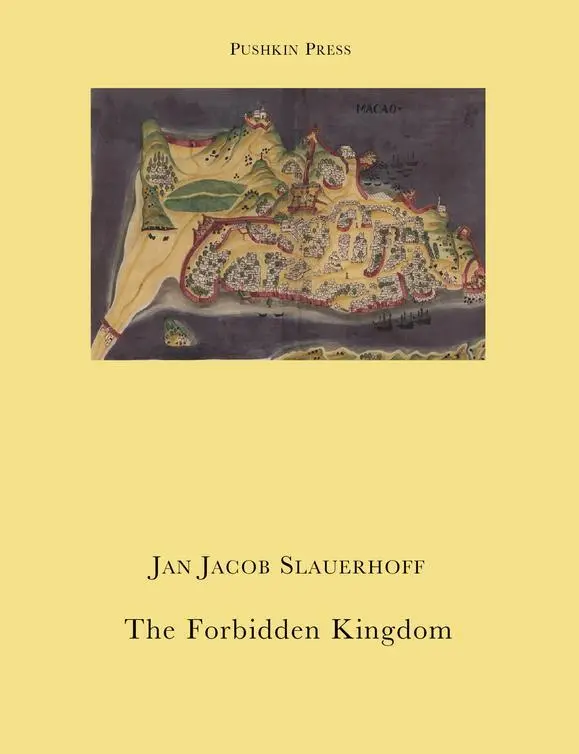
- Название:The Forbidden Kingdom
- Автор:
- Издательство:Pushkin Press
- Жанр:
- Год:2013
- ISBN:нет данных
- Рейтинг книги:5 / 5. Голосов: 1
-
Избранное:Добавить в избранное
- Отзывы:
-
Ваша оценка:
The Forbidden Kingdom: краткое содержание, описание и аннотация
Предлагаем к чтению аннотацию, описание, краткое содержание или предисловие (зависит от того, что написал сам автор книги «The Forbidden Kingdom»). Если вы не нашли необходимую информацию о книге — напишите в комментариях, мы постараемся отыскать её.
brings together the seemingly unrelated lives of a twentieth-century ship's radio operator and the sixteenth-century Portuguese poet-in-exile Luis Camoes.
Jacob Slauerhoff draws his reader into a dazzling world of exoticism, betrayal, and exile, where past and present merge and the possibility of death is never far away.
Born in The Netherlands in 1898, upon graduating from university
signed up as a ship's surgeon with the Dutch East India Company. He was at sea throughout his life, voyaging to the Far East, Latin America, and Africa.
The Forbidden Kingdom — читать онлайн бесплатно полную книгу (весь текст) целиком
Ниже представлен текст книги, разбитый по страницам. Система сохранения места последней прочитанной страницы, позволяет с удобством читать онлайн бесплатно книгу «The Forbidden Kingdom», без необходимости каждый раз заново искать на чём Вы остановились. Поставьте закладку, и сможете в любой момент перейти на страницу, на которой закончили чтение.
Интервал:
Закладка:
They moored for a day at Fogo. He went ashore alone. The town was next to the jetty. He walked straight up a burning-hot slope of rubble, impelled by the desire to see what was behind it. In this way he climbed over a further two ridges and was then able to follow a fold in the terrain, a strip of shade, and finally arrived in a valley, in a rose garden more luxuriant than those in Algarve. He spent the afternoon in this scented solitude, in grottoes of intertwined buds and flowers, thinking the whole time: “It would be best if I killed myself right here.” And when in spite of this he left: “This is the last charming thing I shall see in my life.” He hastily climbed the ridge, and in the falling dusk descended the slope of rubble, hurting his feet.
He half hoped that he would sprain his ankle, and leapt hazardously over the stones. Then he slowly climbed the last ridge, sat down and tried to fall asleep, so that the ship might sail without him. Then he heard voices and two men crept past, Juromena and Margado, both of whom had lived lavishly on board, with a change of costume every day, three lackeys… Camões fled back on board, afraid of his own cowardice.
The ship was far from ready to depart. The heat of the day persisted in the cabin, and the whole night was filled with a rattling din.
He had a dream:
My dignity is diminished; I am a lowly figure among men and have to work and obey for a paltry wage. Yet I am more powerful than when I laboriously assemble words and ordered them on paper. Now I hurl my words into space; they travel infinite distances, driven by a vibration that I nonchalantly produce with my hand. They circle the globe, they fall where I wish — like seed from heaven. So why don’t I feel like a God, but like someone lost and humiliated among the people I must obey?
He woke up. The din of the loading had stopped. He went back to sleep.
The dream kept returning. Sometimes he had a tight-fitting hood on his head, sometimes he felt that the ship was no longer made of wood but of blistering iron and manned by beings he had never seen on earth, white, but speaking different languages, and wearing strange, close-fitting robes.
He woke up. Loading was continuing more intensively. Morning was approaching, and they were not yet ready.
Again that dream… Now a host of yellow-skinned people forced their way into the cramped cabin, which was already filling with strange objects, more and more of them, until it was ready to burst. That did not happen, but it was being more and more compressed. Suddenly it was alone on a great empty plateau, and it was as if it were about to explode.
He woke up. The anchor chain was being raised; the men on the capstan sang. Now he fell into dreamless sleep and did not wake up until the ship was out at sea. The rose garden was over there, beyond the grey mountains, scarcely visible any longer above the sea.
The following day the sealed orders were opened in the Admiral’s quarters. First came the regular orders: call in at Mozambique, take fruit on board, and slaves if possible, leave the sick behind. Then there were letters for the Governor of Calico and for the Viceroy in Goa. That was usually all. But now a couple of other documents emerged from the chest. Cabral and the Captain looked displeased, since neither of them liked reading, especially orders. The Admiral read the document, and then gave it to the Captain, but the latter preferred not to strain too much and asked what was in it.
“Things haven’t yet been resolved in Goa, so we’ve got to sail on to Malacca; the stragglers will have to head straight for there from Mozambique.”
“There’s more profit to be made in Malacca than in Goa, where we’ve been for fifty years: Malacca is rich and the population is weak.”
“We’re not staying in Malacca either, we have to move straight on from there to Macao.”
“That’s unheard of, a ship having to sail straight from Lisbon to Macao in one go. Anyway, it’s impossible: we’re fouling too much. In Malacca we’ll have to spend at least a month in dry dock to scrape the hull.”
“Those are the orders. We mustn’t stop for more than a week in Malacca.”
“There’s something behind this; let’s read the last letter, and perhaps that will explain things.” It was an order bearing the royal seal. Cabral appeared to be moved as he read it. He ran his hand over his head, gave it to the Captain and said, “Read it for yourself.”
The Captain laughed and said, “I suspected as much.” But suddenly his laughter dried up. “Of course they want him as far away as possible; that’s why we have made for that godforsaken outpost instead of staying in the right neck of the woods. If we’re not caught in a typhoon, we’ll have to surrender all we’ve got; they’re short of everything there. Then on to Japan empty, back fully laden, and by that time we’ll have been at sea for a year, and none the better for it, except for a bit of freight commission. And all for that outcast. If I were you, I’d leave him behind in Mozambique.”
“That’s not what the orders say.”
“The idea is for him to disappear, the sooner the better.”
Camões was summoned to the saloon. Cabral looked at him pityingly with the letter in his hand.
“This concerns you, Dom Luís. The King wants you to make the voyage as a prisoner, and to serve as a soldier in furthest East Asia.”
Camões stared uncomprehendingly.
“Read it for yourself.” The Admiral handed him the letter. The vengefulness of the King (or the jealousy of the Infante) could be read in the well-formed characters and sober style of the private secretary.
An argument developed about the meaning of “prisoner”. The Admiral wanted Camões to stay in his cabin and be allowed on deck in the evening under guard, while the Captain felt that he should be locked in the hold, and stay there in chains until their arrival. After all, his intended function as a soldier branded him as a common prisoner.
The Admiral asserted his authority. Camões stayed in his cabin as far as Mozambique. He was still able to see this harbour through the porthole.
Four days later the ship stopped, with all its flags at half mast. From the poop deck the body of the Admiral was lowered into the waters of the Indian Ocean, accompanied by the singing of a litany and the thundering of all the ship’s cannon — almost a hundred of them. The very same day Luís de Camões was put at the bottom of the hold in a damp stinking hole prepared for mutineers and thieves. That was how he spent the second half of the voyage. He saw nothing of Goa or Malacca; all he perceived of those harbours was the ship at anchor and the muffled din that penetrated to where he was.
Such was his glorious entry into the East.
While other prisoners made bird cages from fruit stones, and model ships from slivers of wood, he passed the time in fashioning stanzas for the poem he thought he had abandoned for good. Since he saw nothing of the foreign countries, like the other prisoners with improvised tools, he had to make do with mythology to give colour and coherence to his story, and he reluctantly resorted to it. However, he gradually came to enjoy his work, the only thing that helped him through the interminable hours.
The passage from Mozambique to Malacca took almost two months; the winds were not favourable. Two months! Camões gradually forgot that he had ever lived on dry land and been free. It was as if he had squatted in that swaying hold with a crumpled piece of paper on his painful knees, since time immemorial.
III. Ilha Verde
THREE DAYS AFTER we left the roadstead of Malacca I was set free. I blinked at the light, and at first had difficulty in moving, but was not downcast or thoroughly embittered and was resolved to seize my chance, and not grant the King the pleasure of seeing me pine away ignominiously. One day, even if it were many years later, I hoped to return, raised into a new aristocracy by reason of my fortune. I hoped that he would still be on the throne, old, languid and joyless… ravaged by maladies and ruling over an impoverished land, when I appeared before him with my companions. Our scars would be so numerous that there would be no room left for decorations; the triumphs we had left behind us were so great that in comparison Portugal seemed a paltry little country! Soon, after this final visit, paid like prodigal sons, we would embark once more without compunction and with great wealth for the territory we had conquered for ourselves and where, surrounded by luxury and sustained by power, we would die.
Читать дальшеИнтервал:
Закладка:
Похожие книги на «The Forbidden Kingdom»
Представляем Вашему вниманию похожие книги на «The Forbidden Kingdom» списком для выбора. Мы отобрали схожую по названию и смыслу литературу в надежде предоставить читателям больше вариантов отыскать новые, интересные, ещё непрочитанные произведения.










Обсуждение, отзывы о книге «The Forbidden Kingdom» и просто собственные мнения читателей. Оставьте ваши комментарии, напишите, что Вы думаете о произведении, его смысле или главных героях. Укажите что конкретно понравилось, а что нет, и почему Вы так считаете.