Jan Slauerhoff - The Forbidden Kingdom
Здесь есть возможность читать онлайн «Jan Slauerhoff - The Forbidden Kingdom» весь текст электронной книги совершенно бесплатно (целиком полную версию без сокращений). В некоторых случаях можно слушать аудио, скачать через торрент в формате fb2 и присутствует краткое содержание. Год выпуска: 2013, Издательство: Pushkin Press, Жанр: Классическая проза, на английском языке. Описание произведения, (предисловие) а так же отзывы посетителей доступны на портале библиотеки ЛибКат.
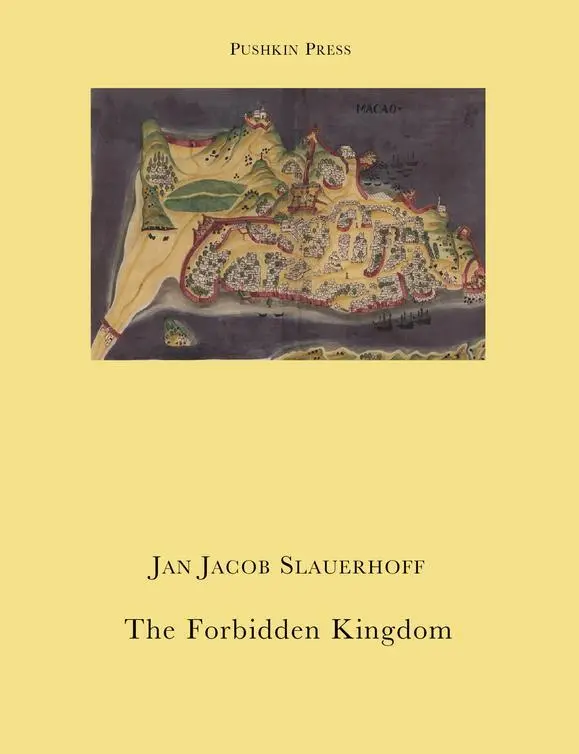
- Название:The Forbidden Kingdom
- Автор:
- Издательство:Pushkin Press
- Жанр:
- Год:2013
- ISBN:нет данных
- Рейтинг книги:5 / 5. Голосов: 1
-
Избранное:Добавить в избранное
- Отзывы:
-
Ваша оценка:
The Forbidden Kingdom: краткое содержание, описание и аннотация
Предлагаем к чтению аннотацию, описание, краткое содержание или предисловие (зависит от того, что написал сам автор книги «The Forbidden Kingdom»). Если вы не нашли необходимую информацию о книге — напишите в комментариях, мы постараемся отыскать её.
brings together the seemingly unrelated lives of a twentieth-century ship's radio operator and the sixteenth-century Portuguese poet-in-exile Luis Camoes.
Jacob Slauerhoff draws his reader into a dazzling world of exoticism, betrayal, and exile, where past and present merge and the possibility of death is never far away.
Born in The Netherlands in 1898, upon graduating from university
signed up as a ship's surgeon with the Dutch East India Company. He was at sea throughout his life, voyaging to the Far East, Latin America, and Africa.
The Forbidden Kingdom — читать онлайн бесплатно полную книгу (весь текст) целиком
Ниже представлен текст книги, разбитый по страницам. Система сохранения места последней прочитанной страницы, позволяет с удобством читать онлайн бесплатно книгу «The Forbidden Kingdom», без необходимости каждый раз заново искать на чём Вы остановились. Поставьте закладку, и сможете в любой момент перейти на страницу, на которой закончили чтение.
Интервал:
Закладка:
Then he was forced to become viceroy of the Indies and to realize before his death that the discoverers had become plunderers, that a global Portuguese empire had not been established, that they had only attacked another global empire, which tolerated the foreigners and the damage they wrought, like the elephant tolerates a troublesome itching rash that it cannot reach, but which apart from that does not disturb its ponderous existence.
Why now, for the departure of Fernando Alvares Cabral with a fleet of five ships, of which only the São Bento rose above the edge of the quay as it sat in the water, was half the court once again present, many prelates in their regalia, the King and the Infante himself? Surely not to show the Spanish envoy they still had ships?
No, the eagerness to set forth, the urge to do great deeds was already declining. Once the despised discoverers had paid homage to the court. Now it was the other way round. The tacit and respectful request was: “Don’t return empty-handed. It’s already becoming difficult to live in the grand style. Don’t settle in the East. Let the fatherland enjoy the riches. Come back.”
But most of them stood indifferently on deck and did not join in the hymns that the canons struck up with trembling voices and the choirboys with shrill ones.
Cabral had bowed to the King, the prelate had sprinkled the holy water over the few who knelt bare-headed, and at the bow they were already casting off.
Then something happened, unexpectedly.
A tall old man — no one knew where he had come from — forced his way through the guard, stood in the open between the ship and the court and uttered — no one understood and everyone listened — a curse that was like a long-awaited storm that finally erupts. All felt themselves under the spell. The sun hung low in the west on a bank of cloud that blocked the mouth of the Tagus. Its shadow, together with that of the Tower of Belem, fell over all of them. The choirs fell silent, he spoke to the ships with his back to the court, so that at first they heard nothing. But the old man, who had begun in a calm and measured fashion, now yelled louder and louder. “…Is there nothing better to do than to convert and exterminate heathens living on the other side of the world? It took you centuries to drive the Moors out of the country, and before you know it they’ll be back. They’re waiting just across the water. They can learn a thing or two here. For centuries they have searched for the philosophers’ stone. In twenty years you have converted the country’s best blood into gold. Who profited by it? Even the court is here as a covert form of begging.”
On the ships there was muttered approval, on the quayside deathly silence.
“Let the English and the Norwegians, who in their own countries are stricken by poverty and damp, sail to the East. This country is fertile and rich, never too cold and never too hot. Da Gama and Albuquerque have mausoleums and statues. They should have been strung up. And so should the first man who raised a sail on a boat and left the coast. Accursed be all who seek the unknown, accursed be Prometheus, accursed be Odysseus.”
Still no one intervened. But on the São Bento a man climbed onto the railings and shouted, “Leave those Ancients in peace, Father. We’re going anyway, because we don’t feel like staying in this country for ever, however beautiful it is.”
Now the spell had been broken, and everyone started talking at once, and the ladies of the court laughed loudly and shrilly.
The old man was no longer the threatening Jeremiah, but a poor, sorely tried man who stood craning his neck at the water’s edge, weeping: “Luís, don’t leave your father, don’t go yet. In a year’s time you’ll be able to sell your ancestral lands and do whatever you want… I’ll be dead by then!”
Soldiers dragged him away.
On board no one admired Luís for his stoicism. A sailor yanked him off the railings.
The manoeuvring began. The officers ordered the men to sing and cast off. But soon the ships were far from the shore, and one could just see the courtiers getting up from the stands and hurriedly making their way home. The quay was empty before they were out of sight, and no one looked back any more.
Only Luís, who had nothing to do, gazed from the stern at the disappearing land. He looked at the Tower of Belem as if it were his father still standing there. False modesty had made him commit a cowardly act. His father would soon die now, Diana would become queen and forget him. He didn’t intend to return like a hero and participate in a feeble comedy at court.
But was that why he had made a clean break with the past?
The birds continued to follow the ship for some way, until the coast was a vague strip of brown. That would soon cease. But it was as if those he was trying to evade were following him, as if he were constantly encountering them on the narrow ship and would soon find it claustrophobic. Was this the broad, liberating horizon that his departure was supposed to bring?
His eyes filled with tears, his thoughts with lines of verse. He hid in his cabin. In order to appease his father, who was still standing in front of him as he had stood there on the quay, at first tall and threatening, then pleading and weak, he began to write, and tried to transform the painful scene into a great prophetic event, but he failed. He could not master difficult stanzas; he lacked the patience. Instead, two lines kept booming through his head:
Though we’ve bid farewell to the land,
all the pain sails with us on board… *
and could get no further with that either.
He went back on deck, which was empty and shiny with moisture in the moonlight; the coasts that he knew slid past deathly pale in the distance. Occasionally a sailor went past without a greeting, pushing him aside if he was in the way. He saw the other ships small, black and deserted on the sea. It was as if these were outcasts like himself, the only silent friends he had left.
Then he realized that they were ships too, where it was even worse than here. Sleep seemed to him all he could still manage to do, but that proved equally difficult.
* Quoted in Schneider, p. 107.
II
THE NEXT MORNING he was back on deck, and the sea was empty. The São Bento was the only ship with a proper complement of sails; the others were not much more than decked-out hulks. Off Mozambique those that were left would rejoin them. So those distant friends too were lost.
Actually he had nothing to complain about: he was sailing on the biggest ship, where the food, for the time being at least, was good, and enjoyed all the rights pertaining to his rank. He sat at the captain’s right hand at table, inspected his standard, which was raised along the railings twice a day, and occupied an airy starboard cabin on the poop deck, in which he spent a great deal of time thinking constantly of the life he had left behind and often regretting it. His longing for the East diminished the closer he got to it.
The rigging of the mizzen mast ran over the railings just in front of his cabin. The twenty parallel taut cables and the thin ratlines between them formed an Aeolian harp. Camões liked listening to their swelling and subsiding song, growling or whistling but unceasing.
The movement of the ship — the large São Bento too was tossed about on the waves — fighting the ever-stronger ocean swell, did not make him seasick, as his fellow-officers secretly hoped. He did dream a lot, though, being unaccustomed to the narrow berth beneath the low ceiling of his cabin.
One morning the Cape Verde islands lay before them — the first landfall that was found on the tentative medieval voyages of discovery, without a compass or a sextant. Now they were the first mooring place on a voyage taking them a hundred times farther. Camões, however, viewed them as if he were already infinitely far removed from the fatherland and here had a last chance to return and escape an impending disaster. He had the same impulse as a few months ago when they had sailed from Lisbon down the Tagus: to let the ship leave without him and jump ashore. Now it was to let the fleet sail without him and disappear into the interior.
Читать дальшеИнтервал:
Закладка:
Похожие книги на «The Forbidden Kingdom»
Представляем Вашему вниманию похожие книги на «The Forbidden Kingdom» списком для выбора. Мы отобрали схожую по названию и смыслу литературу в надежде предоставить читателям больше вариантов отыскать новые, интересные, ещё непрочитанные произведения.








Обсуждение, отзывы о книге «The Forbidden Kingdom» и просто собственные мнения читателей. Оставьте ваши комментарии, напишите, что Вы думаете о произведении, его смысле или главных героях. Укажите что конкретно понравилось, а что нет, и почему Вы так считаете.