Joseph Roth - The Silent Prophet
Здесь есть возможность читать онлайн «Joseph Roth - The Silent Prophet» весь текст электронной книги совершенно бесплатно (целиком полную версию без сокращений). В некоторых случаях можно слушать аудио, скачать через торрент в формате fb2 и присутствует краткое содержание. Год выпуска: 2003, Издательство: The Overlook Press, Жанр: Классическая проза, на английском языке. Описание произведения, (предисловие) а так же отзывы посетителей доступны на портале библиотеки ЛибКат.
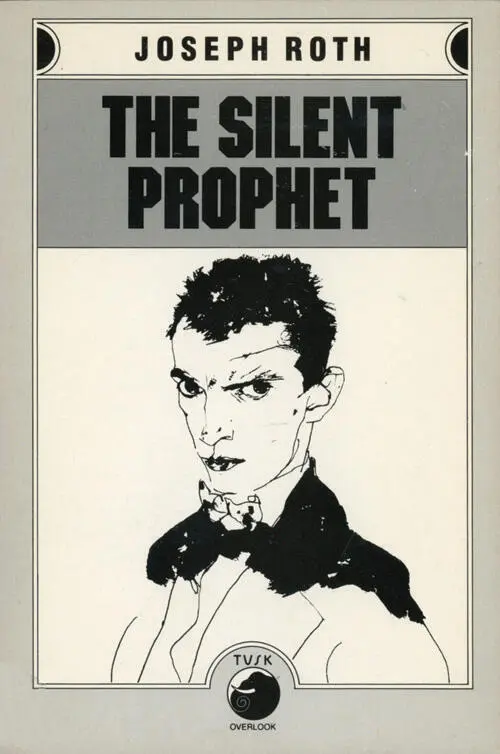
- Название:The Silent Prophet
- Автор:
- Издательство:The Overlook Press
- Жанр:
- Год:2003
- ISBN:нет данных
- Рейтинг книги:3 / 5. Голосов: 1
-
Избранное:Добавить в избранное
- Отзывы:
-
Ваша оценка:
The Silent Prophet: краткое содержание, описание и аннотация
Предлагаем к чтению аннотацию, описание, краткое содержание или предисловие (зависит от того, что написал сам автор книги «The Silent Prophet»). Если вы не нашли необходимую информацию о книге — напишите в комментариях, мы постараемся отыскать её.
The Silent Prophet — читать онлайн бесплатно полную книгу (весь текст) целиком
Ниже представлен текст книги, разбитый по страницам. Система сохранения места последней прочитанной страницы, позволяет с удобством читать онлайн бесплатно книгу «The Silent Prophet», без необходимости каждый раз заново искать на чём Вы остановились. Поставьте закладку, и сможете в любой момент перейти на страницу, на которой закончили чтение.
Интервал:
Закладка:
He said ‘cross the lines to Russia’ as if it were a matter of going for a pleasant drive. He had decided to make a rendezvous with the comrades as one arranges an excursion to a well-known and popular beauty spot. He sat, powerful and calm on his old sofa which was wide and large enough for a grown man but seemed narrow, short and fragile under the weight and force of his body.
‘In order to avoid any unpleasantness just now, you will travel first class,’ said P. ‘You’ll find yourself in the good society of higher officers and war contractors and no policeman will dare to demand your identity card. But if it should happen, make a fuss and snarl at any officials who cross your path.’
They walked slowly through the streets. P. had the solemn deliberation of a burgomaster. ‘If one has my kind of appearance,’ he said, ‘no one in Central Europe will be the least bit suspicious. The Germans, and the smaller races within the German cultural sphere, have an indestructible trust in broad shoulders. Compare, for instance, the popularity of Hindenburg with the anonymity of Hötzendorf, who is small and elegant. The Russians command respect, although they are enemies. But the Russian generals have broad epaulettes, like the Germans. Striplings like yourself evoke mistrust.’
In order to see Friedrich safely on his way, P. accompanied him to the station. And with the joviality that sprang from his nature, he delivered Friedrich into the care of the conductor. ‘My dear fellow,’ he said, ‘my friend is ill and must have agreeable neighbours.’ ‘Thank you, Excellency,’ said Friedrich, so loudly that the policeman who was due to accompany the train must have heard. ‘Take care of yourself,’ said P. and bade him farewell. The conductor and the policeman saluted as P. left the platform with great strides.
Friedrich was not left alone in the compartment. A German colonel and an Austrian major climbed in. They exchanged greetings. It was wartime and one could be sure that no common travellers sat in the first class. Nowadays, whoever got on the train and wore civilian clothes was even mightier than a uniform. Clever officers, therefore, had gradually accustomed themselves to regard civilians they encountered in the first class as superiors.
They were the more resentful when, just before the train departed, the conductor squeezed in one more passenger who would have made a more suitable first-class passenger in peacetime. Both officers exchanged a quick glance. While the eyebrows of each were raised in astonishment, their moustaches were already smiling. Both moved nearer each other as if they now had to join in mutual defence. The passenger so suspiciously received did not seem to notice anything for the moment. He sat very free and comfortable because the others had made themselves so small. He was shortsighted, as was betrayed by the thick lenses of his pince-nez, the way his head was permanently poked forwards, and his uncertain searching movements. He had evidently been in a hurry not to miss the train, his panting was clearly audible. His short legs dangled slightly above the floor, continually sought by the tips of his toes. His plump white hands lay on his knees and his fingers drummed inaudibly on the soft material of his trousers.
A black goatee in which the first grey hairs sprouted gave the gentleman the appearance of a high banking official. ‘A pimp!’ Friedrich heard the German colonel whisper. ‘Army rabbi!’ whispered the Austrian major.
The man whose vocation was not yet definitely established was meanwhile gazing affably and cordially at his fellow-passengers. His panting had gradually stopped. It was clear that he was satisfied with his present situation.
Finally he stood up, bowed slightly, first to the colonel, then to the major, and lastly — but only with a slight nod — to Friedrich. ‘Doctor Süsskind,’ he said out loud. His voice conveyed more assurance than his body.
‘You’re probably enlisting as an army chaplain, your reverence?’ said the Austrian major, while a shadow fell over the face of the silent colonel. ‘No!’ said the man, who had sat down again in the corner with feet dangling. ‘I am a war correspondent.’ And he gave the name of a Liberal newspaper. ‘Ah — war correspondent?’ said the major.
‘I was recently in your country, touring the Austro-Hungarian monarchy,’ replied the correspondent authoritatively.
‘Well, I hope everything turned out to your liking,’ said the major lightly and indifferently.
‘Not everything, unfortunately!’ began the journalist. ‘I had the opportunity of talking with several important personalities and with clever men not in office. It seemed to me, in Austria’ — he corrected himself, with an emphatic bow in the direction of the German colonel — ‘with our allies, that a stronger central driving force was needed. The organization leaves much to be desired. The Austrian is sanguine and the nations he rules are still uncivilized. It would also be as well to impose a little silence on the different national demands as long as we are fighting. Yes, gentlemen!’
What countries had he seen? asked the major.
‘The Poles, among others,’ replied the correspondent. In Cracow he had eaten well but slept badly from fear of vermin. And in Budapest he had seen two bugs in one night. The Hungarians refused to speak German to him. Yet they understood everything. A lieutenant of hussars had been very charming but had had no idea of the importance of the artillery on the Western Front. Yes!
‘There are lice at the front,’ said the Austrian major, as if he intended to tell quite another story. But he said no more.
In Pressburg, related the journalist, he had heard how soldiers in a tavern had spoken a Slav dialect. ‘It must have been Slovak,’ he stated, ‘with a German word now and again.’
‘Perhaps it was Czech,’ said the major.
‘Could be,’ replied the reporter, ‘but isn’t it all the same?’ Even Czech wasn’t so very different.
‘A Bavarian can’t understand a Prussian,’ remarked the major.
‘You’re mistaken!’ said the newsman excitedly. ‘They are only dialects.’ And he began to praise the unity of all German strains, not taking his eyes off the German colonel the while. The latter looked out of the window.
Suddenly the colonel turned round and said: ‘Talking of dialects, you are from Frankfurt, aren’t you?’
‘No! From Breslau!’ retorted the correspondent in a firm, almost military, voice.
‘Not bad either,’ said the colonel and regarded the landscape anew.
‘So you are from the press,’ began the Austrian major, as if he had only just realized that the reporter had something to do with a newspaper. ‘The seventh great power, eh?’ he enquired amiably.
The journalist smiled. ‘Now,’ continued the major, ‘you know better than we do when it will end. What’s your opinion?’
‘Who can tell!’ replied the journalist. ‘Our armies are deep in enemy territory. The nation is united as never before. The Social Democrats are fighting like everyone else. Who would have thought this miracle possible! You are on your way to Germany, aren’t you? Well, you’ll see how all our distinctions of class and creed have vanished. The old dispute between Catholicism and Protestantism is over.’
‘Really,’ said the major. ‘Well, and how about the Israelites?’
The journalist was silent and the colonel smiled at the landscape.
‘A dwindling number!’ said the bearded one, as if he would have liked to say: ‘There aren’t any at all.’
‘Our Israelites are very brave,’ continued the major perseveringly.
‘Excuse me,’ said the journalist and left the compartment. They saw him through the glass of the door. He went right and then left.
Читать дальшеИнтервал:
Закладка:
Похожие книги на «The Silent Prophet»
Представляем Вашему вниманию похожие книги на «The Silent Prophet» списком для выбора. Мы отобрали схожую по названию и смыслу литературу в надежде предоставить читателям больше вариантов отыскать новые, интересные, ещё непрочитанные произведения.







Обсуждение, отзывы о книге «The Silent Prophet» и просто собственные мнения читателей. Оставьте ваши комментарии, напишите, что Вы думаете о произведении, его смысле или главных героях. Укажите что конкретно понравилось, а что нет, и почему Вы так считаете.