Joseph Roth - The Silent Prophet
Здесь есть возможность читать онлайн «Joseph Roth - The Silent Prophet» весь текст электронной книги совершенно бесплатно (целиком полную версию без сокращений). В некоторых случаях можно слушать аудио, скачать через торрент в формате fb2 и присутствует краткое содержание. Год выпуска: 2003, Издательство: The Overlook Press, Жанр: Классическая проза, на английском языке. Описание произведения, (предисловие) а так же отзывы посетителей доступны на портале библиотеки ЛибКат.
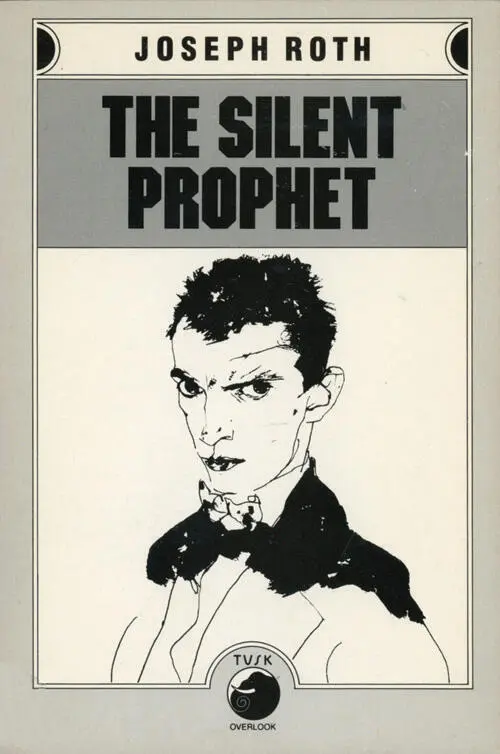
- Название:The Silent Prophet
- Автор:
- Издательство:The Overlook Press
- Жанр:
- Год:2003
- ISBN:нет данных
- Рейтинг книги:3 / 5. Голосов: 1
-
Избранное:Добавить в избранное
- Отзывы:
-
Ваша оценка:
The Silent Prophet: краткое содержание, описание и аннотация
Предлагаем к чтению аннотацию, описание, краткое содержание или предисловие (зависит от того, что написал сам автор книги «The Silent Prophet»). Если вы не нашли необходимую информацию о книге — напишите в комментариях, мы постараемся отыскать её.
The Silent Prophet — читать онлайн бесплатно полную книгу (весь текст) целиком
Ниже представлен текст книги, разбитый по страницам. Система сохранения места последней прочитанной страницы, позволяет с удобством читать онлайн бесплатно книгу «The Silent Prophet», без необходимости каждый раз заново искать на чём Вы остановились. Поставьте закладку, и сможете в любой момент перейти на страницу, на которой закончили чтение.
Интервал:
Закладка:
At Herr von Maerker’s house, where Hilde acted as mediator between literature, art and the history of art, there gathered not only fighting men but also painters and writers. Friedrich found their glances curious and quizzing. His revolutionary opinions and his Siberian experiences, together with his readiness to struggle against Tsarism — which people took for granted — fitted in with their conception of the identity of freedom and the cause of the Fatherland. His very presence attested to this identity.
The writer G., one of the cultivated satirists who knew how to combine a decadent manner, elegant posturing and large debts with a sensitive feeling for language, was immersed in a discussion with young Baron K. about the French literature of the Enlightenment. He avoided the discussion of current events. He was, in fact, a sceptic and might have upset the general optimism. If he had expressed his opinions, it would have been all over with his congenial occupation and civilian clothing. However, in order not to appear as a man without any kind of attachment to the Fatherland, he said ‘The war is the very time in which one is able to think. Never before have I been able to read so extensively and with so few distractions. At present I am reading the French. It affords me a special pleasure to get to know our enemies better. They are cruel and clever. The entire race is impelled by their so-called “ raison ”. It is quite obvious to me, of course, that such sound commonsense rears a thrifty lower middle class but not a heroic nation. Great occasions call for a sweet unreason.’
Hilde smiled and exchanged a glance with the writer. She understood that he had spoken for her and not to the lieutenant. She did not much care for the cavalry. For whereas the writer and the ‘intellectuals’ — this word was used increasingly often — discussed the very simplest battle reports in such a manner that nothing remained of their actuality but a faint echo, which Hilde found agreeable, the lieutenant named names, numbers, kilometres and divisions, which bored her. And although he said nothing that the others could not have said, had they wished to, it seemed as if he alone knew what war was all about.
Besides this lieutenant, Hilde’s father alone among all the men present remained an object for her particular disdain. Only since the war had the ministerial adviser participated in his daughter’s entertainments, so changed was he by the great event. Among all the groups of that social class which produced no officers, no ministerial officials, no diplomats and no landed proprietors, the one he most detested consisted of what he called the ‘Bohemians’, of whom his notions were infantile. Even now when, revolutionized by wartime enthusiasm, he yielded to the general illusion that differences would be abolished and that a painter in travelling clothes and riding-breeches who painted a base hospital and a base commandant was part of the baggage-train of heroes, even now he winced imperceptibly when the painter P., as soon as anything exciting was mentioned, took his foot in his hands as if this manipulation was a necessary aid to better hearing, or when the drama critic R., in a quiet moment, broke a match between his teeth. In this unsuspecting state, which he owed to a secluded youth in a feudal institution, Herr von Maerker did not understand that these men did not display the free ways of an artistic disposition but the miserable ones of a lower middle-class upbringing. He regarded it as a method of expressing the artistic temperament.
Friedrich looked around. The war correspondent who had just returned from the front was talking with a lieutenant, a lawyer in mufti, about the excellent equipment of the troops. He wanted next to go to Belgium and describe the victory parade. A Liberal deputy, middle-aged and at that time not liable for service, was explaining to a one-year volunteer, to whom it was of no concern, that the war would constitute the final overthrow of clericalism and that non-denominational schools would come about in a matter of weeks. The ironic author was now talking to Hilde. He had left the young cavalryman sitting in silence, and although their chairs were touching the literary man was separated from the officer by a whole world, a world that abounded with French writings of the Enlightenment. The writer now wore round his mouth a smile that could be put on and taken off like a moustache-trainer, one that he used to make an impression on women. His suit, his deportment, his hairstyle, were the careful work of an entire morning. Out of sceptical protest he wore his elegant civilian suit, for which he had a special permit in his pocket. But it was as provocative as an injustice in contrast with the entire uniformed world. The painstakingness revealed by the knot of his necktie alone was a demonstration against the confusion of a whole epoch. The glance, full of gentle appraisal, with which he followed Hilde’s gestures and seemed to note them behind his forehead, held the melancholy renunciation of a critical genius who had yielded to the censor and was compelled to conceal deep within himself the many witticisms that occurred to him at every communiqué from the front. Friedrich hated him even more than the painter.
He looked at Hilde. A slight flush, which darkened the brown of her cheeks, disclosed that she felt herself to be the centre of a circle of the elect who adored her and whom she herself venerated, and Friedrich asked himself if there was a causal connection between the adoration that pleased her and the veneration she rendered in return. She seemed strange and remote and almost hostile to him in the midst of these others. He would have liked to extract the immediate significance of every movement she made in order to detach her from her connection with this world, and the meaning of every word she said so that her beloved voice might continue as nothing but an innocuous sound. He loved her voice, but not her words. He loved her eyes, but hated what they recorded.
12
It was not until August that the Ukrainian P. returned from the camp. In the meantime it had become known that the Russian revolutionaries had for some time been the natural allies of the Central Powers. P.’s liberation from the camp was doubtless politically motivated. He remained in Vienna, the authorities were aware of it and even supported him. Some days after P.’s return Friedrich set out on his journey through Germany to Zürich. P. had been in contact with Zürich throughout, even during his stay in the camp, and with Comrade Tomkin in M. in Brandenburg — one of the middlemen between the comrades and the secret police. He was unchanged. Robust and carefree as he was, he seemed to regard the years up to the war, the straits in which he always lived and his sufferings in the concentration camp, as a kind of necessary gymnastic exercise, which he was able to surmount. He was unafraid, not because he was brave but because the bulk and strength of his muscles, the inexhaustible elasticity of his tendons and nerves and a healthly abundance of red blood left no room for fear. He was as little capable of being afraid as a tree. But, like every fearless man, he understood that anxiety did not always flow from cowardice but was also a quality connected with one’s physical constitution and nerves.
‘Your worrying was unnecessary,’ said P. to Friedrich. ‘If you’d been locked up, they’d soon have let you out. We are allies for the time being and under the protection of a powerful institution. Our comrades even receive passports. You’ll be taken care of too. You will now go to M., here is an address. You will report to this man and he’ll give you money and papers for Switzerland. Give my greetings to the comrades. I’m staying here for the moment. I might be able to cross the lines to Russia.’
Читать дальшеИнтервал:
Закладка:
Похожие книги на «The Silent Prophet»
Представляем Вашему вниманию похожие книги на «The Silent Prophet» списком для выбора. Мы отобрали схожую по названию и смыслу литературу в надежде предоставить читателям больше вариантов отыскать новые, интересные, ещё непрочитанные произведения.






Обсуждение, отзывы о книге «The Silent Prophet» и просто собственные мнения читателей. Оставьте ваши комментарии, напишите, что Вы думаете о произведении, его смысле или главных героях. Укажите что конкретно понравилось, а что нет, и почему Вы так считаете.