Герман Мелвилл - Typee
Здесь есть возможность читать онлайн «Герман Мелвилл - Typee» весь текст электронной книги совершенно бесплатно (целиком полную версию без сокращений). В некоторых случаях можно слушать аудио, скачать через торрент в формате fb2 и присутствует краткое содержание. Год выпуска: 2014, Издательство: epubBooks Classics, Жанр: Классическая проза, на английском языке. Описание произведения, (предисловие) а так же отзывы посетителей доступны на портале библиотеки ЛибКат.
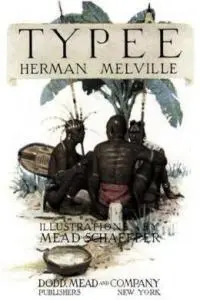
- Название:Typee
- Автор:
- Издательство:epubBooks Classics
- Жанр:
- Год:2014
- ISBN:нет данных
- Рейтинг книги:4 / 5. Голосов: 1
-
Избранное:Добавить в избранное
- Отзывы:
-
Ваша оценка:
Typee: краткое содержание, описание и аннотация
Предлагаем к чтению аннотацию, описание, краткое содержание или предисловие (зависит от того, что написал сам автор книги «Typee»). Если вы не нашли необходимую информацию о книге — напишите в комментариях, мы постараемся отыскать её.
Typee — читать онлайн бесплатно полную книгу (весь текст) целиком
Ниже представлен текст книги, разбитый по страницам. Система сохранения места последней прочитанной страницы, позволяет с удобством читать онлайн бесплатно книгу «Typee», без необходимости каждый раз заново искать на чём Вы остановились. Поставьте закладку, и сможете в любой момент перейти на страницу, на которой закончили чтение.
Интервал:
Закладка:
They lived in great harmony with each other. I will give an instance of their fraternal feeling.
One day, in returning with Kory–Kory from my accustomed visit to the Ti, we passed by a little opening in the grove; on one side of which, my attendant informed me, was that afternoon to be built a dwelling of bamboo. At least a hundred of the natives were bringing materials to the ground, some carrying in their hands one or two of the canes which were to form the sides, others slender rods of the Habiscus, strung with palmetto leaves, for the roof. Every one contributed something to the work; and by the united, but easy, and even indolent, labours of all, the entire work was completed before sunset. The islanders, while employed in erecting this tenement, reminded me of a colony of beavers at work. To be sure, they were hardly as silent and demure as those wonderful creatures, nor were they by any means as diligent. To tell the truth, they were somewhat inclined to be lazy, but a perfect tumult of hilarity prevailed; and they worked together so unitedly, and seemed actuated by such an instinct of friendliness, that it was truly beautiful to behold.
Not a single female took part in this employment: and if the degree of consideration in which the ever–adorable sex is held by the men be—as the philosophers affirm—a just criterion of the degree of refinement among a people, then I may truly pronounce the Typees to be as polished a community as ever the sun shone upon. The religious restrictions of the taboo alone excepted, the women of the valley were allowed every possible indulgence. Nowhere are the ladies more assiduously courted; nowhere are they better appreciated as the contributors to our highest enjoyments; and nowhere are they more sensible of their power. Far different from their condition among many rude nations, where the women are made to perform all the work, while their ungallant lords and masters lie buried in sloth, the gentle sex in the valley of Typee were exempt from toil—if toil it might be called—that, even in that tropical climate, never distilled one drop of perspiration. Their light household occupations, together with the manufacture of tappa, the platting of mats, and the polishing of drinking–vessels, were the only employments pertaining to the women. And even these resembled those pleasant avocations which fill up the elegant morning leisure of our fashionable ladies at home. But in these occupations, slight and agreeable though they were, the giddy young girls very seldom engaged. Indeed, these wilful, care–killing damsels were averse to all useful employment. Like so many spoiled beauties, they ranged through the groves—bathed in the stream—danced—flirted—played all manner of mischievous pranks, and passed their days in one merry round of thoughtless happiness.
During my whole stay on the island I never witnessed a single quarrel, nor anything that in the slightest degree approached even to a dispute. The natives appeared to form one household, whose members were bound together by the ties of strong affection. The love of kindred I did not so much perceive, for it seemed blended in the general love; and where all were treated as brothers and sisters, it was hard to tell who were actually related to each other by blood.
Let it not be supposed that I have overdrawn this picture. I have not done so. Nor let it be urged, that the hostility of this tribe to foreigners, and the hereditary feuds they carry on against their fellow–islanders beyond the mountains, are facts which contradict me. Not so; these apparent discrepancies are easily reconciled. By many a legendary tale of violence and wrong, as well as by events which have passed before their eyes, these people have been taught to look upon white men with abhorrence. The cruel invasion of their country by Porter has alone furnished them with ample provocation; and I can sympathize in the spirit which prompts the Typee warrior to guard all the passes to his valley with the point of his levelled spear, and, standing upon the beach, with his back turned upon his green home, to hold at bay the intruding European.
As to the origin of the enmity of this particular clan towards the neighbouring tribes, I cannot so confidently speak. I will not say that their foes are the aggressors, nor will I endeavour to palliate their conduct. But surely, if our evil passions must find vent, it is far better to expend them on strangers and aliens, than in the bosom of the community in which we dwell. In many polished countries civil contentions, as well as domestic enmities, are prevalent, at the same time that the most atrocious foreign wars are waged. How much less guilty, then, are our islanders, who of these three sins are only chargeable with one, and that the least criminal!
The reader will, ere long, have reason to suspect that the Typees are not free from the guilt of cannibalism; and he will then, perhaps, charge me with admiring a people against whom so odious a crime is chargeable. But this only enormity in their character is not half so horrible as it is usually described. According to the popular fictions, the crews of vessels, shipwrecked on some barbarous coast, are eaten alive like so many dainty joints by the uncivil inhabitants; and unfortunate voyagers are lured into smiling and treacherous bays; knocked on the head with outlandish war–clubs; and served up without any preliminary dressing. In truth, so horrific and improbable are these accounts, that many sensible and well–informed people will not believe that any cannibals exist; and place every book of voyages which purports to give any account of them, on the same shelf with Blue Beard and Jack the Giant–killer. While others, implicitly crediting the most extravagant fictions, firmly believe that there are people in the world with tastes so depraved, that they would infinitely prefer a single mouthful of material humanity to a good dinner of roast beef and plum pudding. But here, Truth, who loves to be centrally located, is again found between the two extremes; for cannibalism to a certain moderate extent is practised among several of the primitive tribes in the Pacific, but it is upon the bodies of slain enemies alone; and horrible and fearful as the custom is, immeasurably as it is to be abhorred and condemned, still I assert that those who indulge in it are in other respects humane and virtuous.
Chapter XXVII
Fishing Parties—mode of Distributing the Fish—midnight Banquet—timekeeping Tapers—unceremonious Style of Eating the Fish.
There was no instance in which the social and kindly dispositions of the Typees were more forcibly evinced than in the manner they conducted their great fishing parties. Four times during my stay in the valley the young men assembled near the full of the moon, and went together on these excursions. As they were generally absent about forty–eight hours, I was led to believe that they went out towards the open sea, some distance from the bay. The Polynesians seldom use a hook and line, almost always employing large, well–made nets, most ingeniously fabricated from the twisted fibres of a certain bark. I examined several of them which had been spread to dry upon the beach at Nukuheva. They resembled very much our own seines, and I should think they were very nearly as durable.
All the South Sea islanders are passionately fond of fish; but none of them can be more so than the inhabitants of Typee. I could not comprehend, therefore, why they so seldom sought it in their waters; for it was only at stated times that the fishing parties were formed, and these occasions were always looked forward to with no small degree of interest.
During their absence, the whole population of the place were in a ferment, and nothing was talked of but “pehee, pehee” (fish, fish). Towards the time when they were expected to return, the vocal telegraph was put into operation—the inhabitants, who were scattered throughout the length of the valley, leaped upon rocks and into trees, shouting with delight at the thoughts of the anticipated treat. As soon as the approach of the party was announced, there was a general rush of the men towards the beach; some of them remaining, however, about the Ti, in order to get matters in readiness for the reception of the fish, which were brought to the Taboo Groves in immense packages of leaves, each one of them being suspended from a pole carried on the shoulders of two men.
Читать дальшеИнтервал:
Закладка:
Похожие книги на «Typee»
Представляем Вашему вниманию похожие книги на «Typee» списком для выбора. Мы отобрали схожую по названию и смыслу литературу в надежде предоставить читателям больше вариантов отыскать новые, интересные, ещё непрочитанные произведения.






Обсуждение, отзывы о книге «Typee» и просто собственные мнения читателей. Оставьте ваши комментарии, напишите, что Вы думаете о произведении, его смысле или главных героях. Укажите что конкретно понравилось, а что нет, и почему Вы так считаете.