Герман Мелвилл - Typee
Здесь есть возможность читать онлайн «Герман Мелвилл - Typee» весь текст электронной книги совершенно бесплатно (целиком полную версию без сокращений). В некоторых случаях можно слушать аудио, скачать через торрент в формате fb2 и присутствует краткое содержание. Год выпуска: 2014, Издательство: epubBooks Classics, Жанр: Классическая проза, на английском языке. Описание произведения, (предисловие) а так же отзывы посетителей доступны на портале библиотеки ЛибКат.
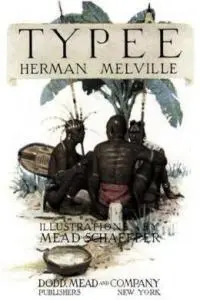
- Название:Typee
- Автор:
- Издательство:epubBooks Classics
- Жанр:
- Год:2014
- ISBN:нет данных
- Рейтинг книги:4 / 5. Голосов: 1
-
Избранное:Добавить в избранное
- Отзывы:
-
Ваша оценка:
Typee: краткое содержание, описание и аннотация
Предлагаем к чтению аннотацию, описание, краткое содержание или предисловие (зависит от того, что написал сам автор книги «Typee»). Если вы не нашли необходимую информацию о книге — напишите в комментариях, мы постараемся отыскать её.
Typee — читать онлайн бесплатно полную книгу (весь текст) целиком
Ниже представлен текст книги, разбитый по страницам. Система сохранения места последней прочитанной страницы, позволяет с удобством читать онлайн бесплатно книгу «Typee», без необходимости каждый раз заново искать на чём Вы остановились. Поставьте закладку, и сможете в любой момент перейти на страницу, на которой закончили чтение.
Интервал:
Закладка:
During my stay in the valley, as none of its inmates were so accommodating as to die and be buried in order to gratify my curiosity with regard to their funeral rites, I was reluctantly obliged to remain in ignorance of them. As I have reason to believe, however, that the observances of the Typees in these matters are the same with those of all other tribes on the island, I will here relate a scene I chanced to witness at Nukuheva.
A young man had died, about daybreak, in a house near the beach. I had been sent ashore that morning, and saw a good deal of the preparations they were making for his obsequies. The body, neatly wrapped in new white tappa, was laid out in an open shed of cocoa–nut boughs, upon a bier constructed of elastic bamboos ingeniously twisted together. This was supported, about two feet from the ground, by large canes planted uprightly in the earth. Two females, of a dejected appearance, watched by its side, plaintively chanting, and beating the air with large grass fans whitened with pipe–clay. In the dwelling–house adjoining a numerous company were assembled, and various articles of food were being prepared for consumption. Two or three individuals, distinguished by head–dresses of beautiful tappa, and wearing a great number of ornaments, appeared to officiate as masters of the ceremonies. By noon the entertainment had fairly begun, and we were told that it would last during the whole of the two following days. With the exception of those who mourned by the corpse, every one seemed disposed to drown the sense of the late bereavement in convivial indulgence. The girls, decked out in their savage finery, danced; the old men chanted; the warriors smoked and chatted; and the young and lusty, of both sexes, feasted plentifully, and seemed to enjoy themselves as pleasantly as they could have done had it been a wedding.
The islanders understand the art of embalming, and practice it with such success, that the bodies of their great chiefs are frequently preserved for many years in the very houses where they died. I saw three of these in my visit to the bay of Tior. One was enveloped in immense folds of tappa, with only the face exposed, and hung erect against the side of the dwelling. The others were stretched out upon biers of bamboo, in open, elevated temples, which seemed consecrated to their memory. The heads of enemies killed in battle are invariably preserved, and hung up as trophies in the house of the conqueror. I am not acquainted with the process which is in use, but believe that fumigation is the principal agency employed. All the remains which I saw presented the appearance of a ham after being suspended for some time in a smoky chimney.
But to return from the dead to the living. The late festival had drawn together, as I had every reason to believe, the whole population of the vale, and consequently I was enabled to make some estimate with regard to its numbers. I should imagine that there were about two thousand inhabitants in Typee; and no number could have been better adapted to the extent of the valley. The valley is some nine miles in length, and may average one in breadth, the houses being distributed at wide intervals throughout its whole extent, principally, however, towards the head of the vale. There are no villages. The houses stand here and there in the shadow of the groves, or are scattered along the banks of the winding stream; their golden–hued bamboo sides and gleaming white thatch, forming a beautiful contrast to the perpetual verdure in which they are embowered. There are no roads of any kind in the valley. Nothing but a labyrinth of footpaths, twisting and turning among the thickets without end.
Chapter XXVI
The Social Condition and General Character of the Typees.
There seemed to be no rogues of any kind in Typee. In the darkest nights the natives slept securely, with all their worldly wealth around them, in houses the doors of which were never fastened. The disquieting ideas of theft or assassination never disturbed them. Each islander reposed beneath his own palmetto–thatching, or sat under his own bread–fruit, with none to molest or alarm him. There was not a padlock in the valley, nor anything that answered the purpose of one: still there was no community of goods. This long spear, so elegantly carved and highly polished, belongs to Warmoonoo—it is far handsomer than the one which old Marheyo so greatly prizes—it is the most valuable article belonging to its owner. And yet I have seen it leaning against a cocoa–nut tree in the grove, and there it was found when sought for. Here is a sperm–whale tooth, graven all over with cunning devices—it is the property of Kurluna. It is the most precious of the damsel’s ornaments. In her estimation, its price is far above rubies; and yet there hangs the dental jewel, by its cord of braided bark, in the girl’s house, which is far back in the valley; the door is left open, and all the inmates have gone off to bathe in the stream. [5] The strict honesty which the inhabitants of nearly all the Polynesian Islands manifest towards each other, is in striking contrast with the thieving propensities some of them evince in their intercourse with foreigners. It would almost seem that, according to their peculiar code of morals, the pilfering of a hatchet or a wrought nail from a European is looked upon as a praiseworthy action. Or rather, it may be presumed, that bearing in mind the wholesale forays made upon them by their nautical visitors, they consider the property of the latter as a fair object of reprisal. This consideration, while it serves to reconcile an apparent contradiction in the moral character of the islanders, should in some measure alter that low opinion of it which the reader of South Sea voyages is too apt to form.
So much for the respect in which such matters are held in Typee. As to the land of the valley, whether it was the joint property of its inhabitants, or whether it was parcelled out among a certain number of landed proprietors, who allowed everybody to roam over it as much as they pleased, I never could ascertain. At any rate, musty parchments and title–deeds there were none in the island; and I am half inclined to believe that its inhabitants hold their broad valleys in fee simple from nature herself.
Yesterday I saw Kory–Kory hie him away, armed with a long pole, with which, standing on the ground, he knocked down the fruit from the topmost boughs of the trees, and brought them home in his basket of cocoa–nut leaves. To–day I see an islander, whom I know to reside in a distant part of the valley, doing the self–same thing. On the sloping bank of the stream were a number of banana trees. I have often seen a score or two of young people making a merry foray on the great golden clusters, and bearing them off, one after another, to different parts of the vale, shouting and tramping as they went. No churlish old curmudgeon could have been the owner of that grove of bread–fruit trees, or of these gloriously yellow bunches of bananas.
From what I have said, it will be perceived that there is a vast difference between “personal property” and “real estate” in the valley of Typee. Some individuals, of course, are more wealthy than others. For example: the ridge–pole of Marheyo’s house bends under the weight of many a huge packet of tappa; his long couch is laid with mats placed one upon the other seven deep. Outside, Tinor has ranged along in her bamboo cupboard—or whatever the place may be called—a goodly array of calabashes and wooden trenchers. Now, the house just beyond the grove, and next to Marheyo’s, occupied by Ruaruga, is not quite so well furnished. There are only three moderate–sized packages swinging overhead; there are only two layers of mats beneath; and the calabashes and trenchers are not so numerous, nor so tastefully stained and carved. But then, Ruaruga has a house—not so pretty a one, to be sure—but just as commodious as Marheyo’s; and, I suppose, if he wished to vie with his neighbour’s establishment, he could do so with very little trouble. These, in short, constitute the chief differences perceivable in the relative wealth of the people in Typee.
Читать дальшеИнтервал:
Закладка:
Похожие книги на «Typee»
Представляем Вашему вниманию похожие книги на «Typee» списком для выбора. Мы отобрали схожую по названию и смыслу литературу в надежде предоставить читателям больше вариантов отыскать новые, интересные, ещё непрочитанные произведения.






Обсуждение, отзывы о книге «Typee» и просто собственные мнения читателей. Оставьте ваши комментарии, напишите, что Вы думаете о произведении, его смысле или главных героях. Укажите что конкретно понравилось, а что нет, и почему Вы так считаете.