Герман Мелвилл - Typee
Здесь есть возможность читать онлайн «Герман Мелвилл - Typee» весь текст электронной книги совершенно бесплатно (целиком полную версию без сокращений). В некоторых случаях можно слушать аудио, скачать через торрент в формате fb2 и присутствует краткое содержание. Год выпуска: 2014, Издательство: epubBooks Classics, Жанр: Классическая проза, на английском языке. Описание произведения, (предисловие) а так же отзывы посетителей доступны на портале библиотеки ЛибКат.
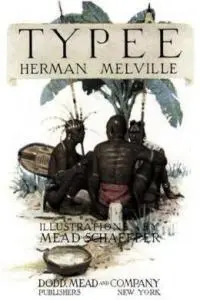
- Название:Typee
- Автор:
- Издательство:epubBooks Classics
- Жанр:
- Год:2014
- ISBN:нет данных
- Рейтинг книги:4 / 5. Голосов: 1
-
Избранное:Добавить в избранное
- Отзывы:
-
Ваша оценка:
Typee: краткое содержание, описание и аннотация
Предлагаем к чтению аннотацию, описание, краткое содержание или предисловие (зависит от того, что написал сам автор книги «Typee»). Если вы не нашли необходимую информацию о книге — напишите в комментариях, мы постараемся отыскать её.
Typee — читать онлайн бесплатно полную книгу (весь текст) целиком
Ниже представлен текст книги, разбитый по страницам. Система сохранения места последней прочитанной страницы, позволяет с удобством читать онлайн бесплатно книгу «Typee», без необходимости каждый раз заново искать на чём Вы остановились. Поставьте закладку, и сможете в любой момент перейти на страницу, на которой закончили чтение.
Интервал:
Закладка:
Never before had we seen the islanders in such a state of bustle and excitement; and the scene furnished abundant evidence of the fact—that it was only at long intervals any such events occur.
When I thought of the length of time that might intervene before a similar chance of escape would be presented, I bitterly lamented that I had not the power of availing myself effectually of the present opportunity.
From all that we could gather, it appeared that the natives were fearful of arriving too late upon the beach, unless they made extraordinary exertions. Sick and lame as I was, I would have started with Toby at once, had not Kory–Kory not only refused to carry me, but manifested the most invincible repugnance to our leaving the neighbourhood of the house. The rest of the savages were equally opposed to our wishes, and seemed grieved and astonished at the earnestness of my solicitations. I clearly perceived that, while my attendant avoided all appearance of constraining my movements, he was nevertheless determined to thwart my wishes. He seemed to me on this particular occasion, as well as often afterwards, to be executing the orders of some other person with regard to me, though at the same time feeling towards me the most lively affection.
Toby, who had made up his mind to accompany the islanders if possible as soon as they were in readiness to depart, and who for that reason had refrained from showing the same anxiety that I had done, now represented to me that it was idle for me to entertain the hope of reaching the beach in time to profit by any opportunity that might then be presented.
“Do you not see,” said he, “the savages themselves are fearful of being too late, and I should hurry forward myself at once, did I not think that, if I showed too much eagerness, I should destroy all our hopes of reaping any benefit from this fortunate event. If you will only endeavour to appear tranquil or unconcerned, you will quiet their suspicions, and I have no doubt they will then let me go with them to the beach, supposing that I merely go out of curiosity. Should I succeed in getting down to the boats, I will make known the condition in which I have left you, and measures may then be taken to secure our escape.”
In the expediency of this I could not but acquiesce; and as the natives had now completed their preparations, I watched with the liveliest interest the reception that Toby’s application might meet with. As soon as they understood from my companion that I intended to remain, they appeared to make no objection to this proposition, and even hailed it with pleasure. Their singular conduct on this occasion not a little puzzled me at the time, and imparted to subsequent events an additional mystery.
The islanders were now to be seen hurrying along the path which led to the sea. I shook Toby warmly by the hand, and gave him my Payta hat to shield his wounded head from the sun, as he had lost his own. He cordially returned the pressure of my hand, and, solemnly promising to return as soon as the boats should leave the shore, sprang from my side, and the next minute disappeared in a turn of the grove.
In spite of the unpleasant reflections that crowded upon my mind, I could not but be entertained by the novel and animated sight which now met my view. One after another, the natives crowded along the narrow path, laden with every variety of fruit. Here, you might have seen one, who, after ineffectually endeavouring to persuade a surly porker to be conducted in leading–strings, was obliged at last to seize the perverse animal in his arms, and carry him struggling again his naked breast, and squealing without intermission. There went two, who at a little distance might have been taken for the Hebrew spies, on their return to Moses with the goodly bunch of grapes. One trotted before the other at a distance of a couple of yards, while between them, from a pole resting on their shoulders, was suspended a huge cluster of bananas, which swayed to and fro with the rocking gait at which they proceeded. Here ran another, perspiring with his exertions, and bearing before him a quantity of cocoa–nuts, who, fearful of being too late, heeded not the fruit that dropped from his basket, and appeared solely intent upon reaching his destination, careless how many of his cocoa–nuts kept company with him.
In a short time the last straggler was seen hurrying on his way, and the faint shouts of those in advance died insensibly upon the ear. Our part of the valley now appeared nearly deserted by its inhabitants, Kory–Kory, his aged father, and a few decrepid old people being all that were left.
Towards sunset, the islanders in small parties began to return from the beach, and among them, as they drew near to the house, I sought to descry the form of my companion. But one after another they passed the dwelling, and I caught no glimpse of him. Supposing, however, that he would soon appear with some of the members of the household, I quieted my apprehensions, and waited patiently to see him advancing, in company with the beautiful Fayaway. At last I perceived Tinor coming forward, followed by the girls and young men who usually resided in the house of Marheyo; but with them came not my comrade, and, filled with a thousand alarms, I eagerly sought to discover the cause of his delay.
My earnest questions appeared to embarrass the natives greatly. All their accounts were contradictory: one giving me to understand that Toby would be with me in a very short time; another, that he did not know where he was; while a third, violently inveighing against him, assured me that he had stolen away, and would never come back. It appeared to me, at the time, that in making these various statements they endeavoured to conceal from me some terrible disaster, lest the knowledge of it should overpower me.
Fearful lest some fatal calamity had overtaken him, I sought out young Fayaway, and endeavoured to learn from her, if possible, the truth.
This gentle being had early attracted my regard, not only from her extraordinary beauty, but from the attractive cast of her countenance, singularly expressive of intelligence and humanity. Of all the natives, she alone seemed to appreciate the effect which the peculiarity of the circumstances in which we were placed had produced upon the minds of my companion and myself. In addressing me—especially when I lay reclining upon the mats suffering from pain—there was a tenderness in her manner which it was impossible to misunderstand or resist. Whenever she entered the house, the expression of her face indicated the liveliest sympathy for me; and moving towards the place where I lay, with one arm slightly elevated in a gesture of pity, and her large glistening eyes gazing intently into mine, she would murmur plaintively, “Awha! awha! Tommo,” and seat herself mournfully beside me.
Her manner convinced me that she deeply compassionated my situation, as being removed from my country and friends, and placed beyond the reach of all relief. Indeed, at times I was almost led to believe that her mind was swayed by gentle impulses hardly to be anticipated from one in her condition; that she appeared to be conscious there were ties rudely severed, which had once bound us to our homes; that there were sisters and brothers anxiously looking forward to our return, who were perhaps never more to behold us.
In this amiable light did Fayaway appear in my eyes; and, reposing full confidence in her candour and intelligence, I now had recourse to her, in the midst of my alarm with regard to my companion.
My questions evidently distressed her. She looked round from one to another of the bystanders, as if hardly knowing what answer to give me. At last, yielding to my importunities, she overcame her scruples, and gave me to understand that Toby had gone away with the boats which had visited the bay, but had promised to return at the expiration of three days. At first I accused him of perfidiously deserting me; but as I grew more composed, I upbraided myself for imputing so cowardly an action to him, and tranquillized myself with the belief that he had availed himself of the opportunity to go round to Nukuheva, in order to make some arrangement by which I could be removed from the valley. At any rate, thought I, he will return with the medicines I require, and then, as soon as I recover, there will be no difficulty in the way of our departure.
Читать дальшеИнтервал:
Закладка:
Похожие книги на «Typee»
Представляем Вашему вниманию похожие книги на «Typee» списком для выбора. Мы отобрали схожую по названию и смыслу литературу в надежде предоставить читателям больше вариантов отыскать новые, интересные, ещё непрочитанные произведения.






Обсуждение, отзывы о книге «Typee» и просто собственные мнения читателей. Оставьте ваши комментарии, напишите, что Вы думаете о произведении, его смысле или главных героях. Укажите что конкретно понравилось, а что нет, и почему Вы так считаете.