Герман Мелвилл - Typee
Здесь есть возможность читать онлайн «Герман Мелвилл - Typee» весь текст электронной книги совершенно бесплатно (целиком полную версию без сокращений). В некоторых случаях можно слушать аудио, скачать через торрент в формате fb2 и присутствует краткое содержание. Год выпуска: 2014, Издательство: epubBooks Classics, Жанр: Классическая проза, на английском языке. Описание произведения, (предисловие) а так же отзывы посетителей доступны на портале библиотеки ЛибКат.
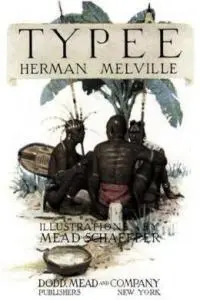
- Название:Typee
- Автор:
- Издательство:epubBooks Classics
- Жанр:
- Год:2014
- ISBN:нет данных
- Рейтинг книги:4 / 5. Голосов: 1
-
Избранное:Добавить в избранное
- Отзывы:
-
Ваша оценка:
Typee: краткое содержание, описание и аннотация
Предлагаем к чтению аннотацию, описание, краткое содержание или предисловие (зависит от того, что написал сам автор книги «Typee»). Если вы не нашли необходимую информацию о книге — напишите в комментариях, мы постараемся отыскать её.
Typee — читать онлайн бесплатно полную книгу (весь текст) целиком
Ниже представлен текст книги, разбитый по страницам. Система сохранения места последней прочитанной страницы, позволяет с удобством читать онлайн бесплатно книгу «Typee», без необходимости каждый раз заново искать на чём Вы остановились. Поставьте закладку, и сможете в любой момент перейти на страницу, на которой закончили чтение.
Интервал:
Закладка:
Consoling myself with these reflections, I lay down that night in a happier frame of mind than I had done for some time. The next day passed without any allusion to Toby on the part of the natives, who seemed desirous of avoiding all reference to the subject. This raised some apprehensions in my breast; but, when night came, I congratulated myself that the second day had now gone by, and that on the morrow Toby would again be with me. But the morrow came and went, and my companion did not appear. Ah! thought I, he reckons three days from the morning of his departure—to–morrow he will arrive. But that weary day also closed upon me without his return. Even yet I would not despair. I thought that something detained him—that he was waiting for the sailing of a boat at Nukuheva, and that in a day or two, at farthest, I should see him again. But day after day of renewed disappointment passed by; at last hope deserted me, and I fell a victim to despair.
Yes, thought I, gloomily, he has secured his own escape, and cares not what calamity may befall his unfortunate comrade. Fool that I was, to suppose that any one would willingly encounter the perils of this valley, after having once got beyond its limits! He has gone, and has left me to combat alone all the dangers by which I am surrounded. Thus would I sometimes seek to derive a desperate consolation from dwelling upon the perfidy of Toby; whilst, at other times, I sunk under the bitter remorse which I felt at having, by my own imprudence, brought upon myself the fate which I was sure awaited me.
At other times I thought that perhaps, after all, these treacherous savages had made away with him, and thence the confusion into which they were thrown by my questions, and their contradictory answers; or he might be a captive in some other part of the valley; or, more dreadful still, might have met with that fate at which my very soul shuddered. But all these speculations were vain; no tidings of Toby ever reached me—he had gone never to return.
The conduct of the islanders appeared inexplicable. All reference to my lost comrade was carefully evaded, and if at any time they were forced to make some reply to my frequent inquiries on the subject, they would uniformly denounce him as an ungrateful runaway, who had deserted his friend, and taken himself off to that vile and detestable place Nukuheva.
But whatever might have been his fate, now that he was gone the natives multiplied their acts of kindness and attention towards myself, treating me with a degree of deference which could hardly have been surpassed had I been some celestial visitant. Kory–Kory never for one moment left my side, unless it were to execute my wishes. The faithful fellow, twice every day, in the cool of the morning and in the evening, insisted upon carrying me to the stream, and bathing me in its refreshing water.
Frequently, in the afternoon, he would carry me to a particular part of the stream, where the beauty of the scene produced a soothing influence upon my mind. At this place the waters flowed between grassy banks, planted with enormous bread–fruit trees, whose vast branches, interlacing overhead, formed a leafy canopy; near the stream were several smooth black rocks. One of these, projecting several feet above the surface of the water, had upon its summit a shallow cavity, which, filled with freshly–gathered leaves, formed a delightful couch.
Here I often laid for hours, covered with a gauze–like veil of tappa, while Fayaway, seated beside me, and holding in her hand a fan woven from the leaflets of a young cocoa–nut bough, brushed aside the insects that occasionally lighted on my face, and Kory–Kory, with a view of chasing away my melancholy, performed a thousand antics in the water before us.
As my eye wandered along this romantic stream, it would fall upon the half–immersed figure of a beautiful girl, standing in the transparent water, and catching in a little net a species of diminutive shell–fish, of which these people are extravagantly fond. Sometimes a chattering group would be seated upon the edge of a low rock in the midst of the brook, busily engaged in thinning and polishing the shells of cocoa–nuts, by rubbing them briskly with a small stone in the water, an operation which soon converts them into a light and elegant drinking–vessel, somewhat resembling goblets made of tortoise–shell.
But the tranquillizing influences of beautiful scenery, and the exhibition of human life under so novel and charming an aspect, were not my only sources of consolation.
Every evening the girls of the house gathered about me on the mats, and, after chasing away Kory–Kory from my side—who, nevertheless, retired only to a little distance, and watched their proceedings with the most jealous attention—would anoint my body with a fragrant oil, squeezed from a yellow root, previously pounded between a couple of stones, and which in their language is denominated “aka.” I used to hail with delight the daily recurrence of this luxurious operation, in which I forgot all my troubles, and buried for the time every feeling of sorrow.
Sometimes, in the cool of the evening, my devoted servitor would lead me out upon the pi–pi in front of the house, and, seating me near its edge, protect my body from the annoyance of the insects which occasionally hovered in the air, by wrapping me round with a large roll of tappa. He then bustled about, and employed himself at least twenty minutes in adjusting everything to secure my personal comfort.
Having perfected his arrangements, he would get my pipe, and, lighting it, would hand it to me. Often he was obliged to strike a light for the occasion; and as the mode he adopted was entirely different from what I had ever seen or heard of before, I will describe it.
A straight, dry, and partly–decayed stick of the Habiscus, about six feet in length, and half as many inches in diameter, with a smaller bit of wood, not more than a foot long, and scarcely an inch wide, is as invariably to be met with in every house in Typee, as a box of lucifer matches in the corner of a kitchen–cupboard at home.
The islander, placing the larger stick obliquely against some object, with one end elevated at an angle of forty–five degrees, mounts astride of it, like an urchin about to gallop off upon a cane, and then, grasping the smaller one firmly in both hands, he rubs its pointed end slowly up and down the extent of a few inches on the principal stick, until at last he makes a narrow groove in the wood, with an abrupt termination at the point farthest from him, where all the dusty particles which the friction creates are accumulated in a little heap.
At first Kory–Kory goes to work quite leisurely, but gradually quickens his pace, and, waxing warm in the employment, drives the stick furiously along the smoking channel, plying his hands to and fro with amazing rapidity, the perspiration starting from every pore. As he approaches the climax of his effort, he pants and gasps for breath, and his eyes almost start from their sockets with the violence of his exertions. This is the critical stage of the operation; all his previous labours are vain if he cannot sustain the rapidity of the movement until the reluctant spark is produced. Suddenly he stops, becomes perfectly motionless. His hands still retain their hold of the smaller stick, which is pressed convulsively against the farther end of the channel, among the fine powder there accumulated, as if he had just pierced through and through some little viper that was wriggling and struggling to escape from his clutches. The next moment a delicate wreath of smoke curls spirally into the air, the heap of dusty particles glows with fire, and Kory–Kory, almost breathless, dismounts from his steed.
This operation appeared to me to be the most laborious species of work performed in Typee; and had I possessed a sufficient intimacy with the language to have conveyed my ideas upon the subject, I should certainly have suggested to the most influential of the natives the expediency of establishing in a college of vestals, to be centrally located in the valley, for the purpose of keeping alive the indispensable article of fire, so as to supersede the necessity of such a vast outlay of strength and good temper as were usually squandered on these occasions. There might, however, be special difficulties in carrying this plan into execution.
Читать дальшеИнтервал:
Закладка:
Похожие книги на «Typee»
Представляем Вашему вниманию похожие книги на «Typee» списком для выбора. Мы отобрали схожую по названию и смыслу литературу в надежде предоставить читателям больше вариантов отыскать новые, интересные, ещё непрочитанные произведения.






Обсуждение, отзывы о книге «Typee» и просто собственные мнения читателей. Оставьте ваши комментарии, напишите, что Вы думаете о произведении, его смысле или главных героях. Укажите что конкретно понравилось, а что нет, и почему Вы так считаете.