Irwin Shaw - Rich Man, Poor Man
Здесь есть возможность читать онлайн «Irwin Shaw - Rich Man, Poor Man» весь текст электронной книги совершенно бесплатно (целиком полную версию без сокращений). В некоторых случаях можно слушать аудио, скачать через торрент в формате fb2 и присутствует краткое содержание. Год выпуска: 1970, ISBN: 1970, Издательство: Delacorte Press, NY, Жанр: Классическая проза, на английском языке. Описание произведения, (предисловие) а так же отзывы посетителей доступны на портале библиотеки ЛибКат.
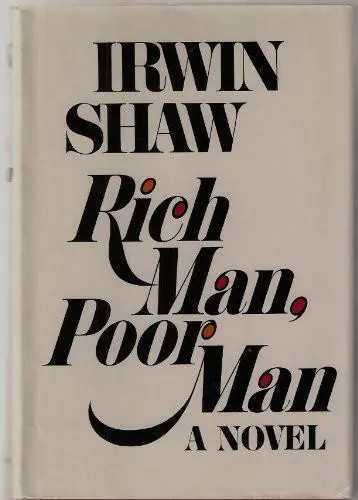
- Название:Rich Man, Poor Man
- Автор:
- Издательство:Delacorte Press, NY
- Жанр:
- Год:1970
- ISBN:9780385288583
- Рейтинг книги:5 / 5. Голосов: 1
-
Избранное:Добавить в избранное
- Отзывы:
-
Ваша оценка:
Rich Man, Poor Man: краткое содержание, описание и аннотация
Предлагаем к чтению аннотацию, описание, краткое содержание или предисловие (зависит от того, что написал сам автор книги «Rich Man, Poor Man»). Если вы не нашли необходимую информацию о книге — напишите в комментариях, мы постараемся отыскать её.
Rich Man, Poor Man — читать онлайн бесплатно полную книгу (весь текст) целиком
Ниже представлен текст книги, разбитый по страницам. Система сохранения места последней прочитанной страницы, позволяет с удобством читать онлайн бесплатно книгу «Rich Man, Poor Man», без необходимости каждый раз заново искать на чём Вы остановились. Поставьте закладку, и сможете в любой момент перейти на страницу, на которой закончили чтение.
Интервал:
Закладка:
Calderwood’s was a small department store on the best corner of the main shopping street of the town. It had been there, since the 1890s, first as a kind of general store serving the needs of a sleepy college village with a back country of solid -farms. As the town had grown and changed its character, the store had grown and changed accordingly. Now it was a long, two-storey structure, a considerable variety of goods displayed behind plate-glass windows. Rudolph had started as a stock boy in busy seasons, but had worked so hard and had come up with so many suggestions that Duncan Calderwood, descendant of the original owner, had had to promote him. The store was still small enough so that one man could do many different jobs in it, and by now Rudolph acted as part time salesman, window dresser, advertising copy writer, adviser on buying, and consultant on the hiring and firing of personnel. When he worked full time in the summer, his salary was fifty dollars a week.
Duncan Calderwood was a spare, laconic Yankee of about fifty, who had married late and had three daughters. Aside from the store, he owned a good deal of real estate in and around the town. Just how much was his own business. He was a close-mouthed man who knew the value of a dollar. The day before, he had told Rudolph to drop around after the graduation exercises were over, he might have an interesting proposition to put to him.
Brad stopped the car in front of the entrance to the store.
I’ll be just a minute,’ Rudolph said, getting out Take your time,’ Brad said. ‘I’ve got my whole life ahead of me.’ He opened his collar and pulled his tie loose, free at last. The top of the car was down and he lay back and closed his eyes luxuriously in the sunlight.
As Rudolph went into the store, he glanced approvingly at one of the windows, which he had arranged three nights before. The window was devoted to carpentry tools and Rudolph had set them out so that they made a severe abstract pattern, uncluttered and gleaming. From time to time Rudolph went down to New York and studied the windows of the big stores on Fifth Avenue to pick up ideas for Calderwood’s.
There was a comfortable, female hum of shopping on the main floor and a slight, typical odour of clothes and new leather and women’s scents that Rudolph always enjoyed. The clerks smiled at him and waved hello as he went towards the back of the store, where Calderwood’s private office was located. One or two of the clerks said, ‘Congratulations,’ and he waved at them. He was well liked, especially by the older people. They did not know that he was consulted on hiring and firing.
Calderwood’s door was open, as it always was. He liked to keep on eye on what was happening in the store. He was seated at his desk, writing a letter with a fountain pen. He had a secretary, who had an office beside his, but there were some things about his business he didn’t want even his secretary to know. He wrote four or five letters a day by hand and stamped them and mailed them himself. The door to the secretary’s office was closed Rudolph stood in the doorway, waiting. Although he left the door open, Calderwood did not like to be interrupted.
Calderwood finished a sentence, reread it, then looked up. He had a sallow, smooth face with a long blade of a nose and receding black hair. He turned the letter face down on his desk. He had big farmer’s hands and he dealt clumsily with frail Stings like sheets of paper. Rudolph was proud of his own slender, long-fingered hands, which he felt, were aristocratic.
‘Come in, Rudy,’ Calderwood said His voice was dry, uninflected
‘Good afternoon, Mr Calderwood.’ Rudolph stepped into the bare room in his good, blue graduation suit. There was a giveaway Calderwood calendar on the wall, with a coloured photograph of the store on it. Aside from the calendar the only other adornment in the room was a photograph of Calderwood’s three daughters, taken when they were little girls, on the desk.
Surprisingly, Calderwood stood up and came around the desk and shook Rudolph’s hand. ‘How did it go?’ He asked.
‘No surprises.’
‘You glad you did it?’
‘You mean go to college?’ Rudolph asked.
‘Yes. Sit down.’ Calderwood went behind his desk and sat on the straight backed wooden chair. Rudolph seated himself on another wooden chair on the right side of the desk. In the furniture-department on the second floor there were dozens of upholstered leather chairs, but they were for customers only.
‘I suppose so,’ Rudolph said. ‘I suppose I’m glad.’
‘Most of the men who made the big fortunes in this country, who are making them today,’ Calderwood said, ‘never had any real schooling. Did you know that?’
‘Yes,’ Rudolph said.
‘They hire schooling,’ said Calderwood. It was almost a threat. Calderwood himself had not finished high school.
‘I’ll try not to let my education interfere with my making a fortune,’ Rudolph said.
Calderwood laughed, dry, economical. ‘I’ll bet you won’t, Rudy,’ he said affably. He pulled open a drawer of the desk and took out a jeweller’s box, with the name of the store written in gilt script on the velvet cover. ‘Here,’ he said, putting the box down on the desk. ‘Here’s something for you.’
Rudolph opened the box. In it was a handsome steel Swiss watch, with a black suede band. ‘It’s very good of you, sir,’ Rudolph said. He tried not to sound surprised.
‘You earned it,’ Calderwood said. He adjusted his narrow tie in the notch of his starched white collar, embarrassed. Generosity did not come easily to him. ‘You put in a lot of good work in this store, Rudy. You got a good head on your shoulders, you have a gift for merchandising.’
‘Thank you, Mr Calderwood.’ This was the real Commencement address, none of that Washington stuff about the rising military curve and aid to our less fortunate brothers.
‘I told you I had a proposition for you, didn’t I?’
‘Yes, sir.’
Calderwood hesitated, cleared his throat, stood up, walked towards the calendar on the wall. It was as though before he took a stupendous final plunge, he had to recheck his figures one last time. He was dressed as always in a black suit with vest, and high-topped black shoes. He liked full support for his ankles, he said. ‘Rudy,’ he began, ‘how would you like to work for Calderwood’s on a full-time basis -‘
That depends,’ Rudolph said, carefully. He had expected this and he had decided what terms he would accept.
‘Depends on what?’ Calderwood asked. He sounded pugnacious. ‘Depends on what the job is,’ Rudolph said. The same as you’ve been doing,’ Calderwood said. ‘Only more so. A little bit of everything. You want a title?’ That depends on the title.’
‘Depends, depends,’ Calderwood said. But he laughed. ‘Who ever made up that idea about the rashness of youth? How about Assistant Manager? Is that a good enough title for you?’ ‘For openers,’ Rudolph said.
‘Maybe I ought to kick you out of this office,’ Calderwood said. The pale eyes iced up momentarily.
‘I don’t want to sound ungrateful,’ Rudolph said, ‘but I don’t want to get into any dead ends. I have some other offers and … ‘
‘I suppose you want to rush down to New York, like all the other damn fools,’ Calderwood said. Take over the city in the first months, get yourself invited to all the parties.’ ‘Not particularly,’ Rudolph said. Actually he didn’t feel ready for New York yet. ‘I like this town.’
With good reason,’ Calderwood said. He sat down behind his desk again, with a sound that was almost a sigh. ‘Listen, Rudy,’ he said, ‘I’m not getting any younger; the doctor says I’ve got to start taking it easier. Delegate responsibility is the
Читать дальшеИнтервал:
Закладка:
Похожие книги на «Rich Man, Poor Man»
Представляем Вашему вниманию похожие книги на «Rich Man, Poor Man» списком для выбора. Мы отобрали схожую по названию и смыслу литературу в надежде предоставить читателям больше вариантов отыскать новые, интересные, ещё непрочитанные произведения.





Обсуждение, отзывы о книге «Rich Man, Poor Man» и просто собственные мнения читателей. Оставьте ваши комментарии, напишите, что Вы думаете о произведении, его смысле или главных героях. Укажите что конкретно понравилось, а что нет, и почему Вы так считаете.