Irwin Shaw - Rich Man, Poor Man
Здесь есть возможность читать онлайн «Irwin Shaw - Rich Man, Poor Man» весь текст электронной книги совершенно бесплатно (целиком полную версию без сокращений). В некоторых случаях можно слушать аудио, скачать через торрент в формате fb2 и присутствует краткое содержание. Год выпуска: 1970, ISBN: 1970, Издательство: Delacorte Press, NY, Жанр: Классическая проза, на английском языке. Описание произведения, (предисловие) а так же отзывы посетителей доступны на портале библиотеки ЛибКат.
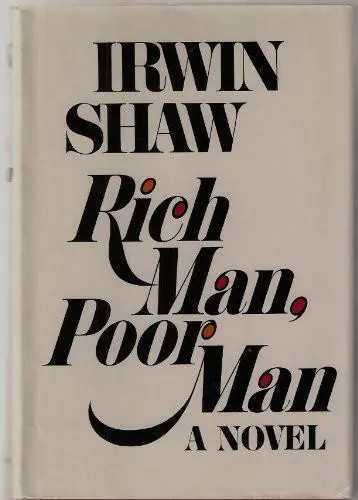
- Название:Rich Man, Poor Man
- Автор:
- Издательство:Delacorte Press, NY
- Жанр:
- Год:1970
- ISBN:9780385288583
- Рейтинг книги:5 / 5. Голосов: 1
-
Избранное:Добавить в избранное
- Отзывы:
-
Ваша оценка:
Rich Man, Poor Man: краткое содержание, описание и аннотация
Предлагаем к чтению аннотацию, описание, краткое содержание или предисловие (зависит от того, что написал сам автор книги «Rich Man, Poor Man»). Если вы не нашли необходимую информацию о книге — напишите в комментариях, мы постараемся отыскать её.
Rich Man, Poor Man — читать онлайн бесплатно полную книгу (весь текст) целиком
Ниже представлен текст книги, разбитый по страницам. Система сохранения места последней прочитанной страницы, позволяет с удобством читать онлайн бесплатно книгу «Rich Man, Poor Man», без необходимости каждый раз заново искать на чём Вы остановились. Поставьте закладку, и сможете в любой момент перейти на страницу, на которой закончили чтение.
Интервал:
Закладка:
They ate on the after deck, behind the pilot house, instead of in the little dining alcove forward of the saloon that they would have used if there had been clients aboard. Kate had set the table and somehow it looked better than when Dwyer did it. She had put two bottles of wine in an icebucket uncorked them, and put the bucket on a chair.
She had made a stew of the fish, with potatoes, garlic, onions, tomatoes, thyme, a lot of rock salt and pepper, and a little white wine and diced bacon. It was still light when they sat down at the table, with the sun setting in the cloudless, greenish-blue sky. The three men had washed, shaved and put on fresh clothes and had had two pastis apiece while sitting on deck, sniffing the aromas corning from the galley. The harbour itself was quiet, with just me sound of little ripples lapping at hulls to be heard.
Kate brought up a big tureen with the stew in it. Bread and butter were ready on the table, next to a big bowl of salad. After she served them all, she sat down with them, unhurried and calm. Thomas, as Captain, poured the wine.
Thomas took a first bite, chewed it thoughtfully. Kate, her head down, also began to eat. ‘Pinky,’ Thomas said, ‘you’re a true friend. You’re plotting to make me a fat man. Kate, you’re hired.’
She looked up and smiled. They raised their glasses to the new member of the crew.
Even the coffee tasted like coffee.
After dinner, while Kate was doing the dishes, the three men sat out in the silent evening, smoking cigars that Pinky had
produced, watching the moon rise over the mauve hills of the Alpes Maritimes.
‘Dwyer,’ Thomas said, leaning back in his chair and spreading his legs in front of him, ‘this is what it’s all about.’
Dwyer did not contradict him.
Later, Thomas went with Kate and Pinky to where the Vega was berthed. It was late and the ship was almost dark, with very few lights showing, but Thomas waited some distance away while Kate went on board to collect her things. He didn’t want to get into an argument with the skipper, if he happened to be awake and angry about losing a hand on five minutes’ notice.
A quarter of an hour later Thomas saw Kate coming noiselessly down the gangplank, carrying a valise. They walked together along the fortress wall, past the boats moored one next to another to where the Clothilde was tied up. Kate stopped for a moment, looked gravely at the white-and-blue boat, groaning a little while with the pull of the water against the two lines that made it fast to the quay. ‘I’m going to remember this evening,’ she said, then kicked off her espadrilles, and holding them in her hand, went barefooted up the gangplank.
Dwyer was waiting up for them. He had made up the extra bunk in Thomas’s cabin for himself and put clean sheets for Kate on the bunk in the other cabin that he had been living in alone. Thomas snored, because of his broken nose, but Dwyer was going to have to get used to it. At least for a while.
A week later, he moved back to his own cabin, because Kate moved into Thomas’s. She said she didn’t mind Thomas’s snoring.
The Goodharts were an old couple who stayed at the Hotel du Cap every June. He owned cotton mills in North Carolina, but had handed over the business to a son. He was a tall, erect, slow-moving heavy man with a shock of iron-grey hair and looked like a retired colonel in the Regular Army. Mrs Goodhart was a little younger than her husband, with soft white hair. Her figure was good enough so that she could get away with Wearing slacks. The Goodharts had chartered the Clothilde for two weeks the year before and had liked it so much that they had arranged a similar charter with Thomas for this year by mail early in the winter.
They were the least demanding of clients. Each morning at ten, Thomas anchored as close inshore as he could manage
opposite the row of the hotel Cabanas and the Goodharts came out in a speedboat. They came with full hampers of food, prepared in the hotel kitchen and baskets of wine-bottles wrapped in napkins. They were both over sixty and if the water was at all rough the transfer could be tricky. On those days, their chauffeur would drive them down to the Clothilde in Antibes Harbour. Sometimes there would be other couples, always old, with them, or they would tell Thomas that they were to pick up some friends in Cannes. Then they’d chug out to the straits between the Isles de Lerins, lying about four thousand yards off the coast, and anchor there for the day. It was almost always calm there and the water was only about twelve feet deep and brilliantly clear so that you could see the seagrass waving on the bottom. The Goodharts would put on bathing suits and lie on mattresses in the sun, reading or dozing, and occasionally dive in for a swim.
Mr Goodhart said that he felt safer about Mrs Goodhart’s swimming when Thomas or Dwyer swam beside her. Mrs Goodhart who was a robust woman with full shoulders and young, strong legs, swam perfectly well, but Thomas knew that it was Mr Goodhart’s way of telling him that he wanted Thomas and anybody else on the boat to feel free to enjoy the clear, cool water between the islands whenever they felt like taking a dip.
Sometimes, if they had guests, Thomas would spread a blanket for them on the after deck and they would play a few rubbers of bridge. Both Mr and Mrs Goodhart were soft-spoken and enormously polite with each other and everybody else.
Promptly at one-thirty every day, they were ready for the first drink, invariably a Bloody Mary, which Thomas made for them. After that, Dwyer unrolled the awning and they ate the food they had brought with them from the hotel. On the table there would be cold langouste, cold roast beef, fish salad or cold loup de mer with a green sauce, melon with prosciutto, cheese, and fruit. They always brought along so much food, even when they had friends with them, that there was plenty left over for the crew, not only for lunch, but for dinner, too. With their meal they each had a bottle of white wine apiece.
The only thing Thomas had to worry about was the coffee and now with Kate aboard that was no problem. The first day of the charter she came up from the galley with the coffee pot, dressed in white shorts and the white T-shirt with the legend Clothilde stretched tightly across her plump bosom and when
Thomas introduced her, Mr Goodhart nodded approvingly and said, ‘Captain, this ship is improving every year’.
After lunch, Mr and Mrs Goodhart went below for their siesta. Quite often, Thomas heard muffled sounds that could only come from lovemaking, Mr and Mrs Goodhart had told Thomas they had been married more than thirty-five years and Thomas marvelled that they did it and still so obviously enjoyed it. The Goodharts shook his entire conception of marriage.
Around about four o’clock, the Goodharts would reappear on deck, grave and ceremonious, as usual, in their bathing suits and would swim for another half hour, with either Dwyer or Thomas accompanying them. Dwyer swam poorly and there were one or two times when Mrs Goodhart was more than a hundred yards away from the Clothilde that Thomas thought there was a good chance she’d have to tow Dwyer back to the boat.
At five o’clock promptly, showered, combed, and dressed in cotton slacks, white shirt and a blue blazer, Goodhart would come up on deck from below and say, ‘Don’t you think it’s time for a drink, Captain?’ and, if there were no guests aboard, ‘I’d be honoured if you’d join me.’
Thomas would prepare two Scotch and sodas and give the signal to Dwyer, who would start the engines and take the wheel. With Kate handling the anchor up forward, they would start back towards the Hotel du Cap. Seated on the aft deck Mr Goodhart and Thomas would sip at their drinks as they pulled out of the straits and went around the island, with the pink-and-white towers of Cannes across the water on their port side.
Читать дальшеИнтервал:
Закладка:
Похожие книги на «Rich Man, Poor Man»
Представляем Вашему вниманию похожие книги на «Rich Man, Poor Man» списком для выбора. Мы отобрали схожую по названию и смыслу литературу в надежде предоставить читателям больше вариантов отыскать новые, интересные, ещё непрочитанные произведения.











Обсуждение, отзывы о книге «Rich Man, Poor Man» и просто собственные мнения читателей. Оставьте ваши комментарии, напишите, что Вы думаете о произведении, его смысле или главных героях. Укажите что конкретно понравилось, а что нет, и почему Вы так считаете.