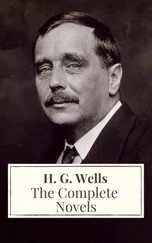
H. Wells - Ann Veronica
Здесь есть возможность читать онлайн «H. Wells - Ann Veronica» весь текст электронной книги совершенно бесплатно (целиком полную версию без сокращений). В некоторых случаях можно слушать аудио, скачать через торрент в формате fb2 и присутствует краткое содержание. Год выпуска: 0101, Жанр: Классическая проза, на немецком языке. Описание произведения, (предисловие) а так же отзывы посетителей доступны на портале библиотеки ЛибКат.

- Название:Ann Veronica
- Автор:
- Жанр:
- Год:0101
- ISBN:нет данных
- Рейтинг книги:4 / 5. Голосов: 1
-
Избранное:Добавить в избранное
- Отзывы:
-
Ваша оценка:
Ann Veronica: краткое содержание, описание и аннотация
Предлагаем к чтению аннотацию, описание, краткое содержание или предисловие (зависит от того, что написал сам автор книги «Ann Veronica»). Если вы не нашли необходимую информацию о книге — напишите в комментариях, мы постараемся отыскать её.
A fascinating description of the women's suffrage movement,
offers an optimistic depiction of one woman's sexual awakening and search for independence.
Ann Veronica — читать онлайн бесплатно полную книгу (весь текст) целиком
Ниже представлен текст книги, разбитый по страницам. Система сохранения места последней прочитанной страницы, позволяет с удобством читать онлайн бесплатно книгу «Ann Veronica», без необходимости каждый раз заново искать на чём Вы остановились. Поставьте закладку, и сможете в любой момент перейти на страницу, на которой закончили чтение.
Интервал:
Закладка:
the young man with the orange tie, and bent his forehead over
him, and brought out at last very clearly from him that the body
was only illusion and everything nothing but just spirit and
molecules of thought. It became a sort of duel at last between
them, and all the others sat and listened--every one, that is,
except the Alderman, who had got the blond young man into a
corner by the green-stained dresser with the aluminum things, and
was sitting with his back to every one else, holding one hand
over his mouth for greater privacy, and telling him, with an
accent of confidential admission, in whispers of the chronic
struggle between the natural modesty and general inoffensiveness
of the Borough Council and the social evil in Marylebone.
So the talk went on, and presently they were criticising
novelists, and certain daring essays of Wilkins got their due
share of attention, and then they were discussing the future of
the theatre. Ann Veronica intervened a little in the novelist
discussion with a defence of Esmond and a denial that the Egoist
was obscure, and when she spoke every one else stopped talking
and listened. Then they deliberated whether Bernard Shaw ought
to go into Parliament. And that brought them to vegetarianism
and teetotalism, and the young man in the orange tie and Mrs.
Goopes had a great set-to about the sincerity of Chesterton and
Belloc that was ended by Goopes showing signs of resuming the
Socratic method.
And at last Ann Veronica and Miss Miniver came down the dark
staircase and out into the foggy spaces of the London squares,
and crossed Russell Square, Woburn Square, Gordon Square, making
an oblique route to Ann Veronica's lodging. They trudged along a
little hungry, because of the fruitarian refreshments, and
mentally very active. And Miss Miniver fell discussing whether
Goopes or Bernard Shaw or Tolstoy or Doctor Tumpany or Wilkins
the author had the more powerful and perfect mind in existence at
the present time. She was clear there were no other minds like
them in all the world.
Part 4
Then one evening Ann Veronica went with Miss Miniver into the
back seats of the gallery at Essex Hall, and heard and saw the
giant leaders of the Fabian Society who are re-making the world:
Bernard Shaw and Toomer and Doctor Tumpany and Wilkins the
author, all displayed upon a platform. The place was crowded,
and the people about her were almost equally made up of very
good-looking and enthusiastic young people and a great variety of
Goopes-like types. In the discussion there was the oddest
mixture of things that were personal and petty with an idealist
devotion that was fine beyond dispute. In nearly every speech
she heard was the same implication of great and necessary changes
in the world--changes to be won by effort and sacrifice indeed,
but surely to be won. And afterward she saw a very much larger
and more enthusiastic gathering, a meeting of the advanced
section of the woman movement in Caxton Hall, where the same note
of vast changes in progress sounded; and she went to a soiree of
the Dress Reform Association and visited a Food Reform
Exhibition, where imminent change was made even alarmingly
visible. The women's meeting was much more charged with
emotional force than the Socialists'. Ann Veronica was carried
off her intellectual and critical feet by it altogether, and
applauded and uttered cries that subsequent reflection failed to
endorse. "I knew you would feel it," said Miss Miniver, as they
came away flushed and heated. "I knew you would begin to see how
it all falls into place together."
It did begin to fall into place together. She became more and
more alive, not so much to a system of ideas as to a big diffused
impulse toward change, to a great discontent with and criticism
of life as it is lived, to a clamorous confusion of ideas for
reconstruction--reconstruction of the methods of business, of
economic development, of the rules of property, of the status of
children, of the clothing and feeding and teaching of every one;
she developed a quite exaggerated consciousness of a multitude of
people going about the swarming spaces of London with their minds
full, their talk and gestures full, their very clothing charged
with the suggestion of the urgency of this pervasive project of
alteration. Some indeed carried themselves, dressed themselves
even, rather as foreign visitors from the land of "Looking
Backward" and "News from Nowhere" than as the indigenous
Londoners they were. For the most part these were detached
people: men practising the plastic arts, young writers, young men
in employment, a very large proportion of girls and women--self-
supporting women or girls of the student class. They made a
stratum into which Ann Veronica was now plunged up to her neck;
it had become her stratum.
None of the things they said and did were altogether new to Ann
Veronica, but now she got them massed and alive, instead of by
glimpses or in books--alive and articulate and insistent. The
London backgrounds, in Bloomsbury and Marylebone, against which
these people went to and fro, took on, by reason of their gray
facades, their implacably respectable windows and window-blinds,
their reiterated unmeaning iron railings, a stronger and stronger
suggestion of the flavor of her father at his most obdurate
phase, and of all that she felt herself fighting against.
She was already a little prepared by her discursive reading and
discussion under the Widgett influence for ideas and "movements,"
though temperamentally perhaps she was rather disposed to resist
and criticise than embrace them. But the people among whom she
was now thrown through the social exertions of Miss Miniver and
the Widgetts--for Teddy and Hetty came up from Morningside Park
and took her to an eighteen-penny dinner in Soho and introduced
her to some art students, who were also Socialists, and so opened
the way to an evening of meandering talk in a studio--carried
with them like an atmosphere this implication, not only that the
world was in some stupid and even obvious way WRONG, with which
indeed she was quite prepared to agree, but that it needed only a
few pioneers to behave as such and be thoroughly and
indiscriminately "advanced," for the new order to achieve itself.
When ninety per cent. out of the ten or twelve people one meets
in a month not only say but feel and assume a thing, it is very
hard not to fall into the belief that the thing is so.
Imperceptibly almost Ann Veronica began to acquire the new
attitude, even while her mind still resisted the felted ideas
that went with it. And Miss Miniver began to sway her.
The very facts that Miss Miniver never stated an argument
clearly, that she was never embarrassed by a sense of
self-contradiction, and had little more respect for consistency
of statement than a washerwoman has for wisps of vapor, which
made Ann Veronica critical and hostile at their first encounter
in Morningside Park, became at last with constant association the
secret of Miss Miniver's growing influence. The brain tires of
resistance, and when it meets again and again, incoherently
active, the same phrases, the same ideas that it has already
slain, exposed and dissected and buried, it becomes less and less
energetic to repeat the operation. There must be something, one
Читать дальшеИнтервал:
Закладка:
Похожие книги на «Ann Veronica»
Представляем Вашему вниманию похожие книги на «Ann Veronica» списком для выбора. Мы отобрали схожую по названию и смыслу литературу в надежде предоставить читателям больше вариантов отыскать новые, интересные, ещё непрочитанные произведения.











Обсуждение, отзывы о книге «Ann Veronica» и просто собственные мнения читателей. Оставьте ваши комментарии, напишите, что Вы думаете о произведении, его смысле или главных героях. Укажите что конкретно понравилось, а что нет, и почему Вы так считаете.