Теодор Драйзер - The Genius
Здесь есть возможность читать онлайн «Теодор Драйзер - The Genius» весь текст электронной книги совершенно бесплатно (целиком полную версию без сокращений). В некоторых случаях можно слушать аудио, скачать через торрент в формате fb2 и присутствует краткое содержание. Год выпуска: 2014, Издательство: epubBooks Classics, Жанр: Классическая проза, на английском языке. Описание произведения, (предисловие) а так же отзывы посетителей доступны на портале библиотеки ЛибКат.
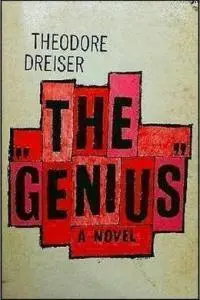
- Название:The Genius
- Автор:
- Издательство:epubBooks Classics
- Жанр:
- Год:2014
- ISBN:нет данных
- Рейтинг книги:4 / 5. Голосов: 1
-
Избранное:Добавить в избранное
- Отзывы:
-
Ваша оценка:
The Genius: краткое содержание, описание и аннотация
Предлагаем к чтению аннотацию, описание, краткое содержание или предисловие (зависит от того, что написал сам автор книги «The Genius»). Если вы не нашли необходимую информацию о книге — напишите в комментариях, мы постараемся отыскать её.
The Genius — читать онлайн бесплатно полную книгу (весь текст) целиком
Ниже представлен текст книги, разбитый по страницам. Система сохранения места последней прочитанной страницы, позволяет с удобством читать онлайн бесплатно книгу «The Genius», без необходимости каждый раз заново искать на чём Вы остановились. Поставьте закладку, и сможете в любой момент перейти на страницу, на которой закончили чтение.
Интервал:
Закладка:
Although she was about the house for ten days and he met her after the third morning not only at dinner, which was natural enough, but at breakfast (which surprised him a little), he paid not so very much attention to her. She was nice, very, but Eugene was thinking of another type. He thought she was uncommonly pleasant and considerate and he admired her style of dressing and her beauty, studying her with interest, wondering what sort of a life she led, for from various bits of conversation he overheard not only at table but at other times he judged she was fairly well to do. There was an apartment in Central Park West, card parties, automobile parties, theatre parties and a general sense of people—acquaintances anyhow, who were making money. He heard her tell of a mining engineer, Dr. Rowland; of a successful coal–mining speculator, Gerald Woods; of a Mrs. Hale who was heavily interested in copper mines and apparently very wealthy. "It's a pity Norman couldn't connect with something like that and make some real money," he heard her say to her mother one evening. He understood that Norman was her husband and that he probably would be back soon. So he kept his distance—interested and curious but hardly more.
Mrs. Wilson was not so easily baffled, however. A car appeared one evening at the door immediately after dinner, a great red touring car, and Mrs. Wilson announced easily, "We're going for a little spin after dinner, Mr. Witla. Don't you want to come along?"
Eugene had never ridden in an automobile at that time. "I'd be very pleased," he said, for the thought of a lonely evening in an empty house had sprung up when he saw it appear.
There was a chauffeur in charge—a gallant figure in a brown straw cap and tan duster, but Mrs. Wilson manoeuvred for place.
"You sit with the driver, coz," she said to Simpson, and when her mother stepped in she followed after, leaving Eugene the place to the right of her.
"There must be a coat and cap in the locker," she said to the chauffeur; "let Mr. Witla have it."
The latter extracted a spare linen coat and straw cap which Eugene put on.
"I like automobiling, don't you?" she said to Eugene good–naturedly. "It's so refreshing. If there is any rest from care on this earth it's in traveling fast."
"I've never ridden before," replied Eugene simply. Something about the way he said it touched her. She felt sorry for him because he appeared lonely and gloomy. His indifference to her piqued her curiosity and irritated her pride. Why shouldn't he take an interest in her? As they sped under leafy lanes, up hill and down dale, she made out his face in the starlight. It was pale, reflective, indifferent. "These deep thinkers!" she chided him. "It's terrible to be a philosopher." Eugene smiled.
When they reached home he went to his room as did all the others to theirs. He stepped out into the hall a few minutes later to go to the library for a book, and found that her door which he had to pass was wide open. She was sitting back in a Morris chair, her feet upon another chair, her skirts slightly drawn up revealing a trim foot and ankle. She did not stir but looked up and smiled winningly.
"Aren't you tired enough to sleep?" he asked.
"Not quite yet," she smiled.
He went down stairs and turning on a light in the library stood looking at a row of books reading the titles. He heard a step and there she was looking at the books also.
"Don't you want a bottle of beer?" she asked. "I think there is some in the ice box. I forgot that you might be thirsty."
"I really don't care," he said. "I'm not much for drinks of any kind."
"That's not very sociable," she laughed.
"Let's have the beer then," he said.
She threw herself back languidly in one of the big dining room chairs when she had brought the drinks and some Swiss cheese and crackers, and said: "I think you'll find some cigarettes on the table in the corner if you like."
He struck her a match and she puffed her cigarette comfortably. "I suppose you find it lonely up here away from all your friends and companions," she volunteered.
"Oh, I've been sick so long I scarcely know whether I have any."
He described some of his imaginary ailments and experiences and she listened to him attentively. When the beer was gone she asked him if he would have more but he said no. After a time because he stirred wearily, she got up.
"Your mother will think we're running some sort of a midnight game down here," he volunteered.
"Mother can't hear," she said. "Her room is on the third floor and besides she doesn't hear very well. Dave don't mind. He knows me well enough by now to know that I do as I please."
She stood closer to Eugene but still he did not see. When he moved away she put out the lights and followed him to the stairs.
"He's either the most bashful or the most indifferent of men," she thought, but she said softly, "Good–night. Pleasant dreams to you," and went her way.
Eugene thought of her now as a good fellow, a little gay for a married woman, but probably circumspect withal. She was simply being nice to him. All this was simply because, as yet, he was not very much interested.
There were other incidents. One morning he passed her door. Her mother had already gone down to breakfast and there was the spectacle of a smooth, shapely arm and shoulder quite bare to his gaze as she lay on her pillow apparently unconscious that her door was open. It thrilled him as something sensuously beautiful for it was a perfect arm. Another time he saw her of an evening just before dinner buttoning her shoes. Her dress was pulled three–quarters of the way to her knees and her shoulders and arms were bare, for she was still in her corset and short skirts. She seemed not to know that he was near. One night after dinner he started to whistle something and she went to the piano to keep him company. Another time he hummed on the porch and she started the same song, singing with him. He drew his chair near the window where there was a couch after her mother had retired for the night, and she came and threw herself on it. "You don't mind if I lie here?" she said, "I'm tired tonight."
"Not at all. I'm glad of your company. I'm lonely."
She lay and stared at him, smiling. He hummed and she sang. "Let me see your palm," she said, "I want to learn something." He held it out. She fingered it temptingly. Even this did not wake him.
She left for five days because of some necessity in connection with her engagements and when she returned he was glad to see her. He had been lonesome, and he knew now that she made the house gayer. He greeted her genially.
"I'm glad to see you back," he said.
"Are you really?" she replied. "I don't believe it."
"Why not?" he asked.
"Oh, signs, omens and portents. You don't like women very well I fancy."
"Don't I!"
"No, I think not," she replied.
She was charming in a soft grayish green satin. He noticed that her neck was beautiful and that her hair looped itself gracefully upon the back of it. Her nose was straight and fine, sensitive because of its thin partitioning walls. He followed her into the library and they went out on the porch. Presently he returned—it was ten o'clock—and she came also. Davis had gone to his room, Mrs. Hibberdell to hers.
"I think I'll read," he said, aimlessly.
"Why anything like that?" she jested. "Never read when you can do anything else."
"What else can I do?"
"Oh, lots of things. Play cards, tell fortunes, read palms, drink beer—" She looked at him wilfully.
He went to his favorite chair near the window, side by side with the window–seat couch. She came and threw herself on it.
"Be gallant and fix my pillows for me, will you?" she asked.
"Of course I will," he said.
He took a pillow and raised her head, for she did not deign to move.
Читать дальшеИнтервал:
Закладка:
Похожие книги на «The Genius»
Представляем Вашему вниманию похожие книги на «The Genius» списком для выбора. Мы отобрали схожую по названию и смыслу литературу в надежде предоставить читателям больше вариантов отыскать новые, интересные, ещё непрочитанные произведения.





Обсуждение, отзывы о книге «The Genius» и просто собственные мнения читателей. Оставьте ваши комментарии, напишите, что Вы думаете о произведении, его смысле или главных героях. Укажите что конкретно понравилось, а что нет, и почему Вы так считаете.