Теодор Драйзер - The Genius
Здесь есть возможность читать онлайн «Теодор Драйзер - The Genius» весь текст электронной книги совершенно бесплатно (целиком полную версию без сокращений). В некоторых случаях можно слушать аудио, скачать через торрент в формате fb2 и присутствует краткое содержание. Год выпуска: 2014, Издательство: epubBooks Classics, Жанр: Классическая проза, на английском языке. Описание произведения, (предисловие) а так же отзывы посетителей доступны на портале библиотеки ЛибКат.
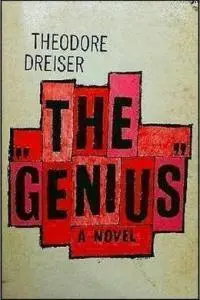
- Название:The Genius
- Автор:
- Издательство:epubBooks Classics
- Жанр:
- Год:2014
- ISBN:нет данных
- Рейтинг книги:4 / 5. Голосов: 1
-
Избранное:Добавить в избранное
- Отзывы:
-
Ваша оценка:
The Genius: краткое содержание, описание и аннотация
Предлагаем к чтению аннотацию, описание, краткое содержание или предисловие (зависит от того, что написал сам автор книги «The Genius»). Если вы не нашли необходимую информацию о книге — напишите в комментариях, мы постараемся отыскать её.
The Genius — читать онлайн бесплатно полную книгу (весь текст) целиком
Ниже представлен текст книги, разбитый по страницам. Система сохранения места последней прочитанной страницы, позволяет с удобством читать онлайн бесплатно книгу «The Genius», без необходимости каждый раз заново искать на чём Вы остановились. Поставьте закладку, и сможете в любой момент перейти на страницу, на которой закончили чтение.
Интервал:
Закладка:
It was during this time that he could not help learning and appreciating just how eager, patient and genuine was her regard for his material welfare. To her he was obviously the greatest man in the world, a great painter, a great thinker, a great lover, a great personality every way. It didn't make so much difference to her at this time that he wasn't making any money. He would sometime, surely, and wasn't she getting it all in fame anyhow, now? Why, to be Mrs. Eugene Witla, after what she had seen of him in New York and Paris, what more could she want? Wasn't it all right for her to rake and scrape now, to make her own clothes and hats, save, mend, press and patch? He would come out of all this silly feeling about other women once he became a little older, and then he would be all right. Anyhow he appeared to love her now; and that was something. Because he was lonely, fearsome, uncertain of himself, uncertain of the future, he welcomed these unsparing attentions on her part, and this deceived her. Who else would give them to him, he thought; who else would be so faithful in times like these? He almost came to believe that he could love her again, be faithful to her, if he could keep out of the range of these other enticing personalities. If only he could stamp out this eager desire for other women, their praise and their beauty!
But this was more because he was sick and lonely than anything else. If he had been restored to health then and there, if prosperity had descended on him as he so eagerly dreamed, it would have been the same as ever. He was as subtle as nature itself; as changeable as a chameleon. But two things were significant and real—two things to which he was as true and unvarying as the needle to the pole—his love of the beauty of life which was coupled with his desire to express it in color, and his love of beauty in the form of the face of a woman, or rather that of a girl of eighteen. That blossoming of life in womanhood at eighteen!—there was no other thing under the sun like it to him. It was like the budding of the trees in spring; the blossoming of flowers in the early morning; the odor of roses and dew, the color of bright waters and clear jewels. He could not be faithless to that. He could not get away from it. It haunted him like a joyous vision, and the fact that the charms of Stella and Ruby and Angela and Christina and Frieda in whom it had been partially or wholly shadowed forth at one time or another had come and gone, made little difference. It remained clear and demanding. He could not escape it—the thought; he could not deny it. He was haunted by this, day after day, and hour after hour; and when he said to himself that he was a fool, and that it would lure him as a will–o'–the–wisp to his destruction and that he could find no profit in it ultimately, still it would not down. The beauty of youth; the beauty of eighteen! To him life without it was a joke, a shabby scramble, a work–horse job, with only silly material details like furniture and houses and steel cars and stores all involved in a struggle for what? To make a habitation for more shabby humanity? Never! To make a habitation for beauty? Certainly! What beauty? The beauty of old age?—How silly! The beauty of middle age? Nonsense! The beauty of maturity? No! The beauty of youth? Yes. The beauty of eighteen. No more and no less. That was the standard, and the history of the world proved it. Art, literature, romance, history, poetry—if they did not turn on this and the lure of this and the wars and sins because of this, what did they turn on? He was for beauty. The history of the world justified him. Who could deny it?
Chapter XVII
From Biloxi, because of the approach of summer when it would be unbearably warm there, and because his funds were so low that it was necessary to make a decisive move of some kind whether it led to complete disaster or not, he decided to return to New York. In storage with Kellners (M. Charles had kindly volunteered to take care of them for him) were a number of the pictures left over from the original show, and nearly all the paintings of the Paris exhibition. The latter had not sold well. Eugene's idea was that he could slip into New York quietly, take a room in some side street or in Jersey City or Brooklyn where he would not be seen, have the pictures in the possession of M. Charles returned to him, and see if he could not get some of the minor art dealers or speculators of whom he had heard to come and look at them and buy them outright. Failing that, he might take them himself, one by one, to different dealers here and there and dispose of them. He remembered now that Eberhard Zang had, through Norma Whitmore, asked him to come and see him. He fancied that, as Kellners had been so interested, and the newspaper critics had spoken of him so kindly the smaller dealers would be eager to take up with him. Surely they would buy this material. It was exceptional—very. Why not?
Eugene forgot or did not know the metaphysical side of prosperity and failure. He did not realize that "as a man thinketh so is he," and so also is the estimate of the whole world at the time he is thinking of himself thus—not as he is but as he thinks he is. The sense of it is abroad—by what processes we know not, but so it is.
Eugene's mental state, so depressed, so helpless, so fearsome—a rudderless boat in the dark, transmitted itself as an impression, a wireless message to all those who knew him or knew of him. His breakdown, which had first astonished M. Charles, depressed and then weakened the latter's interest in him. Like all other capable, successful men in the commercial world M. Charles was for strong men—men in the heyday of their success, the zenith of their ability. The least variation from this standard of force and interest was noticeable to him. If a man was going to fail—going to get sick and lose his interest in life or have his viewpoint affected, it might be very sad, but there was just one thing to do under such circumstances—get away from him. Failures of any kind were dangerous things to countenance. One must not have anything to do with them. They were very unprofitable. Such people as Temple Boyle and Vincent Beers, who had been his instructors in the past and who had heard of him in Chicago at the time of his success, Luke Severas, William McConnell, Oren Benedict, Hudson Dula, and others wondered what had become of him. Why did he not paint any more? He was never seen in the New York haunts of art! It was rumored at the time of the Paris exhibition that he was going to London to do a similar group of views, but the London exhibition never came off. He had told Smite and MacHugh the spring he left that he might do Chicago next, but that came to nothing. There was no evidence of it. There were rumors that he was very rich, that his art had failed him, that he had lost his mind even, and so the art world that knew him and was so interested in him no longer cared very much. It was too bad but—so thought the rival artists—there was one less difficult star to contend with. As for his friends, they were sorry, but such was life. He might recover. If not,—well—.
As time went on, one year, another year, another year, the strangeness of his suddenly brilliant burst and disappearance became to the talented in this field a form of classic memory. He was a man of such promise! Why did he not go on painting? There was an occasional mention in conversation or in print, but Eugene to all intents and purposes was dead.
When he came to New York it was after his capital had been reduced to three hundred dollars and he had given Angela one hundred and twenty–five of this to take her back to Blackwood and keep her there until he could make such arrangements as would permit her to join him. After a long discussion they had finally agreed that this would be best, for, seeing that he could neither paint nor illustrate, there was no certainty as to what he would do. To come here on so little money with her was not advisable. She had her home where she was welcome to stay for a while anyhow. Meanwhile he figured he could weather any storm alone.
Читать дальшеИнтервал:
Закладка:
Похожие книги на «The Genius»
Представляем Вашему вниманию похожие книги на «The Genius» списком для выбора. Мы отобрали схожую по названию и смыслу литературу в надежде предоставить читателям больше вариантов отыскать новые, интересные, ещё непрочитанные произведения.





Обсуждение, отзывы о книге «The Genius» и просто собственные мнения читателей. Оставьте ваши комментарии, напишите, что Вы думаете о произведении, его смысле или главных героях. Укажите что конкретно понравилось, а что нет, и почему Вы так считаете.