Теодор Драйзер - The Genius
Здесь есть возможность читать онлайн «Теодор Драйзер - The Genius» весь текст электронной книги совершенно бесплатно (целиком полную версию без сокращений). В некоторых случаях можно слушать аудио, скачать через торрент в формате fb2 и присутствует краткое содержание. Год выпуска: 2014, Издательство: epubBooks Classics, Жанр: Классическая проза, на английском языке. Описание произведения, (предисловие) а так же отзывы посетителей доступны на портале библиотеки ЛибКат.
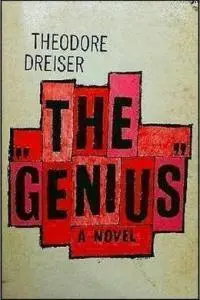
- Название:The Genius
- Автор:
- Издательство:epubBooks Classics
- Жанр:
- Год:2014
- ISBN:нет данных
- Рейтинг книги:4 / 5. Голосов: 1
-
Избранное:Добавить в избранное
- Отзывы:
-
Ваша оценка:
The Genius: краткое содержание, описание и аннотация
Предлагаем к чтению аннотацию, описание, краткое содержание или предисловие (зависит от того, что написал сам автор книги «The Genius»). Если вы не нашли необходимую информацию о книге — напишите в комментариях, мы постараемся отыскать её.
The Genius — читать онлайн бесплатно полную книгу (весь текст) целиком
Ниже представлен текст книги, разбитый по страницам. Система сохранения места последней прочитанной страницы, позволяет с удобством читать онлайн бесплатно книгу «The Genius», без необходимости каждый раз заново искать на чём Вы остановились. Поставьте закладку, и сможете в любой момент перейти на страницу, на которой закончили чтение.
Интервал:
Закладка:
There followed six months spent in Chicago in which he painted not one picture that was satisfactory to him, that was not messed into nothingness by changes and changes and changes. There were then three months in the mountains of Tennessee because someone told him of a wonderfully curative spring in a delightful valley where the spring came as a dream of color and the expense of living was next to nothing. There were four months of summer in southern Kentucky on a ridge where the air was cool, and after that five months on the Gulf of Mexico, at Biloxi, in Mississippi, because some comfortable people in Kentucky and Tennessee told Angela of this delightful winter resort farther South. All this time Eugene's money, the fifteen hundred dollars he had when he left Blackwood, several sums of two hundred, one hundred and fifty and two hundred and fifty, realized from pictures sold in New York and Paris during the fall and winter following his Paris exhibition, and two hundred which had come some months afterward from a fortuitous sale by M. Charles of one of his old New York views, had been largely dissipated. He still had five hundred dollars, but with no pictures being sold and none painted he was in a bad way financially in so far as the future was concerned. He could possibly return to Alexandria with Angela and live cheaply there for another six months, but because of the Frieda incident both he and she objected to it. Angela was afraid of Frieda and was resolved that she would not go there so long as Frieda was in the town, and Eugene was ashamed because of the light a return would throw on his fading art prospects. Blackwood was out of the question to him. They had lived on her parents long enough. If he did not get better he must soon give up this art idea entirely, for he could not live on trying to paint.
He began to think that he was possessed—obsessed of a devil—and that some people were pursued by evil spirits, fated by stars, doomed from their birth to failure or accident. How did the astrologer in New York know that he was to have four years of bad luck? He had seen three of them already. Why did a man who read his palm in Chicago once say that his hand showed two periods of disaster, just as the New York astrologer had and that he was likely to alter the course of his life radically in the middle portion of it? Were there any fixed laws of being? Did any of the so–called naturalistic school of philosophers and scientists whom he had read know anything at all? They were always talking about the fixed laws of the universe—the unalterable laws of chemistry and physics. Why didn't chemistry or physics throw some light on his peculiar physical condition, on the truthful prediction of the astrologer, on the signs and portents which he had come to observe for himself as foretelling trouble or good fortune for himself. If his left eye twitched he had observed of late he was going to have a quarrel with someone—invariably Angela. If he found a penny or any money, he was going to get money; for every notification of a sale of a picture with the accompanying check had been preceded by the discovery of a coin somewhere: once a penny in State Street, Chicago, on a rainy day—M. Charles wrote that a picture had been sold in Paris for two hundred; once a three–cent piece of the old American issue in the dust of a road in Tennessee—M. Charles wrote that one of his old American views had brought one hundred and fifty; once a penny in sands by the Gulf in Biloxi—another notification of a sale. So it went. He found that when doors squeaked, people were apt to get sick in the houses where they were; and a black dog howling in front of a house was a sure sign of death. He had seen this with his own eyes, this sign which his mother had once told him of as having been verified in her experience, in connection with the case of a man who was sick in Biloxi. He was sick, and a dog came running along the street and stopped in front of this place—a black dog—and the man died. Eugene saw this with his own eyes,—that is, the dog and the sick man's death notice. The dog howled at four o'clock in the afternoon and the next morning the man was dead. He saw the crape on the door. Angela mocked at his superstition, but he was convinced. "There are more things in heaven and earth, Horatio, than are dreamt of in your philosophy."
Chapter XVI
Eugene was reaching the point where he had no more money and was compelled to think by what process he would continue to make a living in the future. Worry and a hypochondriacal despair had reduced his body to a comparatively gaunt condition. His eyes had a nervous, apprehensive look. He would walk about speculating upon the mysteries of nature, wondering how he was to get out of this, what was to become of him, how soon, if ever, another picture would be sold, when? Angela, from having fancied that his illness was a mere temporary indisposition, had come to feel that he might be seriously affected for some time. He was not sick physically: he could walk and eat and talk vigorously enough, but he could not work and he was worrying, worrying, worrying.
Angela was quite as well aware as Eugene that their finances were in a bad way or threatening to become so, though he said nothing at all about them. He was ashamed to confess at this day, after their very conspicuous beginning in New York, that he was in fear of not doing well. How silly—he with all his ability! Surely he would get over this, and soon.
Angela's economical upbringing and naturally saving instinct stood her in good stead now, for she could market with the greatest care, purchase to the best advantage, make every scrap and penny count. She knew how to make her own clothes, as Eugene had found out when he first visited Blackwood, and was good at designing hats. Although she had thought in New York, when Eugene first began to make money, that now she would indulge in tailor–made garments and the art of an excellent dressmaker, she had never done so. With true frugality she had decided to wait a little while, and then Eugene's health having failed she had not the chance any more. Fearing the possible long duration of this storm she had begun to mend and clean and press and make over whatever seemed to require it. Even when Eugene suggested that she get something new she would not do it. Her consideration for their future—the difficulty he might have in making a living, deterred her.
Eugene noted this, though he said nothing. He was not unaware of the fear that she felt, the patience she exhibited, the sacrifice she made of her own whims and desires to his, and he was not entirely unappreciative. It was becoming very apparent to him that she had no life outside his own—no interests. She was his shadow, his alter ego, his servant, his anything he wanted her to be. "Little Pigtail" was one of his jesting pet names for her because in the West as a boy they had always called anyone who ran errands for others a pigtailer. In playing "one old cat," if one wanted another to chase the struck balls he would say: "You pig–tail for me, Willie, will you?" And Angela was his "little pigtail."
There were no further grounds for jealousy during the time, almost two years, in which they were wandering around together, for the reason that she was always with him, almost his sole companion, and that they did not stay long enough in any one place and under sufficiently free social conditions to permit him to form those intimacies which might have resulted disastrously. Some girls did take his eye—the exceptional in youth and physical perfection were always doing that, but he had no chance or very little of meeting them socially. They were not living with people they knew, were not introduced in the local social worlds, which they visited. Eugene could only look at these maidens whom he chanced to spy from time to time, and wish that he might know them better. It was hard to be tied down to a conventional acceptance of matrimony—to pretend that he was interested in beauty only in a sociological way. He had to do it before Angela though (and all conventional people for that matter), for she objected strenuously to the least interest he might manifest in any particular woman. All his remarks had to be general and guarded in their character. At the least show of feeling or admiration Angela would begin to criticize his choice and to show him wherein his admiration was ill–founded. If he were especially interested she would attempt to tear his latest ideal to pieces. She had no mercy, and he could see plainly enough on what her criticism was based. It made him smile but he said nothing. He even admired her for her heroic efforts to hold her own, though every victory she seemed to win served only to strengthen the bars of his own cage.
Читать дальшеИнтервал:
Закладка:
Похожие книги на «The Genius»
Представляем Вашему вниманию похожие книги на «The Genius» списком для выбора. Мы отобрали схожую по названию и смыслу литературу в надежде предоставить читателям больше вариантов отыскать новые, интересные, ещё непрочитанные произведения.





Обсуждение, отзывы о книге «The Genius» и просто собственные мнения читателей. Оставьте ваши комментарии, напишите, что Вы думаете о произведении, его смысле или главных героях. Укажите что конкретно понравилось, а что нет, и почему Вы так считаете.