Теодор Драйзер - Jennie Gerhardt
Здесь есть возможность читать онлайн «Теодор Драйзер - Jennie Gerhardt» весь текст электронной книги совершенно бесплатно (целиком полную версию без сокращений). В некоторых случаях можно слушать аудио, скачать через торрент в формате fb2 и присутствует краткое содержание. Год выпуска: 2014, Издательство: epubBooks Classics, Жанр: Классическая проза, на английском языке. Описание произведения, (предисловие) а так же отзывы посетителей доступны на портале библиотеки ЛибКат.
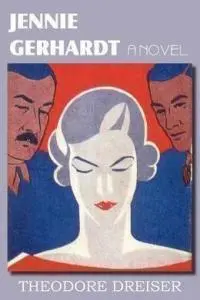
- Название:Jennie Gerhardt
- Автор:
- Издательство:epubBooks Classics
- Жанр:
- Год:2014
- ISBN:нет данных
- Рейтинг книги:5 / 5. Голосов: 1
-
Избранное:Добавить в избранное
- Отзывы:
-
Ваша оценка:
Jennie Gerhardt: краткое содержание, описание и аннотация
Предлагаем к чтению аннотацию, описание, краткое содержание или предисловие (зависит от того, что написал сам автор книги «Jennie Gerhardt»). Если вы не нашли необходимую информацию о книге — напишите в комментариях, мы постараемся отыскать её.
Jennie Gerhardt — читать онлайн бесплатно полную книгу (весь текст) целиком
Ниже представлен текст книги, разбитый по страницам. Система сохранения места последней прочитанной страницы, позволяет с удобством читать онлайн бесплатно книгу «Jennie Gerhardt», без необходимости каждый раз заново искать на чём Вы остановились. Поставьте закладку, и сможете в любой момент перейти на страницу, на которой закончили чтение.
Интервал:
Закладка:
It was astonishing to Lester to see how thoroughly his father had taken his case into consideration. He half suspected, on reading these conditions, that his brother Robert had had something to do with the framing of them, but of course he could not be sure. Robert had not given any direct evidence of enmity.
"Who drew this will?" he demanded of O'Brien, a little later.
"Well, we all had a hand in it," replied O'Brien, a little shamefacedly. "It was a very difficult document to draw up. You know, Mr. Kane, there was no budging your father. He was adamant. He has come very near defeating his own wishes in some of these clauses. Of course, you know, we had nothing to do with its spirit. That was between you and him. I hated very much to have to do it."
"Oh, I understand all that!" said Lester. "Don't let that worry you."
Mr. O'Brien was very grateful.
During the reading of the will Lester had sat as stolid as an ox.
He got up after a time, as did the others, assuming an air of nonchalance. Robert, Amy, Louise and Imogene all felt shocked, but not exactly, not unqualifiedly regretful. Certainly Lester had acted very badly. He had given his father great provocation.
"I think the old gentleman has been a little rough in this," said Robert, who had been sitting next him. "I certainly did not expect him to go as far as that. So far as I am concerned some other arrangement would have been satisfactory."
Lester smiled grimly. "It doesn't matter," he said.
Imogene, Amy, and Louise were anxious to be consolatory, but they did not know what to say. Lester had brought it all on himself. "I don't think papa acted quite right, Lester," ventured Amy, but Lester waved her away almost gruffly.
"I can stand it," he said.
He figured out, as he stood there, what his income would be in case he refused to comply with his father's wishes. Two hundred shares of L. S. and M. S., in open market, were worth a little over one thousand each. They yielded from five to six per cent., sometimes more, sometimes less. At this rate he would have ten thousand a year, not more.
The family gathering broke up, each going his way, and Lester returned to his sister's house. He wanted to get out of the city quickly, gave business as an excuse to avoid lunching with any one, and caught the earliest train back to Chicago. As he rode he meditated.
So this was how much his father really cared for him! Could it really be so? He, Lester Kane, ten thousand a year, for only three years, and then longer only on condition that he married Jennie! "Ten thousand a year," he thought, "and that for three years! Good Lord! Any smart clerk can earn that. To think he should have done that to me!"
Chapter XLIII
This attempt at coercion was the one thing which would definitely set Lester in opposition to his family, at least for the time being. He had realized clearly enough of late that he had made a big mistake; first in not having married Jennie, thus avoiding scandal; and in the second place in not having accepted her proposition at the time when she wanted to leave him; There were no two ways about it, he had made a mess of this business. He could not afford to lose his fortune entirely. He did not have enough money of his own. Jennie was unhappy, he could see that. Why shouldn't she be? He was unhappy. Did he want to accept the shabby ten thousand a year, even if he were willing to marry her? Finally, did he want to lose Jennie, to have her go out of his life once and for all? He could not make up his mind; the problem was too complicated.
When Lester returned to his home, after the funeral, Jennie saw at once that something was amiss with him, something beyond a son's natural grief for his father's death was weighing upon his spirits. What was it, she wondered. She tried to draw near to him sympathetically, but his wounded spirit could not be healed so easily. When hurt in his pride he was savage and sullen—he could have struck any man who irritated him. She watched him interestedly, wishing to do something for him, but he would not give her his confidence. He grieved, and she could only grieve with him.
Days passed, and now the financial situation which had been created by his father's death came up for careful consideration. The factory management had to be reorganized. Robert would have to be made president, as his father wished. Lester's own relationship to the business would have to come up for adjudication. Unless he changed his mind about Jennie, he was not a stockholder. As a matter of fact, he was not anything. To continue to be secretary and treasurer, it was necessary that he should own at least one share of the company's stock. Would Robert give him any? Would Amy, Louise, or Imogene? Would they sell him any? Would the other members of the family care to do anything which would infringe on Robert's prerogatives under the will? They were all rather unfriendly to Lester at present, and he realized that he was facing a ticklish situation. The solution was—to get rid of Jennie. If he did that he would not need to be begging for stock. If he didn't, he was flying in the face of his father's last will and testament. He turned the matter over in his mind slowly and deliberately. He could quite see how things were coming out. He must abandon either Jennie or his prospects in life. What a dilemma!
Despite Robert's assertion, that so far as he was concerned another arrangement would have been satisfactory, he was really very well pleased with the situation; his dreams were slowly nearing completion. Robert had long had his plans perfected, not only for a thorough reorganization of the company proper, but for an extension of the business in the direction of a combination of carriage companies. If he could get two or three of the larger organizations in the East and West to join with him, selling costs could be reduced, over–production would be avoided, and the general expenses could be materially scaled down. Through a New York representative, he had been picking up stock in outside carriage companies for some time and he was almost ready to act. In the first place he would have himself elected president of the Kane Company, and since Lester was no longer a factor, he could select Amy's husband as vice–president, and possibly some one other than Lester as secretary and treasurer. Under the conditions of the will, the stock and other properties set aside temporarily for Lester, in the hope that he would come to his senses, were to be managed and voted by Robert. His father had meant, obviously, that he, Robert, should help him coerce his brother. He did not want to appear mean, but this was such an easy way. It gave him a righteous duty to perform. Lester must come to his senses or he must let Robert run the business to suit himself.
Lester, attending to his branch duties in Chicago, foresaw the drift of things. He realized now that he was permanently out of the company, a branch manager at his brother's sufferance, and the thought irritated him greatly. Nothing had been said by Robert to indicate that such a change had taken place—things went on very much as before—but Robert's suggestions were now obviously law. Lester was really his brother's employee at so much a year. It sickened his soul.
There came a time, after a few weeks, when he felt as if he could not stand this any longer. Hitherto he had been a free and independent agent. The approaching annual stockholder's meeting which hitherto had been a one–man affair and a formality, his father doing all the voting, would be now a combination of voters, his brother presiding, his sisters very likely represented by their husbands, and he not there at all. It was going to be a great come–down, but as Robert had not said anything about offering to give or sell him any stock which would entitle him to sit as a director or hold any official position in the company, he decided to write and resign. That would bring matters to a crisis. It would show his brother that he felt no desire to be under obligations to him in any way or to retain anything which was not his—and gladly so—by right of ability and the desire of those with whom he was associated. If he wanted to move back into the company by deserting Jennie he would come in a very different capacity from that of branch manager. He dictated a simple, straight–forward business letter, saying:
Читать дальшеИнтервал:
Закладка:
Похожие книги на «Jennie Gerhardt»
Представляем Вашему вниманию похожие книги на «Jennie Gerhardt» списком для выбора. Мы отобрали схожую по названию и смыслу литературу в надежде предоставить читателям больше вариантов отыскать новые, интересные, ещё непрочитанные произведения.






Обсуждение, отзывы о книге «Jennie Gerhardt» и просто собственные мнения читателей. Оставьте ваши комментарии, напишите, что Вы думаете о произведении, его смысле или главных героях. Укажите что конкретно понравилось, а что нет, и почему Вы так считаете.