Теодор Драйзер - Jennie Gerhardt
Здесь есть возможность читать онлайн «Теодор Драйзер - Jennie Gerhardt» весь текст электронной книги совершенно бесплатно (целиком полную версию без сокращений). В некоторых случаях можно слушать аудио, скачать через торрент в формате fb2 и присутствует краткое содержание. Год выпуска: 2014, Издательство: epubBooks Classics, Жанр: Классическая проза, на английском языке. Описание произведения, (предисловие) а так же отзывы посетителей доступны на портале библиотеки ЛибКат.
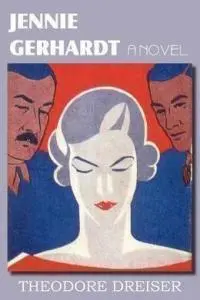
- Название:Jennie Gerhardt
- Автор:
- Издательство:epubBooks Classics
- Жанр:
- Год:2014
- ISBN:нет данных
- Рейтинг книги:5 / 5. Голосов: 1
-
Избранное:Добавить в избранное
- Отзывы:
-
Ваша оценка:
Jennie Gerhardt: краткое содержание, описание и аннотация
Предлагаем к чтению аннотацию, описание, краткое содержание или предисловие (зависит от того, что написал сам автор книги «Jennie Gerhardt»). Если вы не нашли необходимую информацию о книге — напишите в комментариях, мы постараемся отыскать её.
Jennie Gerhardt — читать онлайн бесплатно полную книгу (весь текст) целиком
Ниже представлен текст книги, разбитый по страницам. Система сохранения места последней прочитанной страницы, позволяет с удобством читать онлайн бесплатно книгу «Jennie Gerhardt», без необходимости каждый раз заново искать на чём Вы остановились. Поставьте закладку, и сможете в любой момент перейти на страницу, на которой закончили чтение.
Интервал:
Закладка:
Chapter XL
Lester returned to Chicago. He realized that he had offended his father seriously, how seriously he could not say. In all his personal relations with old Archibald he had never seen him so worked up. But even now Lester did not feel that the breach was irreparable; he hardly realized that it was necessary for him to act decisively if he hoped to retain his father's affection and confidence. As for the world at large, what did it matter how much people talked or what they said. He was big enough to stand alone. But was he? People turn so quickly from weakness or the shadow of it. To get away from failure—even the mere suspicion of it—that seems to be a subconscious feeling with the average man and woman; we all avoid non–success as though we fear that it may prove contagious. Lester was soon to feel the force of this prejudice.
One day Lester happened to run across Berry Dodge, the millionaire head of Dodge, Holbrook & Kingsbury, a firm that stood in the dry–goods world, where the Kane Company stood in the carriage world. Dodge had been one of Lester's best friends. He knew him as intimately as he knew Henry Bracebridge, of Cleveland, and George Knowles, of Cincinnati. He visited at his handsome home on the North Shore Drive, and they met constantly in a business and social way. But since Lester had moved out to Hyde Park, the old intimacy had lapsed. Now they came face to face on Michigan Avenue near the Kane building.
"Why, Lester, I'm glad to see you again," said Dodge.
He extended a formal hand, and seemed just a little cool. "I hear you've gone and married since I saw you."
"No, nothing like that," replied Lester, easily, with the air of one who prefers to be understood in the way of the world sense.
"Why so secret about it, if you have?" asked Dodge, attempting to smile, but with a wry twist to the corners of his mouth. He was trying to be nice, and to go through a difficult situation gracefully. "We fellows usually make a fuss about that sort of thing. You ought to let your friends know."
"Well," said Lester, feeling the edge of the social blade that was being driven into him, "I thought I'd do it in a new way. I'm not much for excitement in that direction, anyhow."
"It is a matter of taste, isn't it?" said Dodge a little absently. "You're living in the city, of course?"
"In Hyde Park."
"That's a pleasant territory. How are things otherwise?" And he deftly changed the subject before waving him a perfunctory farewell.
Lester missed at once the inquiries which a man like Dodge would have made if he had really believed that he was married. Under ordinary circumstances his friend would have wanted to know a great deal about the new Mrs. Kane. There would have been all those little familiar touches common to people living on the same social plane. Dodge would have asked Lester to bring his wife over to see them, would have definitely promised to call. Nothing of the sort happened, and Lester noticed the significant omission.
It was the same with the Burnham Moores, the Henry Aldriches, and a score of other people whom he knew equally well. Apparently they all thought that he had married and settled down. They were interested to know where he was living, and they were rather disposed to joke him about being so very secretive on the subject, but they were not willing to discuss the supposed Mrs. Kane. He was beginning to see that this move of his was going to tell against him notably.
One of the worst stabs—it was the cruelest because, in a way, it was the most unintentional—he received from an old acquaintance, Will Whitney, at the Union Club. Lester was dining there one evening, and Whitney met him in the main reading–room as he was crossing from the cloak–room to the cigar–stand. The latter was a typical society figure, tall, lean, smooth–faced, immaculately garbed, a little cynical, and to–night a little the worse for liquor. "Hi, Lester!" he called out, "what's this talk about a menage of yours out in Hyde Park? Say, you're going some. How are you going to explain all this to your wife when you get married?"
"I don't have to explain it," replied Lester irritably. "Why should you be so interested in my affairs? You're not living in a stone house, are you?"
"Say, ha! ha! that's pretty good now, isn't it? You didn't marry that little beauty you used to travel around with on the North Side, did you? Eh, now! Ha, ha! Well, I swear. You married! You didn't, now, did you?"
"Cut it out, Whitney," said Lester roughly. "You're talking wild."
"Pardon, Lester," said the other aimlessly, but sobering. "I beg your pardon. Remember, I'm just a little warm. Eight whisky–sours straight in the other room there. Pardon. I'll talk to you some time when I'm all right. See, Lester? Eh! Ha! ha! I'm a little loose, that's right. Well, so long! Ha! ha!"
Lester could not get over that cacophonous "ha! ha!" It cut him, even though it came from a drunken man's mouth. "That little beauty you used to travel with on the North Side. You didn't marry her, did you?" He quoted Whitney's impertinences resentfully. George! But this was getting a little rough! He had never endured anything like this before—he, Lester Kane. It set him thinking. Certainly he was paying dearly for trying to do the kind thing by Jennie.
Chapter XLI
But worse was to follow. The American public likes gossip about well–known people, and the Kanes were wealthy and socially prominent. The report was that Lester, one of its principal heirs, had married a servant girl. He, an heir to millions! Could it be possible? What a piquant morsel for the newspapers! Very soon the paragraphs began to appear. A small society paper, called the South Side Budget, referred to him anonymously as "the son of a famous and wealthy carriage manufacturer of Cincinnati," and outlined briefly what it knew of the story. "Of Mrs. ―" it went on, sagely, "not so much is known, except that she once worked in a well–known Cleveland society family as a maid and was, before that, a working–girl in Columbus, Ohio. After such a picturesque love–affair in high society, who shall say that romance is dead?"
Lester saw this item. He did not take the paper, but some kind soul took good care to see that a copy was marked and mailed to him. It irritated him greatly, for he suspected at once that it was a scheme to blackmail him. But he did not know exactly what to do about it. He preferred, of course, that such comments should cease, but he also thought that if he made any effort to have them stopped he might make matters worse. So he did nothing. Naturally, the paragraph in the Budget attracted the attention of other newspapers. It sounded like a good story, and one Sunday editor, more enterprising than the others, conceived the notion of having this romance written up. A full–page Sunday story with a scare–head such as "Sacrifices Millions for His Servant Girl Love," pictures of Lester, Jennie, the house at Hyde Park, the Kane manufactory at Cincinnati, the warehouse on Michigan Avenue—certainly, such a display would make a sensation. The Kane Company was not an advertiser in any daily or Sunday paper. The newspaper owed him nothing. If Lester had been forewarned he might have put a stop to the whole business by putting an advertisement in the paper or appealing to the publisher. He did not know, however, and so was without power to prevent the publication. The editor made a thorough job of the business. Local newspaper men in Cincinnati, Cleveland, and Columbus were instructed to report by wire whether anything of Jennie's history was known in their city. The Bracebridge family in Cleveland was asked whether Jennie had ever worked there. A garbled history of the Gerhardts was obtained from Columbus. Jennie's residence on the North Side, for several years prior to her supposed marriage, was discovered and so the whole story was nicely pieced together. It was not the idea of the newspaper editor to be cruel or critical, but rather complimentary. All the bitter things, such as the probable illegitimacy of Vesta, the suspected immorality of Lester and Jennie in residing together as man and wife, the real grounds of the well–known objections of his family to the match, were ignored. The idea was to frame up a Romeo and Juliet story in which Lester should appear as an ardent, self–sacrificing lover, and Jennie as a poor and lovely working–girl, lifted to great financial and social heights by the devotion of her millionaire lover. An exceptional newspaper artist was engaged to make scenes depicting the various steps of the romance and the whole thing was handled in the most approved yellow–journal style. There was a picture of Lester obtained from his Cincinnati photographer for a consideration; Jennie had been surreptitiously "snapped" by a staff artist while she was out walking.
Читать дальшеИнтервал:
Закладка:
Похожие книги на «Jennie Gerhardt»
Представляем Вашему вниманию похожие книги на «Jennie Gerhardt» списком для выбора. Мы отобрали схожую по названию и смыслу литературу в надежде предоставить читателям больше вариантов отыскать новые, интересные, ещё непрочитанные произведения.






Обсуждение, отзывы о книге «Jennie Gerhardt» и просто собственные мнения читателей. Оставьте ваши комментарии, напишите, что Вы думаете о произведении, его смысле или главных героях. Укажите что конкретно понравилось, а что нет, и почему Вы так считаете.