Теодор Драйзер - Jennie Gerhardt
Здесь есть возможность читать онлайн «Теодор Драйзер - Jennie Gerhardt» весь текст электронной книги совершенно бесплатно (целиком полную версию без сокращений). В некоторых случаях можно слушать аудио, скачать через торрент в формате fb2 и присутствует краткое содержание. Год выпуска: 2014, Издательство: epubBooks Classics, Жанр: Классическая проза, на английском языке. Описание произведения, (предисловие) а так же отзывы посетителей доступны на портале библиотеки ЛибКат.
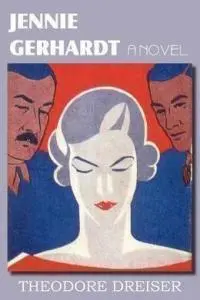
- Название:Jennie Gerhardt
- Автор:
- Издательство:epubBooks Classics
- Жанр:
- Год:2014
- ISBN:нет данных
- Рейтинг книги:5 / 5. Голосов: 1
-
Избранное:Добавить в избранное
- Отзывы:
-
Ваша оценка:
Jennie Gerhardt: краткое содержание, описание и аннотация
Предлагаем к чтению аннотацию, описание, краткое содержание или предисловие (зависит от того, что написал сам автор книги «Jennie Gerhardt»). Если вы не нашли необходимую информацию о книге — напишите в комментариях, мы постараемся отыскать её.
Jennie Gerhardt — читать онлайн бесплатно полную книгу (весь текст) целиком
Ниже представлен текст книги, разбитый по страницам. Система сохранения места последней прочитанной страницы, позволяет с удобством читать онлайн бесплатно книгу «Jennie Gerhardt», без необходимости каждый раз заново искать на чём Вы остановились. Поставьте закладку, и сможете в любой момент перейти на страницу, на которой закончили чтение.
Интервал:
Закладка:
"Run on," was her comment. "I'll wait for you."
"What would you do if I really should?"
"Why, Lester, I wouldn't do anything. You'd come back to me, maybe."
"Wouldn't you care?"
"You know I'd care. But if you felt that you wanted to, I wouldn't try to stop you. I wouldn't expect to be all in all to one man, unless he wanted me to be."
"Where do you get those ideas, Jennie?" he asked her once, curious to test the breadth of her philosophy.
"Oh, I don't know, why?"
"They're so broad, so good–natured, so charitable. They're not common, that's sure."
"Why, I don't think we ought to be selfish, Lester. I don't know why. Some women think differently, I know, but a man and a woman ought to want to live together, or they ought not to—don't you think? It doesn't make so much difference if a man goes off for a little while—just so long as he doesn't stay—if he wants to come back at all."
Lester smiled, but he respected her for the sweetness of her point of view—he had to.
To–night, when she saw this woman so eager to talk to Lester, she realized at once that they must have a great deal in common to talk over; whereupon she did a characteristic thing. "Won't you excuse me for a little while?" she asked, smiling. "I left some things uncared for in our rooms. I'll be back."
She went away, remaining in her room as long as she reasonably could, and Lester and Letty fell to discussing old times in earnest. He recounted as much of his experiences as he deemed wise, and Letty brought the history of her life up to date. "Now that you're safely married, Lester," she said daringly, "I'll confess to you that you were the one man I always wanted to have propose to me—and you never did."
"Maybe I never dared," he said, gazing into her superb black eyes, and thinking that perhaps she might know that he was not married. He felt that she had grown more beautiful in every way. She seemed to him now to be an ideal society figure–perfection itself—gracious, natural, witty, the type of woman who mixes and mingles well, meeting each new–comer upon the plane best suited to him or her.
"Yes, you thought! I know what you thought. Your real thought just left the table."
"Tut, tut, my dear. Not so fast. You don't know what I thought."
"Anyhow, I allow you some credit. She's charming."
"Jennie has her good points," he replied simply.
"And are you happy?"
"Oh, fairly so. Yes, I suppose I'm happy—as happy as any one can be who sees life as it is. You know I'm not troubled with many illusions."
"Not any, I think, kind sir, if I know you."
"Very likely, not any, Letty; but sometimes I wish I had a few. I think I would be happier."
"And I, too, Lester. Really, I look on my life as a kind of failure, you know, in spite of the fact that I'm almost as rich as Croesus—not quite. I think he had some more than I have."
"What talk from you—you, with your beauty and talent, and money—good heavens!"
"And what can I do with it? Travel, talk, shoo away silly fortune–hunters. Oh, dear, sometimes I get so tired!"
Letty looked at Lester. In spite of Jennie, the old feeling came back. Why should she have been cheated of him? They were as comfortable together as old married people, or young lovers. Jennie had had no better claim. She looked at him, and her eyes fairly spoke. He smiled a little sadly.
"Here comes my wife," he said. "We'll have to brace up and talk of other things. You'll find her interesting—really."
"Yes, I know," she replied, and turned on Jennie a radiant smile.
Jennie felt a faint sense of misgiving. She thought vaguely that this might be one of Lester's old flames. This was the kind of woman he should have chosen—not her. She was suited to his station in life, and he would have been as happy—perhaps happier. Was he beginning to realize it? Then she put away the uncomfortable thought; pretty soon she would be getting jealous, and that would be contemptible.
Mrs. Gerald continued to be most agreeable in her attitude toward the Kanes. She invited them the next day to join her on a drive through Rotten Row. There was a dinner later at Claridge's, and then she was compelled to keep some engagement which was taking her to Paris. She bade them both an affectionate farewell, and hoped that they would soon meet again. She was envious, in a sad way, of Jennie's good fortune. Lester had lost none of his charm for her. If anything, he seemed nicer, more considerate, more wholesome. She wished sincerely that he were free. And Lester—subconsciously perhaps—was thinking the same thing.
No doubt because of the fact that she was thinking of it, he had been led over mentally all of the things which might have happened if he had married her. They were so congenial now, philosophically, artistically, practically. There was a natural flow of conversation between them all the time, like two old comrades among men. She knew everybody in his social sphere, which was equally hers, but Jennie did not. They could talk of certain subtle characteristics of life in a way which was not possible between him and Jennie, for the latter did not have the vocabulary. Her ideas did not flow as fast as those of Mrs. Gerald. Jennie had actually the deeper, more comprehensive, sympathetic, and emotional note in her nature, but she could not show it in light conversation. Actually she was living the thing she was, and that was perhaps the thing which drew Lester to her. Just now, and often in situations of this kind, she seemed at a disadvantage, and she was. It seemed to Lester for the time being as if Mrs. Gerald would perhaps have been a better choice after all—certainly as good, and he would not now have this distressing thought as to his future.
They did not see Mrs. Gerald again until they reached Cairo. In the gardens about the hotel they suddenly encountered her, or rather Lester did, for he was alone at the time, strolling and smoking.
"Well, this is good luck," he exclaimed. "Where do you come from?"
"Madrid, if you please. I didn't know I was coming until last Thursday. The Ellicotts are here. I came over with them. You know I wondered where you might be. Then I remembered that you said you were going to Egypt. Where is your wife?"
"In her bath, I fancy, at this moment. This warm weather makes Jennie take to water. I was thinking of a plunge myself."
They strolled about for a time. Letty was in light blue silk, with a blue and white parasol held daintily over her shoulder, and looked very pretty. "Oh, dear!" she suddenly ejaculated, "I wonder sometimes what I am to do with myself. I can't loaf always this way. I think I'll go back to the States to live."
"Why don't you?"
"What good would it do me? I don't want to get married. I haven't any one to marry now—that I want." She glanced at Lester significantly, then looked away.
"Oh, you'll find some one eventually," he said, somewhat awkwardly. "You can't escape for long—not with your looks and money."
"Oh, Lester, hush!"
"All right! Have it otherwise, if you want. I'm telling you."
"Do you still dance?" she inquired lightly, thinking of a ball which was to be given at the hotel that evening. He had danced so well a few years before.
"Do I look it?"
"Now, Lester, you don't mean to say that you have gone and abandoned that last charming art. I still love to dance. Doesn't Mrs. Kane?"
"No, she doesn't care to. At least she hasn't taken it up. Come to think of it, I suppose that is my fault. I haven't thought of dancing in some time."
It occurred to him that he hadn't been going to functions of any kind much for some time. The opposition his entanglement had generated had put a stop to that.
"Come and dance with me to–night. Your wife won't object. It's a splendid floor. I saw it this morning."
Читать дальшеИнтервал:
Закладка:
Похожие книги на «Jennie Gerhardt»
Представляем Вашему вниманию похожие книги на «Jennie Gerhardt» списком для выбора. Мы отобрали схожую по названию и смыслу литературу в надежде предоставить читателям больше вариантов отыскать новые, интересные, ещё непрочитанные произведения.





Обсуждение, отзывы о книге «Jennie Gerhardt» и просто собственные мнения читателей. Оставьте ваши комментарии, напишите, что Вы думаете о произведении, его смысле или главных героях. Укажите что конкретно понравилось, а что нет, и почему Вы так считаете.