Arnold Bennett - The Old Wives' Tale
Здесь есть возможность читать онлайн «Arnold Bennett - The Old Wives' Tale» весь текст электронной книги совершенно бесплатно (целиком полную версию без сокращений). В некоторых случаях можно слушать аудио, скачать через торрент в формате fb2 и присутствует краткое содержание. Год выпуска: 2005, ISBN: 2005, Издательство: Kessinger Publishing, Жанр: Классическая проза, на английском языке. Описание произведения, (предисловие) а так же отзывы посетителей доступны на портале библиотеки ЛибКат.
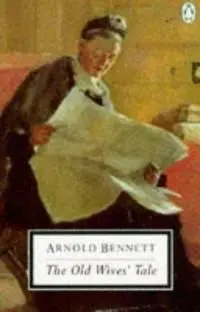
- Название:The Old Wives' Tale
- Автор:
- Издательство:Kessinger Publishing
- Жанр:
- Год:2005
- ISBN:9781417903672
- Рейтинг книги:5 / 5. Голосов: 1
-
Избранное:Добавить в избранное
- Отзывы:
-
Ваша оценка:
The Old Wives' Tale: краткое содержание, описание и аннотация
Предлагаем к чтению аннотацию, описание, краткое содержание или предисловие (зависит от того, что написал сам автор книги «The Old Wives' Tale»). Если вы не нашли необходимую информацию о книге — напишите в комментариях, мы постараемся отыскать её.
The Old Wives' Tale — читать онлайн бесплатно полную книгу (весь текст) целиком
Ниже представлен текст книги, разбитый по страницам. Система сохранения места последней прочитанной страницы, позволяет с удобством читать онлайн бесплатно книгу «The Old Wives' Tale», без необходимости каждый раз заново искать на чём Вы остановились. Поставьте закладку, и сможете в любой момент перейти на страницу, на которой закончили чтение.
Интервал:
Закладка:
Sophia then experienced a pure and primitive emotion, uncoloured by any moral or religious quality. She was not sorry that Gerald had wasted his life, nor that he was a shame to his years and to her. The manner of his life was of no importance. What affected her was that he had once been young, and that he had grown old, and was now dead. That was all. Youth and vigour had come to that. Youth and vigour always came to that. Everything came to that. He had ill-treated her; he had abandoned her; he had been a devious rascal; but how trivial were such accusations against him! The whole of her huge and bitter grievance against him fell to pieces and crumbled. She saw him young, and proud, and strong, as for instance when he had kissed her lying on the bed in that London hotel--she forgot the name--in 1866; and now he was old, and worn, and horrible, and dead. It was the riddle of life that was puzzling and killing her. By the corner of her eye, reflected in the mirror of a wardrobe near the bed, she glimpsed a tall, forlorn woman, who had once been young and now was old; who had once exulted in abundant strength, and trodden proudly on the neck of circumstance, and now was old. He and she had once loved and burned and quarrelled in the glittering and scornful pride of youth. But time had worn them out. "Yet a little while," she thought, "and I shall be lying on a bed like that! And what shall I have lived for? What is the meaning of it?" The riddle of life itself was killing her, and she seemed to drown in a sea of inexpressible sorrow.
Her memory wandered hopelessly among those past years. She saw Chirac with his wistful smile. She saw him whipped over the roof of the Gare du Nord at the tail of a balloon. She saw old Niepce. She felt his lecherous arm round her. She was as old now as Niepce had been then. Could she excite lust now? Ah! the irony of such a question! To be young and seductive, to be able to kindle a man's eye--that seemed to her the sole thing desirable. Once she had been so! ... Niepce must certainly have been dead for years. Niepce, the obstinate and hopeful voluptuary, was nothing but a few bones in a coffin now!
She was acquainted with affliction in that hour. All that she had previously suffered sank into insignificance by the side of that suffering.
She turned to the veiled window and idly pulled the blind and looked out. Huge red and yellow cars were swimming in thunder along Deansgate; lorries jolted and rattled; the people of Manchester hurried along the pavements, apparently unconscious that all their doings were vain. Yesterday he too had been in Deansgate, hungry for life, hating the idea of death! What a figure he must have made! Her heart dissolved in pity for him. She dropped the blind.
"My life has been too terrible!" she thought. "I wish I was dead. I have been through too much. It is monstrous, and I cannot stand it. I do not want to die, but I wish I was dead."
There was a discreet knock on the door.
"Come in," she said, in a calm, resigned, cheerful voice. The sound had recalled her with the swiftness of a miracle to the unconquerable dignity of human pride.
Mr. Till Boldero entered.
"I should like you to come downstairs and drink a cup of tea," he said. He was a marvel of tact and good nature. "My wife is unfortunately not here, and the house is rather at sixes and sevens; but I have sent out for some tea."
She followed him downstairs into the parlour. He poured out a cup of tea.
"I was forgetting," she said. "I am forbidden tea. I mustn't drink it."
She looked at the cup, tremendously tempted. She longed for tea. An occasional transgression could not harm her. But no! She would not drink it.
"Then what can I get you?"
"If I could have just milk and water," she said meekly.
Mr. Boldero emptied the cup into the slop basin, and began to fill it again.
"Did he tell you anything?" she asked, after a considerable silence.
"Nothing," said Mr. Boldero in his low, soothing tones. "Nothing except that he had come from Liverpool. Judging from his shoes I should say he must have walked a good bit of the way."
"At his age!" murmured Sophia, touched.
"Yes," sighed Mr. Boldero. "He must have been in great straits. You know, he could scarcely talk at all. By the way, here are his clothes. I have had them put aside."
Sophia saw a small pile of clothes on a chair. She examined the suit, which was still damp, and its woeful shabbiness pained her. The linen collar was nearly black, its stud of bone. As for the boots, she had noticed such boots on the feet of tramps. She wept now. These were the clothes of him who had once been a dandy living at the rate of fifty pounds a week.
"No luggage or anything, of course?" she muttered.
"No," said Mr. Boldero. "In the pockets there was nothing whatever but this."
He went to the mantelpiece and picked up a cheap, cracked letter case, which Sophia opened. In it were a visiting card--'Senorita Clemenzia Borja'--and a bill-head of the Hotel of the Holy Spirit, Concepcion del Uruguay, on the back of which a lot of figures had been scrawled.
"One would suppose," said Mr. Boldero, "that he had come from South America."
"Nothing else?"
"Nothing."
Gerald's soul had not been compelled to abandon much in the haste of its flight.
A servant announced that Mrs. Scales's friends were waiting for her outside in the motor-car. Sophia glanced at Mr. Till Boldero with an exacerbated anxiety on her face.
"Surely they don't expect me to go back with them tonight!" she said. "And look at all there is to be done!"
Mr. Till Boldero's kindness was then redoubled. "You can do nothing for HIM now," he said. "Tell me your wishes about the funeral. I will arrange everything. Go back to your sister to- night. She will be nervous about you. And return tomorrow or the day after. ... No! It's no trouble, I assure you!"
She yielded.
Thus towards eight o'clock, when Sophia had eaten a little under Mr. Boldero's superintendence, and the pawnshop was shut up, the motor-car started again for Bursley, Lily Holl being beside her lover and Sophia alone in the body of the car. Sophia had told them nothing of the nature of her mission. She was incapable of talking to them. They saw that she was in a condition of serious mental disturbance. Under cover of the noise of the car, Lily said to Dick that she was sure Mrs. Scales was ill, and Dick, putting his lips together, replied that he meant to be in King Street at nine-thirty at the latest. From time to time Lily surreptitiously glanced at Sophia--a glance of apprehensive inspection, or smiled at her silently; and Sophia vaguely responded to the smile.
In half an hour they had escaped from the ring of Manchester and were on the county roads of Cheshire, polished, flat, sinuous. It was the season of the year when there is no night--only daylight and twilight; when the last silver of dusk remains obstinately visible for hours. And in the open country, under the melancholy arch of evening, the sadness of the earth seemed to possess Sophia anew. Only then did she realize the intensity of the ordeal through which she was passing.
To the south of Congleton one of the tyres softened, immediately after Dick had lighted his lamps. He stopped the car and got down again. They were two miles Astbury, the nearest village. He had just, with the resignation of experience, reached for the tool- bag, when Lily exclaimed: "Is she asleep, or what?" Sophia was not asleep, but she was apparently not conscious.
It was a difficult and a trying situation for two lovers. Their voices changed momentarily to the tone of alarm and consternation, and then grew firm again. Sophia showed life but not reason. Lily could feel the poor old lady's heart.
"Well, there's nothing for it!" said Dick, briefly, when all their efforts failed to rouse her.
Читать дальшеИнтервал:
Закладка:
Похожие книги на «The Old Wives' Tale»
Представляем Вашему вниманию похожие книги на «The Old Wives' Tale» списком для выбора. Мы отобрали схожую по названию и смыслу литературу в надежде предоставить читателям больше вариантов отыскать новые, интересные, ещё непрочитанные произведения.








Обсуждение, отзывы о книге «The Old Wives' Tale» и просто собственные мнения читателей. Оставьте ваши комментарии, напишите, что Вы думаете о произведении, его смысле или главных героях. Укажите что конкретно понравилось, а что нет, и почему Вы так считаете.