Arnold Bennett - The Old Wives' Tale
Здесь есть возможность читать онлайн «Arnold Bennett - The Old Wives' Tale» весь текст электронной книги совершенно бесплатно (целиком полную версию без сокращений). В некоторых случаях можно слушать аудио, скачать через торрент в формате fb2 и присутствует краткое содержание. Год выпуска: 2005, ISBN: 2005, Издательство: Kessinger Publishing, Жанр: Классическая проза, на английском языке. Описание произведения, (предисловие) а так же отзывы посетителей доступны на портале библиотеки ЛибКат.
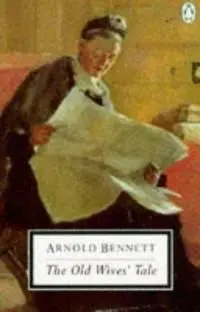
- Название:The Old Wives' Tale
- Автор:
- Издательство:Kessinger Publishing
- Жанр:
- Год:2005
- ISBN:9781417903672
- Рейтинг книги:5 / 5. Голосов: 1
-
Избранное:Добавить в избранное
- Отзывы:
-
Ваша оценка:
The Old Wives' Tale: краткое содержание, описание и аннотация
Предлагаем к чтению аннотацию, описание, краткое содержание или предисловие (зависит от того, что написал сам автор книги «The Old Wives' Tale»). Если вы не нашли необходимую информацию о книге — напишите в комментариях, мы постараемся отыскать её.
The Old Wives' Tale — читать онлайн бесплатно полную книгу (весь текст) целиком
Ниже представлен текст книги, разбитый по страницам. Система сохранения места последней прочитанной страницы, позволяет с удобством читать онлайн бесплатно книгу «The Old Wives' Tale», без необходимости каждый раз заново искать на чём Вы остановились. Поставьте закладку, и сможете в любой момент перейти на страницу, на которой закончили чтение.
Интервал:
Закладка:
Creeping out of the room, Constance climbed to the second floor in her dressing-gown, and entered the other chamber. She was obliged to look again upon Sophia's body. Incredible swiftness of calamity! Who could have foreseen it? Constance was less desolated than numbed. She was as yet only touching the fringe of her bereavement. She had not begun to think of herself. She was drenched, as she gazed at Sophia's body, not by pity for herself, but by compassion for the immense disaster of her sister's life. She perceived fully now for the first time the greatness of that disaster. Sophia's charm and Sophia's beauty--what profit had they been to their owner? She saw pictures of Sophia's career, distorted and grotesque images formed in her untravelled mind from Sophia's own rare and compressed recitals. What a career! A brief passion, and then nearly thirty years in a boarding-house! And Sophia had never had a child; had never known either the joy or the pain of maternity. She had never even had a true home till, in all her sterile splendour, she came to Bursley. And she had ended --thus! This was the piteous, ignominious end of Sophia's wondrous gifts of body and soul. Hers had not been a life at all. And the reason? It is strange how fate persists in justifying the harsh generalizations of Puritan morals, of the morals in which Constance had been brought up by her stern parents! Sophia had sinned. It was therefore inevitable that she should suffer. An adventure such as she had in wicked and capricious pride undertaken with Gerald Scales, could not conclude otherwise than it had concluded. It could have brought nothing but evil. There was no getting away from these verities, thought Constance. And she was to be excused for thinking that all modern progress and cleverness was as naught, and that the world would be forced to return upon its steps and start again in the path which it had left.
Up to within a few days of her death people had been wont to remark that Mrs. Scales looked as young as ever, and that she was as bright and as energetic as ever. And truly, regarding Sophia from a little distance--that handsome oval, that erect carriage of a slim body, that challenging eye!--no one would have said that she was in her sixtieth year. But look at her now, with her twisted face, her sightless orbs, her worn skin--she did not seem sixty, but seventy! She was like something used, exhausted, and thrown aside! Yes, Constance's heart melted in an anguished pity for that stormy creature. And mingled with the pity was a stern recognition of the handiwork of divine justice. To Constance's lips came the same phrase as had come to the lips of Samuel Povey on a different occasion: God is not mocked! The ideas of her parents and her grandparents had survived intact in Constance. It is true that Constance's father would have shuddered in Heaven could he have seen Constance solitarily playing cards of a night. But in spite of cards, and of a son who never went to chapel, Constance, under the various influences of destiny, had remained essentially what her father had been. Not in her was the force of evolution manifest. There are thousands such.
Lily, awake, and reclothed with that unreal mien of a grown and comprehending woman, stepped quietly into the room, searching for the poor old thing, Constance. The layer-out had come.
By the first post was delivered a letter addressed to Sophia by Mr. Till Boldero. From its contents the death of Gerald Scales was clear. There seemed then to be nothing else for Constance to do. What had to be done was done for her. And stronger wills than hers put her to bed. Cyril was telegraphed for. Mr. Critchlow called, Mrs. Critchlow following--a fussy infliction, but useful in certain matters. Mr. Critchlow was not allowed to see Constance. She could hear his high grating voice in the corridor. She had to lie calm, and the sudden tranquillity seemed strange after the feverish violence of the night. Only twenty-four hours since, and she had been worrying about the death of a dog! With a body crying for sleep, she dozed off, thoughts of the mystery of life merging into the incoherence of dreams.
The news was abroad in the Square before nine o'clock. There were persons who had witnessed the arrival of the motorcar, and the transfer of Sophia to the house. Untruthful rumours had spread as to the manner of Gerald Scales's death. Some said that he had dramatically committed suicide. But the town, though titillated, was not moved as it would have been moved by a similar event twenty years, or even ten years earlier. Times had changed in Bursley. Bursley was more sophisticated than in the old days.
Constance was afraid lest Cyril, despite the seriousness of the occasion, might exhibit his customary tardiness in coming. She had long since learnt not to rely upon him. But he came the same evening. His behaviour was in every way perfect. He showed quiet but genuine grief for the death of his aunt, and he was a model of consideration for his mother. Further, he at once assumed charge of all the arrangements, in regard both to Sophia and to her husband. Constance was surprised at the ease which he displayed in the conduct of practical affairs, and the assurance with which he gave orders. She had never seen him direct anything before. He said, indeed, that he had never directed anything before, but that there appeared to him to be no difficulties. Whereas Constance had figured a tiresome series of varied complications. As to the burial of Sophia, Cyril was vigorously in favour of an absolutely private funeral; that is to say, a funeral at which none but himself should be present. He seemed to have a passionate objection to any sort of parade. Constance agreed with him. But she said that it would be impossible not to invite Mr. Critchlow, Sophia's trustee, and that if Mr. Critchlow were invited certain others must be invited. Cyril asked: "Why impossible?" Constance said: "Because it mould be impossible. Because Mr. Critchlow would be hurt." Cyril asked: "What does it matter if he is hurt?" and suggested that Mr. Critchlow would get over his damage. Constance grew more serious. The discussion threatened to be warm. Suddenly Cyril yielded. "All right, Mrs. Plover, all right! It shall be exactly as you choose," he said, in a gentle, humouring tone. He had not called her 'Mrs. Plover' for years. She thought the hour badly chosen for verbal pleasantry, but he was so kind that she made no complaint. Thus there were six people at Sophia's funeral, including Mr. Critchlow. No refreshments were offered. The mourners separated at the church. When both funerals were accomplished Cyril sat down and played the harmonium softly, and said that it had kept well in tune. He was extraordinarily soothing.
He had now reached the age of thirty-three. His habits were as industrious as ever, his preoccupation with his art as keen. But he had achieved no fame, no success. He earned nothing, living in comfort on an allowance from his mother. He seldom spoke of his plans and never of his hopes. He had in fact settled down into a dilletante, having learnt gently to scorn the triumphs which he lacked the force to win. He imagined that industry and a regular existence were sufficient justification in themselves for any man's life. Constance had dropped the habit of expecting him to astound the world. He was rather grave and precise in manner, courteous and tepid, with a touch of condescension towards his environment; as though he were continually permitting the perspicacious to discern that he had nothing to learn--if the truth were known! His humour had assumed a modified form. He often smiled to himself. He was unexceptionable.
On the day after Sophia's funeral he set to work to design a simple stone for his aunt's tomb. He said he could not tolerate the ordinary gravestone, which always looked, to him, as if the wind might blow it over, thus negativing the idea of solidity. His mother did not in the least understand him. She thought the lettering of his tombstone affected and finicking. But she let it pass without comment, being secretly very flattered that he should have deigned to design a stone at all.
Читать дальшеИнтервал:
Закладка:
Похожие книги на «The Old Wives' Tale»
Представляем Вашему вниманию похожие книги на «The Old Wives' Tale» списком для выбора. Мы отобрали схожую по названию и смыслу литературу в надежде предоставить читателям больше вариантов отыскать новые, интересные, ещё непрочитанные произведения.








Обсуждение, отзывы о книге «The Old Wives' Tale» и просто собственные мнения читателей. Оставьте ваши комментарии, напишите, что Вы думаете о произведении, его смысле или главных героях. Укажите что конкретно понравилось, а что нет, и почему Вы так считаете.