Arnold Bennett - The Old Wives' Tale
Здесь есть возможность читать онлайн «Arnold Bennett - The Old Wives' Tale» весь текст электронной книги совершенно бесплатно (целиком полную версию без сокращений). В некоторых случаях можно слушать аудио, скачать через торрент в формате fb2 и присутствует краткое содержание. Год выпуска: 2005, ISBN: 2005, Издательство: Kessinger Publishing, Жанр: Классическая проза, на английском языке. Описание произведения, (предисловие) а так же отзывы посетителей доступны на портале библиотеки ЛибКат.
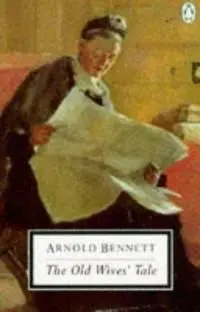
- Название:The Old Wives' Tale
- Автор:
- Издательство:Kessinger Publishing
- Жанр:
- Год:2005
- ISBN:9781417903672
- Рейтинг книги:5 / 5. Голосов: 1
-
Избранное:Добавить в избранное
- Отзывы:
-
Ваша оценка:
The Old Wives' Tale: краткое содержание, описание и аннотация
Предлагаем к чтению аннотацию, описание, краткое содержание или предисловие (зависит от того, что написал сам автор книги «The Old Wives' Tale»). Если вы не нашли необходимую информацию о книге — напишите в комментариях, мы постараемся отыскать её.
The Old Wives' Tale — читать онлайн бесплатно полную книгу (весь текст) целиком
Ниже представлен текст книги, разбитый по страницам. Система сохранения места последней прочитанной страницы, позволяет с удобством читать онлайн бесплатно книгу «The Old Wives' Tale», без необходимости каждый раз заново искать на чём Вы остановились. Поставьте закладку, и сможете в любой момент перейти на страницу, на которой закончили чтение.
Интервал:
Закладка:
While the brazen and pretty servant, mysteriously smiling to herself, dropped food and utensils on to the table, Constance and Sophia attempted to converse with negligent ease upon indifferent topics, as though nothing had occurred that day to mar the beauty of ideal relations between employers and employed. The pretence was ludicrous. The young wench saw through it instantly, and her mysterious smile developed almost into a laugh.
"Please shut the door after you, Maud," said Sophia, as the girl picked up her empty tray.
"Yes, ma'am," replied Maud, politely.
She went out and left the door open.
It was a defiance, offered from sheer, youthful, wanton mischief.
The sisters looked at each other, their faces gravely troubled, aghast, as though they had glimpsed the end of civilized society, as though they felt that they had lived too long into an age of decadence and open shame. Constance's face showed despair--she might have been about to be pitched into the gutter without a friend and without a shilling--but Sophia's had the reckless courage that disaster breeds.
Sophia jumped up, and stepped to the door. "Maud," she called out.
No answer.
"Maud, do you hear me?"
The suspense was fearful.
Still no answer.
Sophia glanced at Constance. "Either she shuts this door, or she leaves this house at once, even if I have to fetch a policeman!"
And Sophia disappeared down the kitchen steps. Constance trembled with painful excitement. The horror of existence closed in upon her. She could imagine nothing more appalling than the pass to which they had been brought by the modern change in the lower classes.
In the kitchen, Sophia, conscious that the moment held the future of at least the next three weeks, collected her forces.
"Maud," she said, "did you not hear me call you?"
Maud looked up from a book--doubtless a wicked book.
"No, ma'am."
"You liar!" thought Sophia. And she said: "I asked you to shut the parlour door, and I shall be obliged if you will do so."
Now Maud would have given a week's wages for the moral force to disobey Sophia. There was nothing to compel her to obey. She could have trampled on the fragile and weak Sophia. But something in Sophia's gaze compelled her to obey. She flounced; she bridled; she mumbled; she unnecessarily disturbed the venerable Spot; but she obeyed. Sophia had risked all, and she had won something.
"And you should light the gas in the kitchen," said Sophia magnificently, as Maud followed her up the steps. "Your young eyes may be very good now, but you are not going the way to preserve them. My sister and I have often told you that we do not grudge you gas."
With stateliness she rejoined Constance, and sat down to the cold supper. And as Maud clicked the door to, the sisters breathed relief. They envisaged new tribulations, but for a brief instant there was surcease.
Yet they could not eat. Neither of them, when it came to the point, could swallow. The day had been too exciting, too distressing. They were at the end of their resources. And they did not hide from each other that they were at the end of their resources. The illness of Fossette, without anything else, had been more than enough to ruin their tranquillity. But the illness of Fossette was as nothing to the ingenious naughtiness of the servant. Maud had a sense of temporary defeat, and was planning fresh operations; but really it was Maud who had conquered. Poor old things, they were in such a 'state' that they could not eat!
"I'm not going to let her think she can spoil my appetite!" said Sophia, dauntless. Truly that woman's spirit was unquenchable.
She cut a couple of slices off the cold fowl; she cut a tomato into slices; she disturbed the butter; she crumbled bread on the cloth, and rubbed bits of fowl over the plates, and dirtied knives and forks. Then she put the slices of fowl and bread and tomato into a piece of tissue paper, and silently went upstairs with the parcel and came down again a moment afterwards empty-handed.
After an interval she rang the bell, and lighted the gas.
"We've finished, Maud. You can clear away."
Constance thirsted for a cup of tea. She felt that a cup of tea was the one thing that would certainly keep her alive. She longed for it passionately. But she would not demand it from Maud. Nor would she mention it to Sophia, lest Sophia, flushed by the victory of the door, should incur new risks. She simply did without. On empty stomachs they tried pathetically to help each other in games of Patience. And when the blithe Maud passed through the parlour on the way to bed, she saw two dignified and apparently calm ladies, apparently absorbed in a delightful game of cards, apparently without a worry in the world. They said "Good night, Maud," cheerfully, politely, and coldly. It was a heroic scene. Immediately afterwards Sophia carried Fossette up to her own bedroom.
II
The next afternoon the sisters, in the drawing-room, saw Dr. Stirling's motor-car speeding down the Square. The doctor's partner, young Harrop, had died a few years before at the age of over seventy, and the practice was much larger than it had ever been, even in the time of old Harrop. Instead of two or three horses, Stirling kept a car, which was a constant spectacle in the streets of the district.
"I do hope he'll call in," said Mrs. Povey, and sighed.
Sophia smiled to herself with a little scorn. She knew that Constance's desire for Dr. Stirling was due simply to the need which she felt of telling some one about the great calamity that had happened to them that morning. Constance was utterly absorbed by it, in the most provincial way. Sophia had said to herself at the beginning of her sojourn in Bursley, and long afterwards, that she should never get accustomed to the exasperating provinciality of the town, exemplified by the childish preoccupation of the inhabitants with their own two-penny affairs. No characteristic of life in Bursley annoyed her more than this. None had oftener caused her to yearn in a brief madness for the desert-like freedom of great cities. But she had got accustomed to it. Indeed, she had almost ceased to notice it. Only occasionally, when her nerves were more upset than usual, did it strike her.
She went into Constance's bedroom to see whether the doctor's car halted in King Street. It did.
"He's here," she called out to Constance.
"I wish you'd go down, Sophia," said Constance. "I can't trust that minx----"
So Sophia went downstairs to superintend the opening of the door by the minx.
The doctor was radiant, according to custom.
"I thought I'd just see how that dizziness was going on," said he as he came up the steps.
"I'm glad you've come," said Sophia, confidentially. Since the first days of their acquaintanceship they had always been confidential. "You'll do my sister good to-day."
Just as Maud was closing the door a telegraph-boy arrived, with a telegram addressed to Mrs. Scales. Sophia read it and then crumpled it in her hand.
"What's wrong with Mrs. Povey to-day?" the doctor asked, when the servant had withdrawn.
"She only wants a bit of your society," said Sophia. "Will you go up? You know the way to the drawing-room. I'll follow."
As soon as he had gone she sat down on the sofa, staring out of the window. Then with a grunt: "Well, that's no use, anyway!" she went upstairs after the doctor. Already Constance had begun upon her recital.
"Yes," Constance was saying. "And when I went down this morning to keep an eye on the breakfast, I thought Spot was very quiet--" She paused. "He was dead in the drawer. She pretended she didn't know, but I'm sure she did. Nothing will convince me that she didn't poison that dog with the mice-poison we had last year. She was vexed because Sophia took her up sharply about Fossette last night, and she revenged herself on the other dog. It would just be like her. Don't tell me! I know. I should have packed her off at once, but Sophia thought better not. We couldn't prove anything, as Sophia says. Now, what do you think of it, doctor?"
Читать дальшеИнтервал:
Закладка:
Похожие книги на «The Old Wives' Tale»
Представляем Вашему вниманию похожие книги на «The Old Wives' Tale» списком для выбора. Мы отобрали схожую по названию и смыслу литературу в надежде предоставить читателям больше вариантов отыскать новые, интересные, ещё непрочитанные произведения.








Обсуждение, отзывы о книге «The Old Wives' Tale» и просто собственные мнения читателей. Оставьте ваши комментарии, напишите, что Вы думаете о произведении, его смысле или главных героях. Укажите что конкретно понравилось, а что нет, и почему Вы так считаете.