Arnold Bennett - The Old Wives' Tale
Здесь есть возможность читать онлайн «Arnold Bennett - The Old Wives' Tale» весь текст электронной книги совершенно бесплатно (целиком полную версию без сокращений). В некоторых случаях можно слушать аудио, скачать через торрент в формате fb2 и присутствует краткое содержание. Год выпуска: 2005, ISBN: 2005, Издательство: Kessinger Publishing, Жанр: Классическая проза, на английском языке. Описание произведения, (предисловие) а так же отзывы посетителей доступны на портале библиотеки ЛибКат.
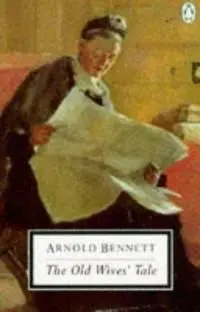
- Название:The Old Wives' Tale
- Автор:
- Издательство:Kessinger Publishing
- Жанр:
- Год:2005
- ISBN:9781417903672
- Рейтинг книги:5 / 5. Голосов: 1
-
Избранное:Добавить в избранное
- Отзывы:
-
Ваша оценка:
The Old Wives' Tale: краткое содержание, описание и аннотация
Предлагаем к чтению аннотацию, описание, краткое содержание или предисловие (зависит от того, что написал сам автор книги «The Old Wives' Tale»). Если вы не нашли необходимую информацию о книге — напишите в комментариях, мы постараемся отыскать её.
The Old Wives' Tale — читать онлайн бесплатно полную книгу (весь текст) целиком
Ниже представлен текст книги, разбитый по страницам. Система сохранения места последней прочитанной страницы, позволяет с удобством читать онлайн бесплатно книгу «The Old Wives' Tale», без необходимости каждый раз заново искать на чём Вы остановились. Поставьте закладку, и сможете в любой момент перейти на страницу, на которой закончили чтение.
Интервал:
Закладка:
"You've shown it to them already?" said Sophia. And her tone implied that somehow she was conscious of a right to overlook the affair of Madame Foucault.
"No," said the other. "I said to myself that first I would ask you for a counsel."
"Then will they pay all that for a room they haven't seen?"
"The fact is," said Madame Foucault, sheepishly. "The lady has seen the room before. I know her a little. It is a former tenant. She lived here some weeks."
"In that room?"
"Oh no! She was poor enough then."
"Where are they?"
"In the corridor. She is very well, the lady. Naturally one must live, she like all the world; but she is veritably well. Quite respectable! One would never say ... Then there would be the meals. We could demand one franc for the cafe au lait, two and a half francs for the lunch, and three francs for the dinner. Without counting other things. That would mean over five hundred francs a month, at least. And what would they cost us? Almost nothing! By what appears, he is a plutocrat ... I could thus quickly repay you."
"Is it a married couple?"
"Ah! You know, one cannot demand the marriage certificate." Madame Foucault indicated by a gesture that the Rue Breda was not the paradise of saints.
"When she came before, this lady, was it with the same man?" Sophia asked coldly.
"Ah, my faith, no!" exclaimed Madame Foucault, bridling. "It was a bad sort, the other, a ...! Ah, no."
"Why do you ask my advice?" Sophia abruptly questioned, in a hard, inimical voice. "Is it that it concerns me?"
Tears came at once into the eyes of Madame Foucault. "Do not be unkind," she implored.
"I'm not unkind," said Sophia, in the same tone.
"Shall you leave me if I accept this offer?"
There was a pause.
"Yes," said Sophia, bluntly. She tried to be large-hearted, large- minded, and sympathetic; but there was no sign of these qualities in her speech.
"And if you take with you the furniture which is yours ...!"
Sophia kept silence.
"How am I to live, I demand of you?" Madame Foucault asked weakly.
"By being respectable and dealing with respectable people!" said Sophia, uncompromisingly, in tones of steel.
"I am unhappy!" murmured the elder woman. "However, you are more strong than I!"
She brusquely dabbed her eyes, gave a little sob, and ran out of the room. Sophia listened at the door, and heard her dismiss the would-be tenants of the best bedroom. She wondered that she should possess such moral ascendancy over the woman, she so young and ingenuous! For, of course, she had not meant to remove the furniture. She could hear Madame Foucault sobbing quietly in one of the other rooms; and her lips curled.
Before evening a truly astonishing event happened. Perceiving that Madame Foucault showed no signs of bestirring herself, Sophia, with good nature in her heart but not on her tongue, went to her, and said:
"Shall I occupy myself with the dinner?"
Madame Foucault sobbed more loudly.
"That would be very amiable on your part," Madame Foucault managed at last to reply, not very articulately.
Sophia put a hat on and went to the grocer's. The grocer, who kept a busy establishment at the corner of the Rue Clausel, was a middle-aged and wealthy man. He had sent his young wife and two children to Normandy until victory over the Prussians should be more assured, and he asked Sophia whether it was true that there was a good bedroom to let in the flat where she lived. His servant was ill of smallpox; he was attacked by anxieties and fears on all sides; he would not enter his own flat on account of possible infection; he liked Sophia, and Madame Foucault had been a customer of his, with intervals, for twenty years. Within an hour he had arranged to rent the middle bedroom at eighty francs a month, and to take his meals there. The terms were modest, but the respectability was prodigious. All the glory of this tenancy fell upon Sophia.
Madame Foucault was deeply impressed. Characteristically she began at once to construct a theory that Sophia had only to walk out of the house in order to discover ideal tenants for the rooms. Also she regarded the advent of the grocer as a reward from Providence for her self-denial in refusing the profits of sinfulness. Sophia felt personally responsible to the grocer for his comfort, and so she herself undertook the preparation of the room. Madame Foucault was amazed at the thoroughness of her housewifery, and at the ingenuity of her ideas for the arrangement of furniture. She sat and watched with admiration sycophantic but real.
That night, when Sophia was in bed, Madame Foucault came into the room, and dropped down by the side of the bed, and begged Sophia to be her moral support for ever. She confessed herself generally. She explained how she had always hated the negation of respectability; how respectability was the one thing that she had all her life passionately desired. She said that if Sophia would be her partner in the letting of furnished rooms to respectable persons, she would obey her in everything. She gave Sophia a list of all the traits in Sophia's character which she admired. She asked Sophia to influence her, to stand by her. She insisted that she would sleep on the sixth floor in the servant's tiny room; and she had a vision of three bedrooms let to successful tradesmen. She was in an ecstasy of repentance and good intentions.
Sophia consented to the business proposition; for she had nothing else whatever in prospect, and she shared Madame Foucault's rosy view about the remunerativeness of the bedrooms. With three tenants who took meals the two women would be able to feed themselves for nothing and still make a profit on the food; and the rents would be clear gain.
And she felt very sorry for the ageing, feckless Madame Foucault, whose sincerity was obvious. The association between them would be strange; it would have been impossible to explain it to St. Luke's Square. ... And yet, if there was anything at all in the virtue of Christian charity, what could properly be urged against the association?
"Ah!" murmured Madame Foucault, kissing Sophia's hands, "it is to- day, then, that I recommence my life. You will see--you will see! You have saved me!"
It was a strange sight, the time-worn, disfigured courtesan, half prostrate before the beautiful young creature proud and unassailable in the instinctive force of her own character. It was almost a didactic tableau, fraught with lessons for the vicious. Sophia was happier than she had been for years. She had a purpose in existence; she had a fluid soul to mould to her will according to her wisdom; and there was a large compassion to her credit. Public opinion could not intimidate her, for in her case there was no public opinion; she knew nobody; nobody had the right to question her doings.
The next day, Sunday, they both worked hard at the bedrooms from early morning. The grocer was installed in his chamber, and the two other rooms were cleansed as they had never been cleansed. At four o'clock, the weather being more magnificent than ever, Madame Foucault said:
"If we took a promenade on the boulevard?"
Sophia reflected. They were partners. "Very well," she agreed.
The boulevard was crammed with gay, laughing crowds. All the cafes were full. None, who did not know, could have guessed that the news of Sedan was scarcely a day old in the capital. Delirious joy reigned in the glittering sunshine. As the two women strolled along, content with their industry and their resolves, they came to a National Guard, who, perched on a ladder, was chipping away the "N" from the official sign of a court-tradesman. He was exchanging jokes with a circle of open mouths. It was in this way that Madame Foucault and Sophia learnt of the establishment of a republic.
"Vive la republique!" cried Madame Foucault, incontinently, and then apologized to Sophia for the lapse.
Читать дальшеИнтервал:
Закладка:
Похожие книги на «The Old Wives' Tale»
Представляем Вашему вниманию похожие книги на «The Old Wives' Tale» списком для выбора. Мы отобрали схожую по названию и смыслу литературу в надежде предоставить читателям больше вариантов отыскать новые, интересные, ещё непрочитанные произведения.










Обсуждение, отзывы о книге «The Old Wives' Tale» и просто собственные мнения читателей. Оставьте ваши комментарии, напишите, что Вы думаете о произведении, его смысле или главных героях. Укажите что конкретно понравилось, а что нет, и почему Вы так считаете.