Arnold Bennett - The Old Wives' Tale
Здесь есть возможность читать онлайн «Arnold Bennett - The Old Wives' Tale» весь текст электронной книги совершенно бесплатно (целиком полную версию без сокращений). В некоторых случаях можно слушать аудио, скачать через торрент в формате fb2 и присутствует краткое содержание. Год выпуска: 2005, ISBN: 2005, Издательство: Kessinger Publishing, Жанр: Классическая проза, на английском языке. Описание произведения, (предисловие) а так же отзывы посетителей доступны на портале библиотеки ЛибКат.
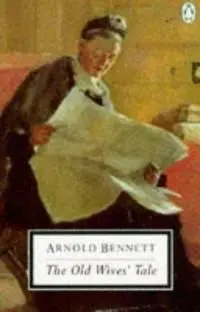
- Название:The Old Wives' Tale
- Автор:
- Издательство:Kessinger Publishing
- Жанр:
- Год:2005
- ISBN:9781417903672
- Рейтинг книги:5 / 5. Голосов: 1
-
Избранное:Добавить в избранное
- Отзывы:
-
Ваша оценка:
The Old Wives' Tale: краткое содержание, описание и аннотация
Предлагаем к чтению аннотацию, описание, краткое содержание или предисловие (зависит от того, что написал сам автор книги «The Old Wives' Tale»). Если вы не нашли необходимую информацию о книге — напишите в комментариях, мы постараемся отыскать её.
The Old Wives' Tale — читать онлайн бесплатно полную книгу (весь текст) целиком
Ниже представлен текст книги, разбитый по страницам. Система сохранения места последней прочитанной страницы, позволяет с удобством читать онлайн бесплатно книгу «The Old Wives' Tale», без необходимости каждый раз заново искать на чём Вы остановились. Поставьте закладку, и сможете в любой момент перейти на страницу, на которой закончили чтение.
Интервал:
Закладка:
Pans of sulphur were mysteriously burning in each of the three front rooms, and two pairs of doors had been pasted over with paper, to prevent the fumes from escaping. The charwoman had departed. Sophia, with brush, scissors, flour-paste, and news- sheets, was sealing the third pair of doors, when there was a ring at the front door.
She had only to cross the corridor in order to open.
It was Chirac. She was not surprised to see him. The outbreak of the war had induced even Sophia and her landlady to look through at least one newspaper during the day, and she had in this way learnt, from an article signed by Chirac, that he had returned to Paris after a mission into the Vosges country for his paper.
He started on seeing her. "Ah!" He breathed out the exclamation slowly. And then smiled, seized her hand, and kissed it.
The sight of his obvious extreme pleasure in meeting her again was the sweetest experience that had fallen to Sophia for years.
"Then you are cured?"
"Quite."
He sighed. "You know, this is an enormous relief to me, to know, veritably, that you are no longer in danger. You gave me a fright ... but a fright, my dear madame!"
She smiled in silence.
As he glanced inquiringly up and down the corridor, she said--
"I'm all alone in the flat. I'm disinfecting it."
"Then that is sulphur that I smell?"
She nodded. "Excuse me while I finish this door," she said.
He closed the front-door. "But you seem to be quite at home here!" he observed.
"I ought to be," said she.
He glanced again inquiringly up and down the corridor. "And you are really all alone now?" he asked, as though to be doubly sure.
She explained the circumstances.
"I owe you my most sincere excuses for bringing you here," he said confidentially.
"But why?" she replied, looking intently at her door. "They have been most kind to me. Nobody could have been kinder. And Madame Laurence being such a good nurse----"
"It is true," said he. "That was a reason. In effect they are both very good-natured little women. ... You comprehend, as journalist it arrives to me to know all kinds of people ..." He snapped his fingers ... "And as we were opposite the house. In fine, I pray you to excuse me."
"Hold me this paper," she said. "It is necessary that every crack should be covered; also between the floor and the door."
"You English are wonderful," he murmured, as he took the paper. "Imagine you doing that! Then," he added, resuming the confidential tone, "I suppose you will leave the Foucault now, hein?"
"I suppose so," she said carelessly.
"You go to England?"
She turned to him, as she patted the creases out of a strip of paper with a duster, and shook her head.
"Not to England?"
"No."
"If it is not indiscreet, where are you going?"
"I don't know," she said candidly.
And she did not know. She was without a plan. Her brain told her that she ought to return to Bursley, or, at the least, write. But her pride would not hear of such a surrender. Her situation would have to be far more desperate than it was before she could confess her defeat to her family even in a letter. A thousand times no! That was a point which she had for ever decided. She would face any disaster, and any other shame, rather than the shame of her family's forgiving reception of her.
"And you?" she asked. "How does it go? This war?"
He told her, in a few words, a few leading facts about himself. "It must not be said," he added of the war, "but that will turn out ill! I--I know, you comprehend."
"Truly?" she answered with casualness.
"You have heard nothing of him?" Chirac asked.
"Who? Gerald?"
He gave a gesture.
"Nothing! Not a word! Nothing!"
"He will have gone back to England!"
"Never!" she said positively.
"But why not?"
"Because he prefers France. He really does like France. I think it is the only real passion he ever had."
"It is astonishing," reflected Chirac, "how France is loved! And yet ...! But to live, what will he do? Must live!"
Sophia merely shrugged her shoulders.
"Then it is finished between you two?" he muttered awkwardly.
She nodded. She was on her knees, at the lower crack of the doors.
"There!" she said, rising. "It's well done, isn't it? That is all."
She smiled at him, facing him squarely, in the obscurity of the untidy and shabby corridor. Both felt that they had become very intimate. He was intensely flattered by her attitude, and she knew it.
"Now," she said, "I will take off my pinafore. Where can I niche you? There is only my bedroom, and I want that. What are we to do?"
"Listen," he suggested diffidently. "Will you do me the honour to come for a drive? That will do you good. There is sunshine. And you are always very pale."
"With pleasure," she agreed cordially.
While dressing, she heard him walking up and down the corridor; occasionally they exchanged a few words. Before leaving, Sophia pulled off the paper from one of the key-holes of the sealed suite of rooms, and they peered through, one after the other, and saw the green glow of the sulphur, and were troubled by its uncanniness. And then Sophia refixed the paper.
In descending the stairs of the house she felt the infirmity of her knees; but in other respects, though she had been out only once before since her illness, she was conscious of a sufficient strength. A disinclination for any enterprise had prevented her from taking the air as she ought to have done, but within the flat she had exercised her limbs in many small tasks. The little Chirac, nervously active and restless, wanted to take her arm, but she would not allow it.
The concierge and part of her family stared curiously at Sophia as she passed under the archway, for the course of her illness had excited the interest of the whole house. Just as the carriage was driving off, the concierge came across the pavement and paid her compliments, and then said:
"You do not know by hazard why Madame Foucault has not returned for lunch, madame?"
"Returned for lunch!" said Sophia. "She will not come back till to-morrow."
The concierge made a face. "Ah! How curious it is! She told my husband that she would return in two hours. It is very grave! Question of business."
"I know nothing, madame," said Sophia. She and Chirac looked at each other. The concierge murmured thanks and went off muttering indistinctly.
The fiacre turned down the Rue Laferriere, the horse slipping and sliding as usual over the cobblestones. Soon they were on the boulevard, making for the Champs Elysees and the Bois de Boulogne.
The fresh breeze and bright sunshine and the large freedom of the streets quickly intoxicated Sophia--intoxicated her, that is to say, in quite a physical sense. She was almost drunk, with the heady savour of life itself. A mild ecstasy of well-being overcame her. She saw the flat as a horrible, vile prison, and blamed herself for not leaving it sooner and oftener. The air was medicine, for body and mind too. Her perspective was instantly corrected. She was happy, living neither in the past nor in the future, but in and for that hour. And beneath her happiness moved a wistful melancholy for the Sophia who had suffered such a captivity and such woes. She yearned for more and yet more delight, for careless orgies of passionate pleasure, in the midst of which she would forget all trouble. Why had she refused the offer of Laurence? Why had she not rushed at once into the splendid fire of joyous indulgence, ignoring everything but the crude, sensuous instinct? Acutely aware as she was of her youth, her beauty, and her charm, she wondered at her refusal. She did not regret her refusal. She placidly observed it as the result of some tremendously powerful motive in herself, which could not be questioned or reasoned with--which was, in fact, the essential HER.
Читать дальшеИнтервал:
Закладка:
Похожие книги на «The Old Wives' Tale»
Представляем Вашему вниманию похожие книги на «The Old Wives' Tale» списком для выбора. Мы отобрали схожую по названию и смыслу литературу в надежде предоставить читателям больше вариантов отыскать новые, интересные, ещё непрочитанные произведения.







Обсуждение, отзывы о книге «The Old Wives' Tale» и просто собственные мнения читателей. Оставьте ваши комментарии, напишите, что Вы думаете о произведении, его смысле или главных героях. Укажите что конкретно понравилось, а что нет, и почему Вы так считаете.