ROBBINS Harold - The Carpetbaggers
Здесь есть возможность читать онлайн «ROBBINS Harold - The Carpetbaggers» весь текст электронной книги совершенно бесплатно (целиком полную версию без сокращений). В некоторых случаях можно слушать аудио, скачать через торрент в формате fb2 и присутствует краткое содержание. Жанр: Классическая проза, на английском языке. Описание произведения, (предисловие) а так же отзывы посетителей доступны на портале библиотеки ЛибКат.
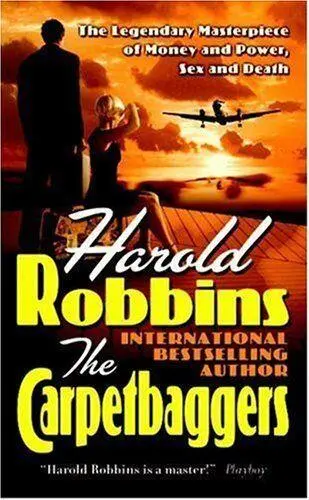
- Название:The Carpetbaggers
- Автор:
- Жанр:
- Год:неизвестен
- ISBN:нет данных
- Рейтинг книги:4 / 5. Голосов: 1
-
Избранное:Добавить в избранное
- Отзывы:
-
Ваша оценка:
The Carpetbaggers: краткое содержание, описание и аннотация
Предлагаем к чтению аннотацию, описание, краткое содержание или предисловие (зависит от того, что написал сам автор книги «The Carpetbaggers»). Если вы не нашли необходимую информацию о книге — напишите в комментариях, мы постараемся отыскать её.
The Carpetbaggers — читать онлайн бесплатно полную книгу (весь текст) целиком
Ниже представлен текст книги, разбитый по страницам. Система сохранения места последней прочитанной страницы, позволяет с удобством читать онлайн бесплатно книгу «The Carpetbaggers», без необходимости каждый раз заново искать на чём Вы остановились. Поставьте закладку, и сможете в любой момент перейти на страницу, на которой закончили чтение.
Интервал:
Закладка:
I watched him walk back to the General. He might be a great aeronautical engineer, but he was too anxious ever to become a good salesman. I turned to the mechanic. "Ready?"
"Ready when you are, Mr. Cord."
"O.K.," I said, starting to climb up to the cockpit. I felt a hand tugging at my leg. I looked down.
"Mind if I come along for the ride?" It was the lieutenant colonel.
"Not at all," I said. "Hop in."
"Thanks. By the way, I didn't get your name."
"Jonas Cord," I said.
"Roger Forrester," he answered, holding out his hand.
I should have guessed it the minute I heard his name, but I didn't tie it up until now. Roger Forrester – one of the original aces of the Lafayette Escadrille. Twenty-two German planes to his credit. He'd been one of my heroes when I was a kid.
"I've heard about you," I said.
His smile changed into a grin. "I've heard quite a bit about you."
We both laughed and I felt better. I pulled on his hand and he came up on the wing beside me. He looked into the cockpit, then back at me.
"No parachute?"
"Never use 'em," I said. "Make me nervous. Psychological. Indicates a lack of confidence."
He laughed.
"I can get one for you if you like."
He laughed again. "To hell with it."
About thirty miles out over the ocean, I put her through all the tricks in the book and then some only the CA-4 could do, and he didn't bat an eyelash.
For a clincher, I took her all the way up in a vertical climb until, at fourteen thousand feet, she hung in the sky like a fly dancing on the tip of a needle. Then I let her fall off on a dead stick into a tailspin that whipped the air-speed indicator up close to the five hundred mark. When we got down to about fifteen hundred feet, I took both hands off the stick and tapped him on the shoulder.
His head whipped around so fast it almost fell off his neck. I laughed. "She's all yours, Colonel!" I shouted.
We were down to twelve hundred feet by the time he turned around; eight hundred feet by the time he had the spin under control; six hundred feet before he had her in a straight dive; and four hundred feet before he could pull back on the stick.
I felt her shudder and tremble under me and a shrill scream came from her wings, like a dame getting her cherry copped. The G pinned me back in my seat, choking the air back into my throat and forcing the big bubbles right up into my eyes. Suddenly, the pressure lifted. We were less than twenty-five feet off the water when we started to climb.
Forrester looked back at me. "I haven't been this scared since I soloed back in fifteen," he yelled, grinning. "How did you know she wouldn't lose her wings in a dive like that?"
"Who knew?" I retorted. "But this was as good a time as any to find out!"
He laughed. I saw his hand reach forward and knock on the instrument panel. "What a plane. Like you said, she sure does fly!"
"Don't tell me. Tell that old coot back there."
A shadow fell across his face. "I'll try. But I don't know if I can do much good. It's all yours," he said, raising his hands. "You take her back in now."
I could see Morrissey and the soldiers standing on the field, watching us through field glasses as we came in. I put her into a wide turn and tapped Forrester on the shoulder. He looked back at me. "Ten bucks says I can take the General's hat off on the first pass."
He hesitated a moment, then grinned. "You're on!"
I came down at the field from about a thousand feet and leveled off about fifteen feet over the runway. I could see the startled expression on their faces as we rushed toward them, then I pulled back the stick. We went over their heads, into an almost vertical climb, catching them full blast in the prop wash.
I looked back just in time to see the captain running after the General's hat. I tapped Forrester's shoulder again. He turned to look back. He was laughing so hard there were tears in his eyes.
She set down as lightly as a pigeon coming home to its roost. I slid back the plastic canopy and we climbed down. I glanced at Forrester's face as we walked over to the group. All the laughter was gone from it now and the wary mask was back on.
The General had his hat on his head again. "Well, Forrester," he said stiffly. "What do you think?"
Forrester looked into his commanding officer's face. "Without a doubt, sir, this is the best fighter in the air today," he said in a flat, emotionless voice. "I'd suggest, sir, that you have a test group make an immediate check to substantiate my opinion."
"Hmm," the General said coldly. "You would, eh?"
"I would, sir," Forrester said quietly.
"There are other factors to be considered, Forrester. Do you have any idea of what these planes might cost?"
"No, sir," Forrester answered. '"My only responsibility is to evaluate the performance of the plane itself."
"My responsibilities go much further than that," the General said. "You must remember that we're operating under a strict budget."
"Yes, sir."
"Please bear it in mind," General Gaddis said testily. "If I went off half-cocked over every idea you Air Corps men had, there wouldn't be money enough left to keep the Army running for a month."
Forrester's face flushed. "Yes, sir."
I glanced at him, wondering why he stood there and took it. It didn't make sense. Not with the reputation he had. He could step out of the Army and knock down twenty times what he was making with any airline in the country. He had a name as good as Rickenbacker's any day.
The General turned to Morrissey. "Now, Mr. Morrissey," he said in an almost jovial voice. "Whom do we talk to about getting a few facts and figures on the cost of this airplane?"
"You can talk with Mr. Cord, sir."
"Fine!" boomed the General. "Let's go into the office and call him."
"You don't have to do that, General," I said quickly. "We can talk right here."
The General stared at me, then his lips broke into what he thought was an expansive smile. "No offense intended, son. I didn't connect the names."
"That's all right, General."
"Your father and I are old friends," he said. "Back during the last war, I bought a lot of the hard stuff from him and if it's all right with you, I'd like to talk this over with him. Purely for old times' sake, you understand. Besides, this can turn out to be a mighty big deal and I'm sure your daddy would like to get in on it himself."
I felt my face go white. I had all I could do to control myself. How long did you have to live in a man's shadow? My voice sounded flat and strained even to my own ears. "I'm sure he would, General. But I'm afraid you'll have to talk to me; you can't talk to him."
"Why not?" The voice was suddenly cold.
"My father's been dead for ten years," I said, turning my back on him and walking toward the hangar.
2
I walked through to the small room in the back that Morrissey used as an office. I shut the door behind me and crossing to his desk, took out the bottle of bourbon that was always there for me. Pouring a shot into a paper cup, I tossed the whisky down my throat. It burned like hell. I looked down at my hands. They were trembling.
There are some people who won't stay dead. It doesn't make any difference what you do to them. You can bury them in the ground, dump them into the ocean or cremate them. But the memory of them will still turn your guts into mush just as if they were still alive.
I remembered what my father said to me one morning down at the corral in back of the house. It was a little while after his marriage to Rina and I’d come down one morning to watch Nevada break a new bronc. It was along about five o'clock and the fast morning sun was just raising its head over the desert.
The bronc was a mean one, a wiry, nasty little black bastard that, every time it threw Nevada, went after him with slashing hoofs and teeth. The last time it threw him, it even tried to roll on him. Nevada scrambled out of the way and just did make it over the fence.
Читать дальшеИнтервал:
Закладка:
Похожие книги на «The Carpetbaggers»
Представляем Вашему вниманию похожие книги на «The Carpetbaggers» списком для выбора. Мы отобрали схожую по названию и смыслу литературу в надежде предоставить читателям больше вариантов отыскать новые, интересные, ещё непрочитанные произведения.











Обсуждение, отзывы о книге «The Carpetbaggers» и просто собственные мнения читателей. Оставьте ваши комментарии, напишите, что Вы думаете о произведении, его смысле или главных героях. Укажите что конкретно понравилось, а что нет, и почему Вы так считаете.