Irwin Shaw - The Young Lions
Здесь есть возможность читать онлайн «Irwin Shaw - The Young Lions» весь текст электронной книги совершенно бесплатно (целиком полную версию без сокращений). В некоторых случаях можно слушать аудио, скачать через торрент в формате fb2 и присутствует краткое содержание. Жанр: Классическая проза, на английском языке. Описание произведения, (предисловие) а так же отзывы посетителей доступны на портале библиотеки ЛибКат.
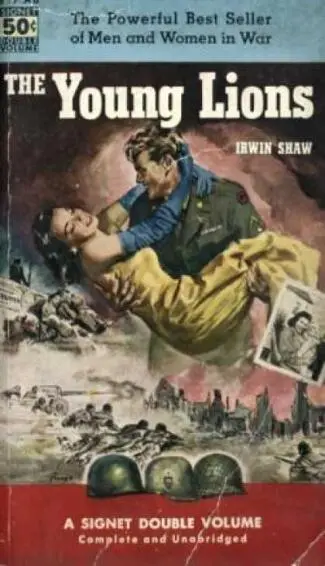
- Название:The Young Lions
- Автор:
- Жанр:
- Год:неизвестен
- ISBN:нет данных
- Рейтинг книги:4 / 5. Голосов: 1
-
Избранное:Добавить в избранное
- Отзывы:
-
Ваша оценка:
The Young Lions: краткое содержание, описание и аннотация
Предлагаем к чтению аннотацию, описание, краткое содержание или предисловие (зависит от того, что написал сам автор книги «The Young Lions»). Если вы не нашли необходимую информацию о книге — напишите в комментариях, мы постараемся отыскать её.
The Young Lions — читать онлайн бесплатно полную книгу (весь текст) целиком
Ниже представлен текст книги, разбитый по страницам. Система сохранения места последней прочитанной страницы, позволяет с удобством читать онлайн бесплатно книгу «The Young Lions», без необходимости каждый раз заново искать на чём Вы остановились. Поставьте закладку, и сможете в любой момент перейти на страницу, на которой закончили чтение.
Интервал:
Закладка:
In Piccadilly, the tarts strolled by in battalions, flashing electric torches on passing faces, giggling harshly, calling, "Hey, Yank, two pounds, Yank."
Michael walked slowly through the shuffling crowds of whores and MPs and soldiers, thinking of Hamlet saying of Fortinbras and his men, "Witness this army of such mass and charge, Led by a delicate and tender prince, Whose spirit with divine ambition puff'd Makes mouths at the invisible event, Exposing what is mortal and unsure To all that fortune, death and danger dare, Even for an eggshell."
What mouths we make at the invisible event, Michael thought, grinning to himself, staring through the darkness at the soldiers bargaining with the women, what regretful, doubtful mouths! We expose all that is mortal and unsure, and for more than an eggshell, but how differently from Fortinbras and his twenty thousand offstage men at arms! Ah, probably Shakespeare was laying it on. Probably no army, not even that of good old Fortinbras, returned from the Polack wars, ever was quite as dashing and wholehearted as the dramatist made out. It supplied a good speech and conveniently fitted Hamlet's delicate situation, and Shakespeare had put it in, although he must have known he was lying. We never hear what a Private First Class in Fortinbras's infantry thought about his tender and delicate prince, and the divine ambition that puff'd him. That would make an interesting scene, too… Twenty thousand men, that for a fantasy and trick of fame, Go to their graves like beds, was it? There were graves waiting not so far off for more than twenty thousand of the men around him, Michael thought, and maybe for himself too, but perhaps in the three hundred years the fantasy and the trick had lost some of their power. And yet we go, we go. Not in the blank-verse, noble certainty so admired by the man in the black tights, but we go. In a kind of limping, painful prose, in legal language too dense for ordinary use or understanding, a judgment against us, more likely than not, by a civil court that is not quite our enemy and not quite our friend, a writ handed down by a nearly honest judge, backed by the decision of a jury of not-quite-our peers, sitting on a case that is not exactly within their jurisdiction. "Go," they say, "go die a little. We have our reasons." And not quite trusting them and not quite doubting them, we go. "Go," they say, "go die a little. Things will not be better when you finish, but perhaps they will not be much worse."
Michael walked slowly along by the Park, thinking of the swans, settling down now on the Serpentine, and the orators who would be out again on Sunday, and the gun crews brewing tea and relaxing now that the planes had fled England. He remembered what an Irish captain on leave in London, from a Dover battery which had knocked down forty planes, had said of the London anti-aircraft outfits. "They never hit anybody," he said in a contemptuous soft burr. "It's a wonder London isn't completely destroyed. They're so busy planting rhododendrons around the emplacements and shining the barrels so they'll look pretty when Miss Churchill happens to pass by, that it's b… all gunnery."
The moon was coming up now, over the old trees and the scarred buildings, and there was a tinkle of glass where some soldiers and their girls were walking over a window that had been blown out in the raid.
"B… all gunnery," Michael said softly to himself, turning into the Dorchester, past the doorman with the decorations from the last war on his uniform. "B… all gunnery," Michael repeated, delighted with the phrase.
There was dance-music swinging into the lobby, and the old ladies and their nephews solemnly drinking tea, and pretty girls floating through on the way to the American bar on the arms of American officers, and Michael had the feeling, looking at the scene, that he had read all about this before, about the last war, that the characters, the setting, the action, were exactly the same, the costumes so little different that the eye hardly noticed it. By a trick of time, he thought, we become the heroes in our youthful romances, but always too late to appear romantic in them.
He walked upstairs to the large room where the party was still in progress and where Louise had said she'd be waiting for him.
"Look," said a tall, dark-haired girl near the door, "a Private." She turned to a Colonel next to her. "I told you there was one in London." She turned back to Michael. "Will you come to dinner next Tuesday night?" she asked. "We'll lionize you. Backbone of the Army."
Michael grinned at her. The Colonel next to her did not seem pleased with Michael. "Come, my dear." He took the girl firmly by the arm. "I'll give you a lemon if you come," the girl said over her shoulder, receding in silk undulations with the Colonel.
"A real whole lemon."
Michael looked around the room. Six Generals, he noticed, and felt very uncomfortable. He had never met a General before. He looked uneasily down at his ill-fitting tunic and the not-quite-polished buttons. He would not have been surprised if one of the Generals had come over to him and taken his name, rank and serial number for not having his buttons polished properly.
He did not see Louise for the moment, and he felt shy at going up to the bar, among the important-looking strangers at the other end of the room, and asking for a drink. When he had passed his sixteenth birthday he had felt that he was finished with being shy for the rest of his life. After that he had felt at home everywhere, had spoken his mind freely, felt that he was acceptable enough, if no more, to get by in any company. But ever since he had joined the Army, a latter-day shyness, more powerful and paralysing than anything he had known as a boy, had developed within him, shyness with officers, with men who had been in action, among women with whom otherwise he would have felt perfectly at ease.
He stood hesitantly a little to one side of the door, staring at the Generals. He did not like their faces. They looked too much like the faces of businessmen, small-town merchants, factory owners, growing a little fat and over-comfortable, with an eye out for a new sales campaign. The German Generals have better faces, he thought. Not better, abstractedly, he thought, but better for Generals. Harder, crueller, more determined. A General should have one of two faces, he thought. Either he should look like a heavyweight prizefighter, staring out coldly with dumb animal courage at the world, through battered, quick slits of eyes, or he should look like a haunted man out of a novel by Dostoevsky, malevolent, almost mad, with a face marked by evil raptures and visions of death. Our Generals, he thought, look as though they might sell you a building lot or a vacuum cleaner, they never look as though they could lead you up to the walls of a fortress. Fortinbras, Fortinbras, did you never migrate from Europe?
"What're you thinking about?" Louise asked.
She was standing at his side. "The faces of our Generals," he said. "I don't like them."
"The trouble with you is," Louise said, "you have the enlisted man's psychology."
"How right you are." He stared at Louise. She was wearing a grey plaid suit with a black blouse. Her red hair, bright and severe above the small, elegant body, shone among the uniforms. He never could decide whether he loved Louise or was annoyed with her. She had a husband somewhere in the Pacific of whom she rarely spoke, and she did some sort of semi-secret job for the OWI and she seemed to know every bigwig in the British Isles. She had a deft, tricky way with men, and was always being invited to week-ends at famous country houses where garrulous military men of high rank seemed to spill a great many dangerous secrets to her. Michael was sure, for example, that she knew when D-Day was going to come, and which targets in Germany were to be bombed for the next month, and when Roosevelt would meet Stalin and Churchill again. She was well over thirty, although she looked younger, and before the war had lived modestly in St Louis, where her husband had taught at a college. After the war, Michael was certain, she would run for the Senate or be appointed Ambassadress to somewhere, and when he thought of it, he pitied the husband, mired on Bougainville or New Caledonia, dreaming of going back to his modest home and quiet wife in St Louis.
Читать дальшеИнтервал:
Закладка:
Похожие книги на «The Young Lions»
Представляем Вашему вниманию похожие книги на «The Young Lions» списком для выбора. Мы отобрали схожую по названию и смыслу литературу в надежде предоставить читателям больше вариантов отыскать новые, интересные, ещё непрочитанные произведения.









Обсуждение, отзывы о книге «The Young Lions» и просто собственные мнения читателей. Оставьте ваши комментарии, напишите, что Вы думаете о произведении, его смысле или главных героях. Укажите что конкретно понравилось, а что нет, и почему Вы так считаете.